Why are you a black man driving around here? Sir, I was just Did I ask you to speak? Silence. Get out of the car immediately. Officer, I did nothing wrong.
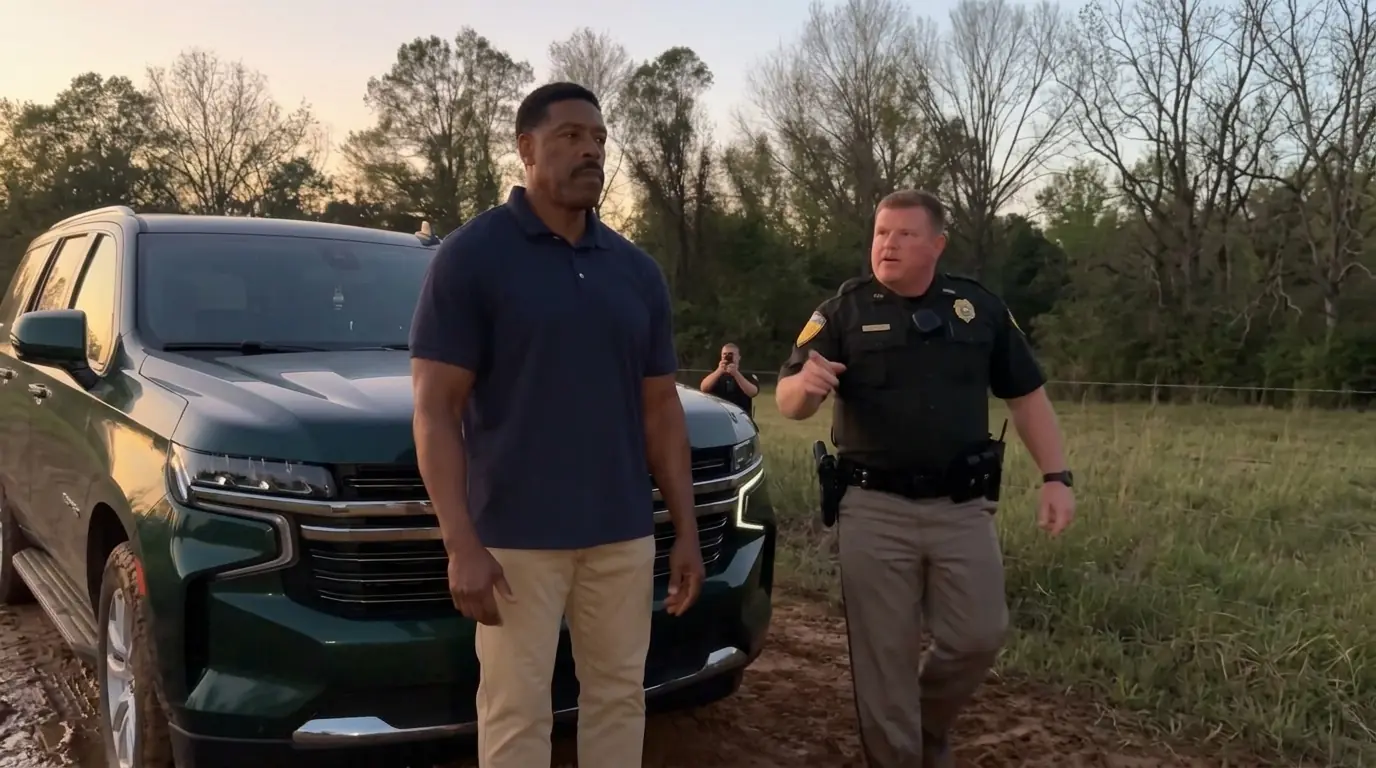
I said get out. Get out of the vehicle. Calm. Hands outstretched. Kneel down on the ground where you belong.
He knelt slowly without a trace of fear. Then a hard slap to his face. A hand grabbed his neck, pushed him forward. His face slammed into the mud. Cold.
Wet. Stay still, black dog. No resistance allowed. Mud in his mouth. Mud in his eyes.
But his breathing remained steady. Because the police officer standing above him had no idea that he had just pressed the face of a four-star general to the ground. And what happened next would destroy everything that police officer had ever built. Let me take you back. 30 minutes before all of that.
The sun was sinking behind the Blue Ridge Mountains. That golden September light was pouring through the trees along Route 12 in Ridgemont County, Virginia. This is the kind of place where time moves slow. Split rail fences line the roads. Old oaks hang over two-lane highways like canopies.
The air smells like fresh-cut grass and honeysuckle. And right through the middle of all that beauty a dark green Chevy Tahoe was cruising at 53 in a 55 zone. Behind the wheel sat Isaac Harper. 46 years old. Clean-shaven.
Navy polo shirt, khaki pants pressed sharp, reading glasses tucked into his collar. He looked like a college professor heading to a weekend dinner. Maybe an accountant. Maybe a church deacon. He looked like nobody special.
And that was entirely by design. Because Isaac Harper was a retired four-star general of the United States Army. The youngest Black man to ever reach that rank. Three combat tours, two Bronze Stars, a Presidential Commendation framed on his office wall in D. C..
And right now, he served as chair of the National Commission on Law Enforcement Oversight. A federal body with one very specific power. The authority to investigate, restructure, or shut down any police department that violated civil rights. But you wouldn't know any of that by looking at him. His phone sat in his hands-free cradle.
Colonel Denise Ashford's voice came through the speaker, warm and slightly impatient. Isaac, if you're late to this dinner, I'm ordering without you. He smiled. Denise, I survived Fallujah. I think I can handle a country road.
Fallujah didn't have catfish. This place does. Save me a seat. 20 minutes. He hung up and let the quiet settle back in.