Calder Danner planted himself in the doorway of his father's house like a wall that had decided it would never move again. He was 22 years old, broad through the shoulders with his mother's dark eyes and none of her softness. The woman standing in the yard with a single travel trunk at her feet was not his mother. She would never be his mother. And he wanted her to understand that before she ever set foot across the threshold.
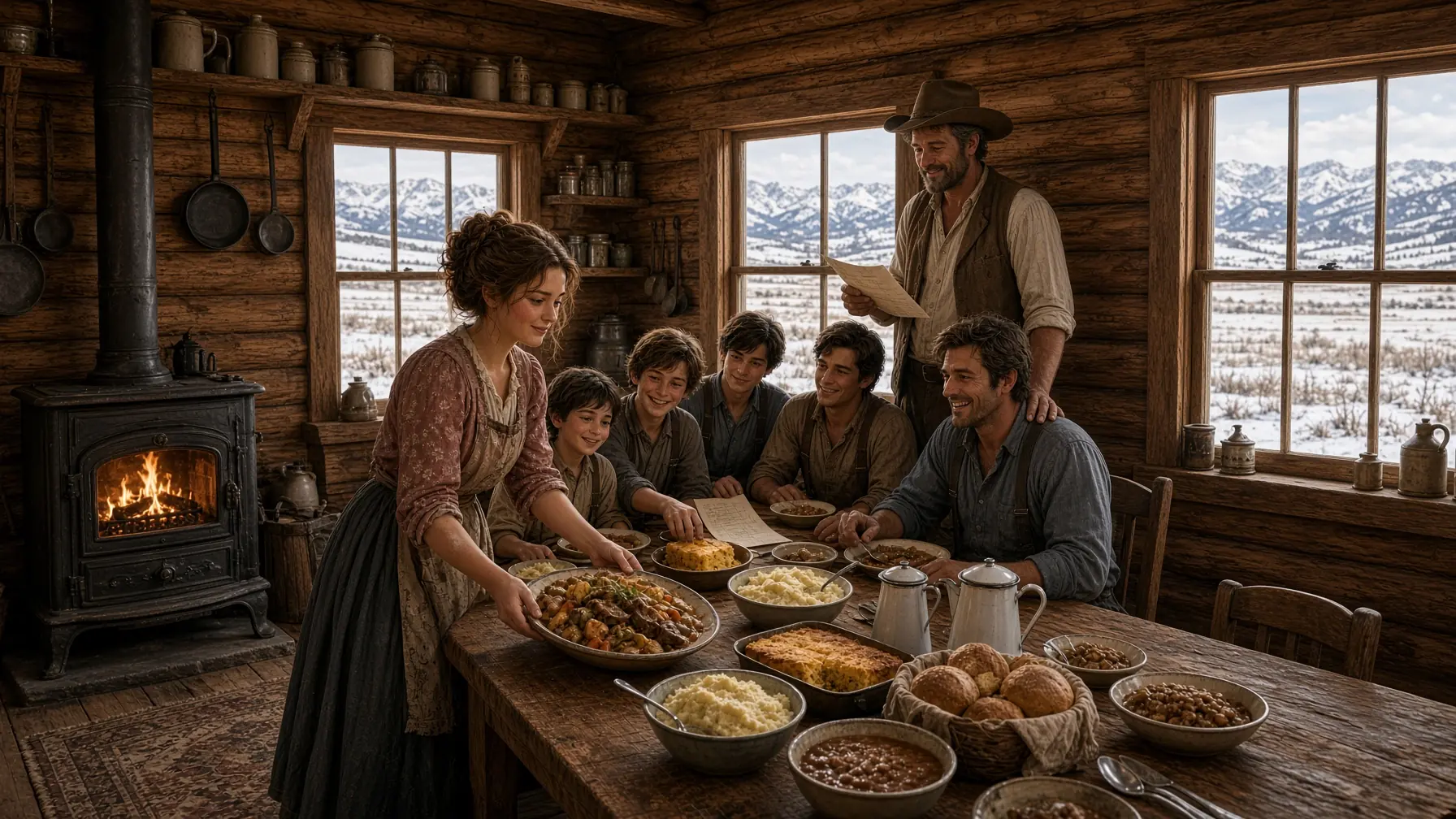
You can sleep in the house, he said. Not a welcome, a policy. You can cook and keep the books, but don't think for one second that gives you any say over how this family runs. Tessa Marlo stood very still in the autumn wind. She had just traveled three days by rail and two more by wagon to reach this valley, and the man speaking to her was not her husband.
He was her husband's son. He was 22 years old, and he was looking at her like she was a problem that needed to be returned to the store. She did not flinch. She did not argue. She picked up her trunk and walked past him into the house.
If you've ever watched someone walk into a room where nobody wanted them and still hold their head level if you know what it cost to do that without trembling, then you already understand what kind of woman Tessa Marlo was before this story even begins. Warren Danner had written her four letters before she agreed to come. The first three were practical to the point of being almost insulting the ranch's acreage, the cattle count, the wage deficit that had forced him to let two hands go the previous spring. He wrote like a man filing a report, not like a man asking a woman to share his life. Tessa had read those first three letters twice each and nearly declined twice each.
It was the fourth letter that changed her mind. He hadn't meant to write it, she suspected. It was shorter than the others, only half a page, and the handwriting was less careful, the kind of penmanship a man produces at 2 in at 2 in the morning when he stopped caring what it looks like. He wrote that his youngest boy, Milo, had stopped talking much since his mother passed. He wrote that the house had a sound to it now, a particular quality of silence, and he didn't know how to describe it except except to say it felt like a held breath that nobody ever let go.
He wrote that he wasn't sure what he was asking her for exactly and that he understood if that uncertainty made her say no. She said yes. She was 28 years old and had spent 5 years keeping accounts for merchants and farmers in a railroad town outside Missoula. She was good with numbers. She was good with silence.
She had buried her own grief quietly enough that most people in town had forgotten she'd had any to bury a broken engagement at 23, followed by the slow, methodical reconstruction of a life that looked perfectly sensible from the outside and felt felt and felt most mornings like a house with all the furniture removed. She wasn't under any illusions about what she was walking into. A 46-year-old rancher with five sons in a failing operation did not send for a wife out of romance. He sent for help. She had decided to try.