"Save my son and I'll be your reward,"
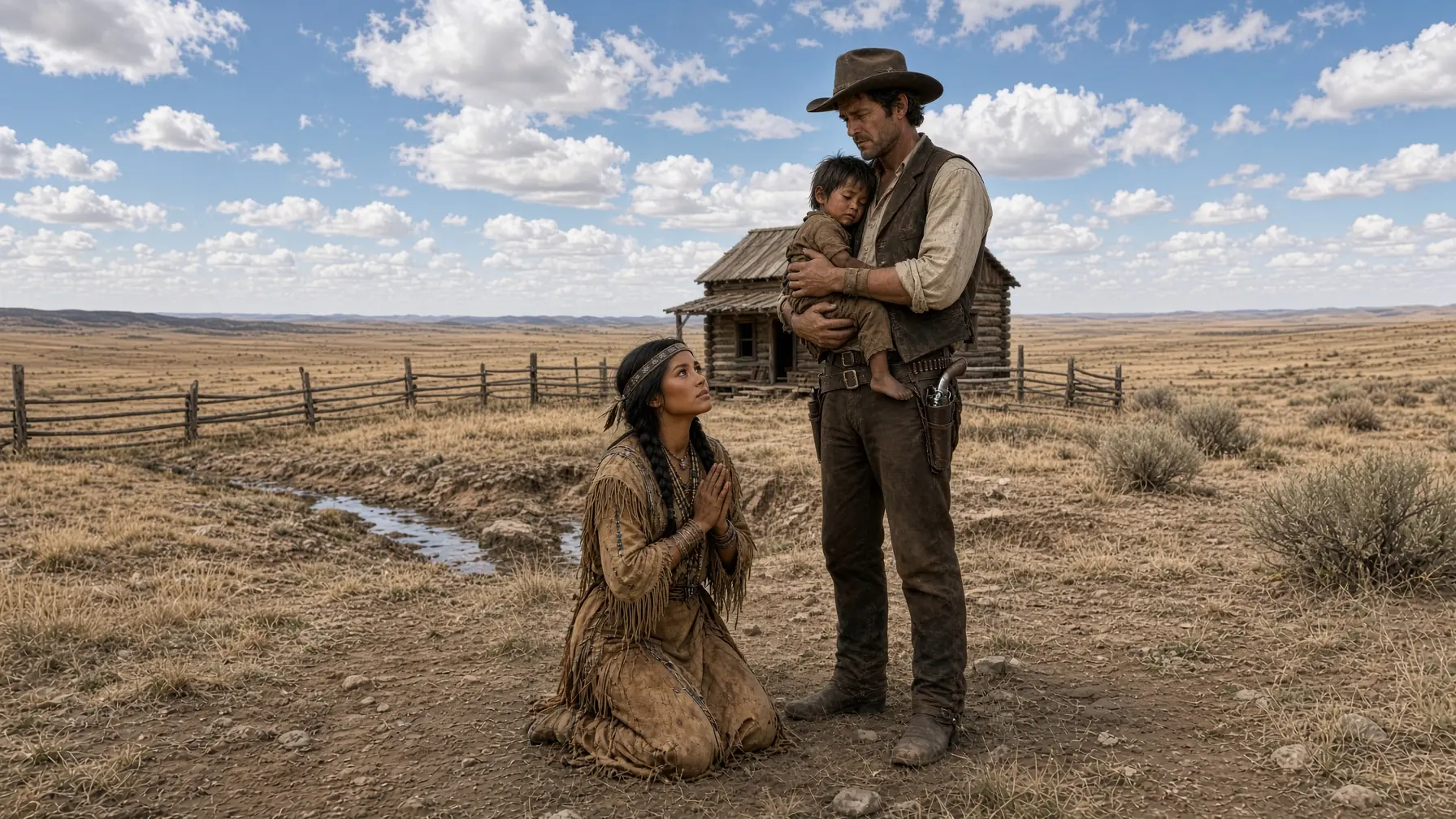
the Apache widow told the retired cowboy. Wade Coulter spent most of his days clinging to small, quiet routines, the kind of habits that kept a man's thoughts from wandering into places he had no desire to visit. He lived alone on a modest spread in the northern reaches of New Mexico territory, far from towns and farther still from the kind of riders who seemed to carry trouble wherever their horses took them. The cabin he had built after leaving the long cattle trails sat beside a dry creek bed, one of those shallow cuts in the earth that only carried water when the rains came down hard enough to wake the land. The wide, empty country around him created exactly the distance Wade wanted between himself and everyone else.
Out there, with nothing but wind, scrub, weathered fence posts, and open sky, the pressure in his chest eased a little. Most days, anyway, it always returned when memories of his brother found their way back without warning. 3 years earlier, Wade had walked away from his work guarding cattle outfits after witnessing the ambush that took Eli Coulter's life. From that day forward, he chose simplicity over company. He repaired fences, tended his two horses, kept his supplies stacked and counted, avoided towns unless necessity forced him there, and more than anything, he stayed away from anything that might make him feel too deeply.
That had become his purpose. Stay alive, stay quiet, and never let the past finish what grief had already started. That afternoon, Wade was working along the fence line, testing each post with a slow shove of his hand, when something in the stillness shifted. The late sun stretched long across the brittle grass. Down in the creek bed, there was nothing left but pale dust and cracked earth.
At first, the movement near the far edge of his property looked like a stray animal searching for shade. Then Wade narrowed his eyes. Whatever was coming toward him did not move like an animal. It stood too upright, moved too carefully, and carried too much weight. Wade straightened without hurry, keeping one hand resting on the top rail of the fence.
He did not call out. He did not step forward. Years on the trail had taught him that moving too quickly toward danger or toward desperation could get a man killed just the same. The figure kept coming. Slowly, unevenly, as the distance closed, Wade finally saw what it was.
A woman. And she was carrying a child not slung over her shoulder, not balanced against one hip. She held the boy pressed tightly against her chest as though she had carried him so long that his weight no longer registered in her exhausted body. The woman reached the flatter ground near the fence and stopped. She was breathing hard through her nose, her shoulders rigid from strain.
She was a patchy dressed in a worn buckskin garment with the lower hem torn ragged from travel. Her bare feet were cut and scraped from miles of unforgiving country. Hair that had once been carefully braided had come loose in several places, strands clinging to a face, stre with dried sweat and dust. The child hung limp in her arms, his head rested against her collarbone, and he showed no strength to hold himself upright. Something tightened in Wade's chest.
It was not fear. He had seen sick children on the cattle roads before. Children burning with fevers that moved fast enough to steal a life before anyone understood how serious things had become. He knew the signs, and when he saw the boy's shallow, uneven breathing, a cold unease moved through him. The woman stopped only a few paces from the fence.