On March 8, 2026, deputies with the Charlotte County Sheriff's Office were dispatched to a home in Punta Gorda, Florida, after a frantic 911 call. The caller said she had gone to check on her neighbor and found him unresponsive near the back of the property. His truck was missing, blood was visible around the area, and part of his body had been covered with plastic sheeting. At first, even the caller seemed unsure how to describe what she had walked into.
"911, what is the address of the emergency?" the dispatcher asked.
"Hello. Yes. I came out to check on my neighbor, and he's dead," the woman said. "His truck's gone. There's blood everywhere. He was covered with plastic."
The dispatcher asked whether she could see an obvious injury and whether there were any weapons nearby. The caller said she could not tell exactly what had happened, only that the scene looked extremely serious. She confirmed that the man had recently been living with a roommate or caregiver who was no longer there. The dispatcher told her to step outside and make contact with arriving deputies.
A deputy rushed toward the back of the house and found an elderly man lying beside a wheelchair. He was unresponsive, but his body was still warm, leading deputies to believe whatever had happened was very recent. There was a serious wound to one arm and blood throughout the immediate area. Because there was still a possibility he could be saved, deputies began CPR.
"Press. Press. Press," one of them instructed as the effort continued.
Another deputy noted that the man was still warm. They worked on him until it became clear he could not be revived. Once the lifesaving effort ended, the location changed from a medical emergency into an active crime scene.
The victim was identified as 76-year-old Paul Dewayne Bradley, a disabled military veteran who depended on caregivers for help with daily activities. The woman who found him stressed three details to deputies: his truck was gone, his live-in caregiver was not there, and his body had been partially covered. Those details quickly became central to the investigation.
As deputies secured the property, a visibly upset friend of Paul's approached. He told officers that a woman had recently moved into Paul's home and that Paul had already been talking about making her leave. According to the friend, Paul had described the woman as mentally unstable and had said he did not want her living there anymore. Another person said they had planned to come to Paul's home at around 7:00 that evening to help make sure she left safely.
That information immediately pointed investigators back to a law-enforcement call earlier that same day. Hours before Paul's body was found, a deputy had already been at the house because Paul wanted assistance removing his live-in caregiver. The earlier interaction had been captured on body camera.
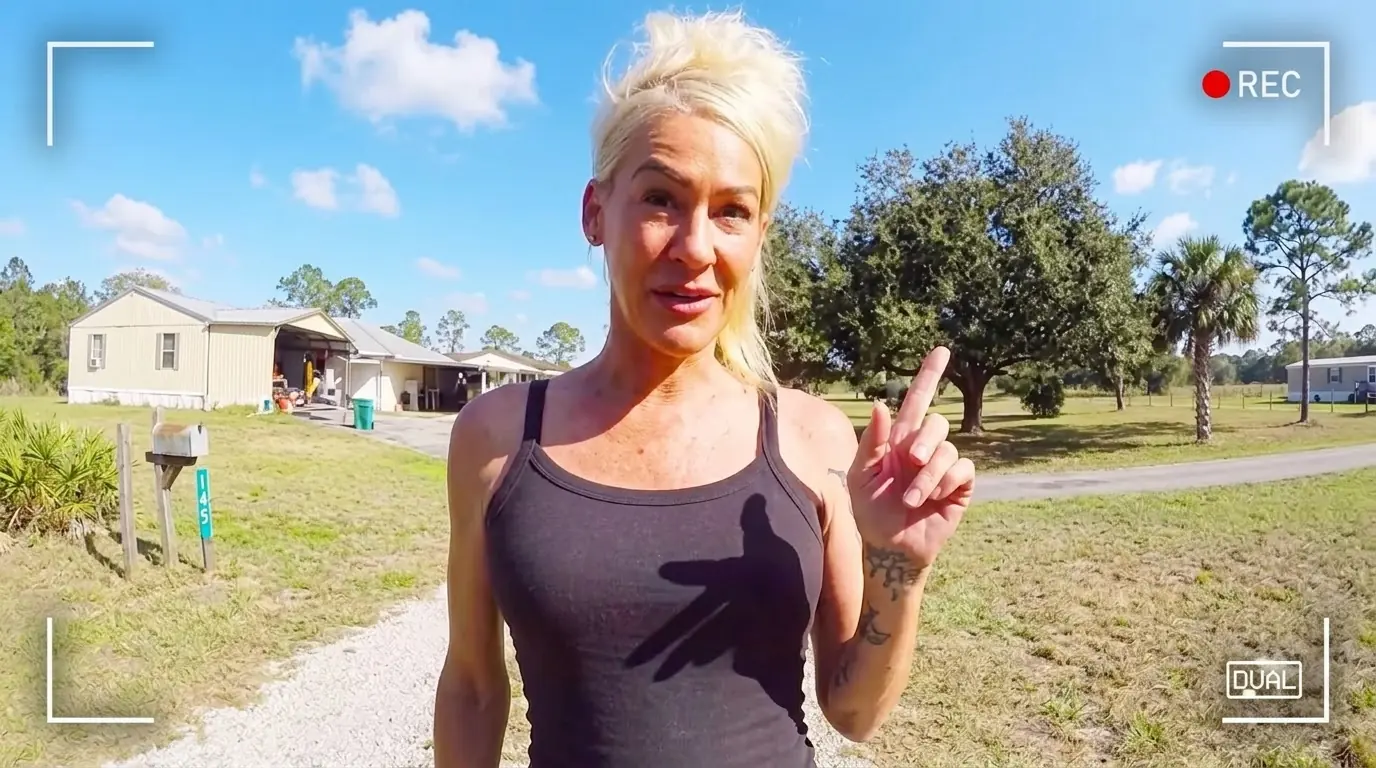
Paul told the deputy he had recently brought the caregiver in on a trial basis. He had thought he might give the arrangement a month, but he said that after only a few days he already knew it was not going to work. The deputy asked what she was failing to do.
"She's just doing nothing?" the deputy asked after Paul complained about the care.
Paul acknowledged that she made good meals but said that was about all she did. He told the deputy he wanted her out of the house. When asked whether he wanted her formally trespassed if she refused to leave, Paul said yes.
The caregiver was 48-year-old Shannon Rose Giblin. When the deputy spoke with Shannon, she denied that the problem was poor caregiving. She said Paul was angry for a different reason and claimed he had made repeated unwanted sexual advances toward her.
"I'm going to tell you the truth, sir," Shannon said before describing her version of events.
She claimed that during an errand, while she was helping Paul get from his mobility device into his truck and fastening his seat belt, he had crossed a serious physical boundary. Shannon said the interaction disgusted her and that another person who knew Paul could potentially support parts of what she was saying. Her accusation immediately made the situation more complicated than a simple dispute between an employer and caregiver.
The deputy explained that he would go back and speak with Paul again. He did not tell Shannon that her allegations were being dismissed. At the same time, he made clear that if Paul wanted her out of his home, law enforcement could not simply force him to continue allowing her to live there while the dispute was sorted out.
Shannon said leaving immediately would be nearly impossible. She had no vehicle of her own, almost no money, and several cats she needed to move. She repeated that Paul was behaving inappropriately toward her and insisted she was being pushed into an impossible situation.
Paul denied Shannon's allegations and remained firm that he wanted her gone. The deputy returned to Shannon and told her she needed to gather her belongings and contact someone who could help her leave. He asked directly whether the situation was likely to turn into a major confrontation once law enforcement left.
"Is there going to be a huge fight here?" he asked.
"No," Shannon answered, before adding that Paul had put his hands on her first during an earlier incident.
The deputy tried to keep the departure orderly. At that moment, there was no indication that he was dealing with a homicide that would unfold only hours later. He left the property after giving both sides instructions about what needed to happen next.
Later that day, Paul was found dead in essentially the same area where the earlier conversation had taken place. Investigators began pulling security footage from nearby residences and discovered that Paul's 2024 Toyota Tacoma had left the property at approximately 4:30 p.m. The truck was now missing along with Shannon.
A deputy requested an urgent felony alert for the Toyota and asked surrounding agencies to locate and stop it. Roughly three hours after Paul's body was discovered, law enforcement found the Tacoma at a McDonald's in Sarasota County, about 53 miles north of the Punta Gorda crime scene. Shannon was inside.
Deputies approached with weapons ready and ordered her to step out with her hands visible.
"Step out of the vehicle with your hands up," they shouted. "Turn around. Walk backwards to me. Do not reach."
Shannon asked where she was being taken as deputies directed her backward, ordered her to her knees, and secured her in handcuffs. When they asked if anyone else was inside the truck, she told them her cats were there. Once she was detained, her first statements immediately centered on her claim that she had been abused.
"Why are you guys being so mean to me when I was just abused?" she asked. She then said she had almost been killed and told deputies to look at marks on her body.
The Sarasota deputies told her they did not yet know the facts of what had happened in Charlotte County. Their role at that moment was to secure her, the vehicle, and the scene. Shannon was transported to the Sarasota County Sheriff's Office for questioning.
During the interview, Shannon gave detectives a much broader account of her short time living with Paul. She described him as manipulative, inappropriate, and abusive. She claimed that on one of her first nights there, he touched her upper leg and moved toward an intimate area before she pulled away.
She also described another conversation in which, according to her, Paul suggested physical closeness between them. Shannon said she went back to her room afterward and cried because she believed he had brought her into the home for reasons that had nothing to do with caregiving. Throughout the interview, she framed Paul's conduct as a pattern rather than a single incident.
Shannon then talked about traumatic experiences from much earlier in her life. She said she had experienced childhood sexual abuse and had later survived a violent relationship in which she feared for her life. According to Shannon, Paul's alleged behavior had triggered memories of those experiences and contributed to the emotional state she was in on March 8.
Detectives did not ignore those claims. They asked whether Paul had become violent after the morning deputy left the house. Shannon said yes and pointed to scratches and other marks that she said came from the confrontation.
But investigators soon received information that complicated her account. After seeing Shannon's mugshot, her sister contacted law enforcement. She wanted detectives to know that, according to her, Shannon had a history of injuring herself and blaming other people.
The sister described an earlier incident involving one of Shannon's former partners. She alleged that Shannon had once bragged about getting the man jailed for months after hurting herself and telling police that he had done it. The sister said that when she saw the scratches on Shannon after Paul's death, she immediately worried Shannon would claim self-defense.
Those allegations did not by themselves establish what happened in Paul's home, but they gave investigators another reason to examine Shannon's visible injuries carefully rather than automatically accepting her explanation. Detectives returned to the timeline after the deputy's departure and asked Shannon to describe exactly how the conflict escalated.
Shannon said she confronted Paul about the way he was treating her. She reminded him that she had been helping him around the house, assisting with personal care, cooking for him, and taking care of daily tasks. She said she could not understand how he could simply call the sheriff and have her pushed out with nowhere to go.
She also said she was terrified about what would happen to her cats. According to Shannon, when she asked Paul what he would do with them if she left, his response convinced her he did not care whether they survived. That fear, she said, added to the emotional pressure already building between them.
Shannon told detectives that Paul then moved away in his scooter and reached for his phone, apparently to call authorities again. She followed him and tried to take the phone. Paul resisted, and the confrontation became physical.
"I guess I snapped," Shannon said.
When detectives asked what she meant, she initially answered only that she had suffered too much abuse. She referred to a prior mental-health hospitalization and said she had experienced a similar emotional break years earlier. The detectives pressed her to move from general explanations to the specific actions that had taken place inside the home.
Eventually, Shannon admitted that she used a kitchen knife during the confrontation and cut Paul. Detectives asked whether the injury had been small or severe. Shannon acknowledged that Paul bled heavily.
Her sister later provided another allegation from Shannon's past. She said a former boyfriend had told her that he had become afraid Shannon might kill him while he slept. According to the sister, the man claimed he had once awakened to find Shannon standing over him with a large kitchen knife and that he ultimately left the area because he feared what might happen.
Investigators also spoke with one of Shannon's former boyfriends directly. According to the source, he described a phone call with Shannon before Paul's death in which she allegedly talked about killing Paul. To the former boyfriend, those remarks suggested that the fatal confrontation had not been a completely spontaneous reaction.
That statement became especially important because Shannon continued framing the incident as an unexpected act of survival. She told detectives she had been scared for both herself and her cats and insisted she had not simply woken up that morning intending to hurt Paul. Investigators now had to compare her version with the earlier police call, the timing of the truck's departure, the physical scene, and the accounts coming from people who knew her.
Shannon continued describing what happened after Paul was injured. She said she moved him in his scooter toward the back of the property and eventually placed him on the ground. She acknowledged remaining there as he died.
Before leaving in Paul's Tacoma, Shannon covered his body with a plastic tarp. Detectives repeatedly asked about that detail because it did not fit neatly with her explanation of a sudden confrontation. When asked why she had covered him, Shannon struggled to give a clear answer.
One detective tried to understand whether the act had been connected to her role as a caregiver, almost like covering someone or tucking them in. Shannon still did not provide a straightforward explanation. The plastic therefore remained one of the details investigators considered as they evaluated what happened after the fatal encounter, not just during it.
Detectives also asked Shannon how she felt now that Paul was dead. Shannon said she did not consider him innocent because, in her view, he had abused her. She continued saying that part of her believed the situation had become a choice between Paul and the safety of herself and her animals.
"Now you both look at me like you hate me," she told the detectives.
They told her they did not hate her. Their job, they explained, was to understand what had happened and document what she was saying. The interview continued as they compared her admissions with the physical evidence and the statements from other witnesses.
Shannon's sister was far less sympathetic. She told investigators that Shannon had threatened many people in the past and described her in extremely harsh terms, including calling her "diabolical." Those were the sister's accusations, not established findings, but they reflected the degree of conflict inside Shannon's own family and the seriousness with which some relatives viewed her history.
By the end of the investigation's early phase, law enforcement had two sharply different portraits. Shannon described Paul as an abusive man whose behavior had pushed her into a state of terror and emotional collapse. Paul's friends described a disabled veteran who had quickly realized his new caregiver was not working out and had asked law enforcement to remove her from his home.
The timeline was difficult to ignore. Paul called deputies that morning asking for help getting Shannon out. Hours later, he was dead, his body was partially covered, and his Toyota Tacoma was gone. Shannon was found 53 miles away in the truck with her cats, and during questioning she admitted using a knife during the confrontation and remaining with Paul as he died.
According to court documents cited in the source, Shannon Rose Giblin was charged in March 2026 with second-degree murder and grand theft of a motor vehicle. She entered a plea of not guilty. Those charges are allegations, and the fact that prosecutors filed them does not establish guilt.
Shannon's public defender later filed a motion requesting a competency examination. The source states that a hearing was scheduled for August 6, 2026, to determine whether she was competent to stand trial. The report also states that she remained jailed without bond at the time it was produced.
What had begun that morning as a dispute over whether a caregiver needed to leave a disabled man's home became, within hours, a homicide investigation crossing county lines. The deputy who tried to settle the conflict earlier in the day had no reason to know he was documenting what would become a critical part of the case's timeline. Now the competing allegations of abuse, self-defense, intent, credibility, and mental state would have to be tested through the criminal process rather than resolved in an interview room.