On the afternoon of November 13, 2019, Colorado Springs police were called to assist state child-care licensing officials at Play Mountain Place, an in-home daycare on East Willamette Avenue. The concern sounded administrative at first: owner Carla Marie Faith was suspected of caring for more children than her license allowed and of using parts of the property that were not approved for child care. But the situation became much more urgent after a parent confirmed that she had dropped off her young child that morning, even though Faith had told licensing officials that no children were being cared for at the property that day.
Faith's license allowed her to care for no more than six children at a time, with additional limits on how many very young children could be present. Licensing officials had also been looking into separate complaints involving child care at another location associated with Faith. By the time police arrived, the central question was no longer simply whether the daycare was over capacity. Officers needed to know where the children actually were and whether any of them had been left without proper supervision.
One of the first officers on scene, identified in the body-camera footage as Officer Landon, met with licensing workers outside the property. From the street, nothing obvious suggested an emergency. The front of the house was quiet, and there were no children visible through the windows. Yet one of the state workers explained that a mother was certain her two-year-old had been dropped off there earlier that morning.
The officer listened at the house and could hear a movie or children's programming playing inside. She also thought she could hear a child. That mattered because Faith had already represented that there were no children on the property. The officer could not simply force entry on a hunch, however, so the group began trying to contact Faith and the parent who had requested the welfare check.
The licensing worker called the mother and suggested that she contact Faith directly, say she was ready to pick up her child, and ask where the child was. The mother was willing. When the call ended, the official remarked that no parent would be comfortable bringing a child back after an experience like this. The concern was growing because the answers they were getting did not match what the parent said had happened that morning.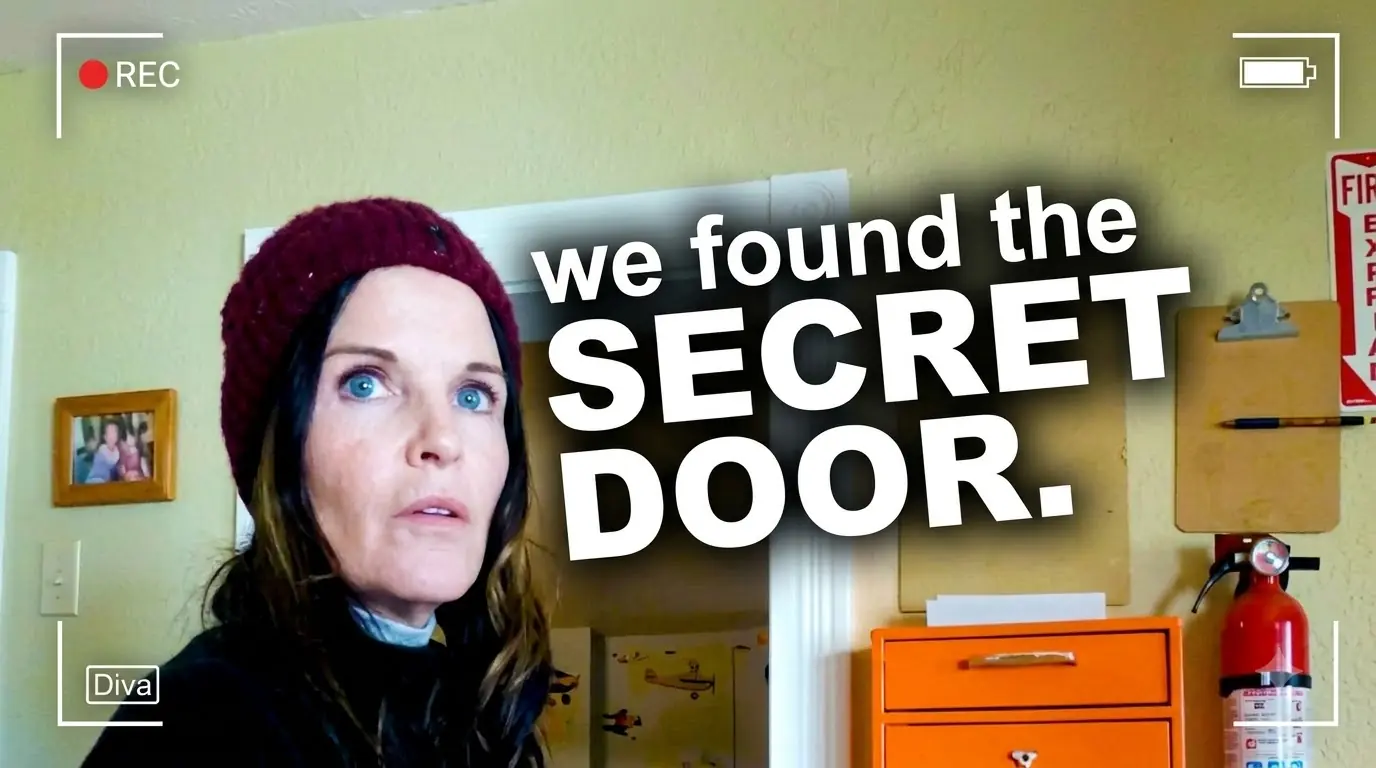
The licensing workers also described earlier strange behavior. A parent had approached the gate to retrieve a child, only to receive a phone call from Faith telling her to leave. Faith had also given investigators inconsistent information about vehicles and where she was going. None of those details alone proved a crime, but together they created a pattern of evasion.
As the officers watched the property, a black Chevrolet Camaro drove nearby. One of the people associated with the house had previously described the car incorrectly, adding another small inconsistency to an already confusing situation. A man named Mark Spain was then contacted near the property. He identified himself as one of Faith's employees and said he had recently driven her to the bank and brought her back.
Spain said he did not think Faith had any children in her care that day. The officer explained that at least one parent believed otherwise and that police needed to locate the child. Spain then gave the same address they were already standing at when asked where children associated with the daycare normally would be.
The officer told him he was not in trouble and that she was simply trying to establish what was happening. She also asked him not to call Faith while officers were still trying to speak with her. The investigation was becoming increasingly difficult because virtually every new conversation raised another question instead of answering the original one.
Before Spain left, the officer asked him to think carefully about whether Faith was known to do anything unusual with the daycare. He said he was not aware of anything serious. Officer Landon explained why she was asking: parents believed their children were at the property, and if adults were moving children between locations or leaving them unattended, police needed to know immediately. The conversation did not solve the mystery, but it confirmed that even one of Faith's employees could not give officers a clear answer about where the children were.
The officers also had to balance urgency with legal limits. Early in the response, they did not have a warrant to tear through every part of the property merely because the licensing officials were suspicious. They kept asking for consent, contacting parents, observing what was in plain view, and listening for sounds from inside. That cautious progression later became important because it showed the hidden-room discovery was not the result of officers arriving with a preconceived criminal theory; the probable welfare concern developed as the contradictions accumulated.
Another officer was called to the rear of the property while the licensing workers maintained visual contact from different sides. Officer Landon was openly uneasy. She told her partner the situation was getting "weirder and weirder" and did not want the civilian licensing officials standing alone around a property where nobody could explain the location of the children.
Eventually, a mother arrived expecting to pick up her child. Around the same time, officers contacted a woman who initially identified herself as Chrissy and said she was simply Faith's friend. Her full name was Christina Swauger. She would later be established as an employee of the daycare, making her initial description of her role another important false statement in the investigation.
Faith also appeared and spoke with Officer Landon. The conversation remained calm, but the officer immediately challenged the fact that police had knocked repeatedly while nobody answered. Faith offered explanations about the intercom and her movements around the property. When asked how many children were present, however, the answers remained vague.
Officer Landon made clear that she was not a licensing investigator and was not primarily concerned with administrative violations. "I just care if kids are okay," she explained. Faith indicated that officers could look around, but there was confusion about a second house or cottage on the property and whether a tenant's permission was needed before police could enter every area.
The officers began looking through the areas they were allowed to inspect. On the surface, the rooms did not reveal the large group of children the licensing workers suspected might be there. Faith continued to maintain that the children were elsewhere. The search might have ended there if not for a series of details inside the house that did not fit her story.
In one area, Officer Landon found a large collection of children's backpacks and diaper bags. Faith said the backpacks were being cleaned for a soccer team. The officer was skeptical. She began counting and saw identifying information and phone numbers connected to children, making the explanation increasingly difficult to accept.
"If I call these parents, where are they going to say their kids are right now?" the officer asked.
Faith did not provide a clear answer. Officer Landon moved her aside and began recording information from the bags so she could contact parents directly. She told her partner that Faith appeared to be hiding the backpacks and that the number of bags strongly suggested many children had been at the property.
The officers continued searching. Then came another strange clue: children's music seemed to be coming from somewhere below them. Faith had told them there was no basement. Yet the sound appeared to travel through vents or the floor from a lower level that officers could not locate.
Officer Landon called her sergeant. "I have a really bad feeling about what's going on here," she said. She explained that she could hear music coming from an area that sounded like a basement even though Faith denied that a basement existed. Her partner remained outside with Faith and Swauger while Landon tried to determine whether there was a hidden entrance.
Faith and Swauger eventually began talking quietly about the children being "at the park." When confronted, they repeated that explanation. Officer Landon asked again how to get downstairs. Faith insisted there was no basement and no access to one.
The contradiction was now direct. Police had children's belongings throughout the house, parents saying their children had been dropped off there, audible children's music below the floor, and a daycare owner claiming the children were somewhere else. Then Officer Parker heard something even more important: a child crying.
The cry appeared to come from the same lower area where the music had been heard. At that point, the officers were no longer dealing only with a licensing dispute. They were performing a welfare check for children who might be concealed somewhere inside a structure, and they had a specific reason to believe children were physically present.
Officer Parker confronted Faith again. "Listen, this started small, and it's going to get bigger and bigger until you tell us where those kids are. How do we get to them?"
Faith maintained that the children were at a park. The officers did not accept the answer. They continued searching the interior and exterior for any stairwell, door, hatch, or hidden access point that could explain the sounds.
Before that breakthrough, the body-camera footage records a long stretch of increasingly pointed questioning. Faith repeatedly tried to redirect the officers toward the explanation that the children had been taken to a park. Officer Landon kept returning to the same problem: if that were true, why were parents arriving at this address, why were there so many children's bags in the house, and why could the officers hear children's sounds from below them? The more specific the questions became, the less the explanations fit together.
At one point, Faith asked to use the bathroom and was escorted rather than allowed to move freely through the property. Officer Parker later told Landon that both women outside seemed nervous and were not following instructions consistently. Landon again called her sergeant and explained that the case had moved beyond a normal licensing complaint because officers could hear what sounded like children below a floor that Faith said had no lower level.
The officers also noticed basement-style windows from the exterior. One had blinds, which made the repeated claim that no basement existed even harder to understand. They checked around decks, gates, side structures, and possible access points, trying to determine whether there was a normal stairway hidden somewhere in the layout. The search took time because the property contained multiple connected areas and officers were trying not to damage anything unnecessarily.
Then the child cried. That sound changed the urgency of the search. Officer Parker told Faith that the situation had begun as something small and was growing because nobody would simply tell police how to reach the children. The officers were no longer asking whether there might be children on the property; they had audible evidence that at least one child was nearby and inaccessible to them.
Eventually, one officer noticed a seam and evidence that part of a wall could move. Contemporary court records and later reporting describe it as a false wall concealing a stairway to the basement. When the panel was moved, the officers finally found the route they had been looking for.
They descended into the lower level and immediately encountered a scene that transformed the case. Twenty-five young children were in the basement with two adult caregivers. A twenty-sixth child connected to the daycare had already been picked up by a parent during the police response, which is why some reports describe 25 children found in the basement while the criminal case involved 26 children in total.
The body-camera footage captures the shock in the officer's voice. "Who are you, and why are you hiding all these kids down here?"
The children were very young. Police and child-welfare records described many as sweaty and thirsty, with wet or soiled diapers. A later state report said the toddlers appeared not to have received adequate diaper changes, naps, or food during the day. There was no allegation that they had been kidnapped; they had been dropped off by their parents for child care. The central issue was that they had been concealed from regulators and police in an unapproved basement while the daycare operated far beyond its licensed capacity.
One of the adults downstairs was Katelynne Dianna Leigh Nelson, whose name is sometimes misspelled in online transcripts as "Caitlyn" or "Kaitlyn." She told Officer Landon that she had been babysitting and claimed the children had not been downstairs very long. Later affidavits and testimony raised questions about that estimate and indicated staff had been instructed to take the children into the basement after licensing officials arrived.
Officer Landon told Nelson that she was looking at, at minimum, an obstruction-related investigation because officers had been searching the house and calling out while staff remained hidden below. The immediate priority, however, was not making arrests. It was identifying every child and reuniting them with their families.
Upstairs, Faith tried to negotiate with the officer. She argued that she could help call parents and organize the children if she were allowed more freedom to move around. Officer Landon refused to treat the situation as a simple misunderstanding.
"How did we get to this point that you're hiding kids in a basement and you're not being honest with me?" she asked. She emphasized that exceeding a licensing limit was different from actively interfering with officers trying to verify the children's welfare.
Faith responded, "I did all of that, and I'm guilty of all of that," in the course of the exchange. That statement did not resolve the criminal case by itself, but the body-camera footage documented the larger pattern prosecutors would later rely on: repeated denials, false explanations, the concealed stairway, and the discovery of the children.
Once the basement was open, officers had to shift from searching to managing a large child-welfare scene. The children were brought out gradually while adults tried to identify which backpack, diaper bag, bottle, or personal item belonged to which child. Officers had arrived expecting to check on one toddler; instead, they were suddenly responsible for accounting for more than two dozen young children and making sure each one was released to the correct parent or guardian.
Faith repeatedly offered to help with the calls. Officer Landon remained skeptical because the discovery had occurred only after Faith and others had denied that the children were present. The officer made clear that the adults could assist with basic information, but police and licensing officials would control the reunification process. This is why the body-camera footage contains long stretches of officers reading names and phone numbers from bags and trying to build a complete list.
The discovery also clarified why the backpacks had mattered so much. They were not random sports bags, as Faith had suggested. They were part of the daily infrastructure of a daycare operating far above the capacity regulators had approved. What had looked at first like an odd pile of belongings became physical evidence that many children had been brought to the property that day.
Parents were contacted one by one and told to come collect their children. Faith told at least one parent that the business was being closed. For many families, that call was the first indication that the place where they had been leaving their toddlers each day was not operating the way they had been led to believe.
The investigation did not end with the basement. Officers searched belongings associated with the caregivers. In a backpack linked to Katelynne Nelson, investigators later reported finding syringes and plastic bags containing methamphetamine. Nelson had also missed court appearances during the criminal proceedings and was eventually arrested in February 2022 after an outstanding warrant had been issued.
The state investigation also showed that the problems at Faith's businesses were not limited to one afternoon. Colorado child-care regulators had documented numerous violations at Play Mountain Place and another Faith-associated preschool over the preceding years. After the November 2019 discovery, authorities shut down multiple child-care operations associated with her.
Parents later described changes in their children that they believed were connected to the daycare. Some spoke publicly about sleep problems, anxiety, fear of darkness, aggressive behavior, and the need for counseling. A civil lawsuit filed by parents alleged negligence and lasting behavioral effects. Those later accounts should be distinguished from what police observed on November 13 itself, but they became an important part of the sentencing narrative.
The criminal case ultimately involved four women connected to the daycare: Carla Marie Faith, Christina Swauger, Katelynne Nelson, and Valerie Fresquez. Their cases did not all end the same way, and later summaries sometimes blur the differences.
Faith went to trial in 2021. An El Paso County jury found her guilty of 26 misdemeanor counts of child abuse, one for each child involved. She was also convicted of attempting to influence a public servant, obstructing a peace officer, and offenses related to operating child care outside the terms of her license.
The prosecution argued that the case was about deliberate deception and putting the operation of the business ahead of the safety of the children. The body-camera video was central evidence. It showed Faith denying that children were present, denying that a basement existed, and offering the soccer-team explanation for the backpacks while officers could hear children's music and crying from below.
On October 21, 2021, District Judge Gregory Werner sentenced Faith to six years in prison on the felony count of attempting to influence a public servant. She received concurrent jail terms for the child-abuse and obstruction offenses, meaning they did not add additional years to the six-year prison term. She was also fined for operating a child-care facility without the required authorization.
During sentencing, family members filled the courtroom and described the effect the case had on their children. The judge rejected the idea that what happened was a momentary mistake. The evidence, he said, reflected a series of choices that placed 26 children's welfare at risk.
Faith later became eligible to seek parole. A parole hearing was held in August 2024, but the Colorado Department of Corrections confirmed that early release was denied. Reporting in 2025 stated that she could seek parole again, but a reliable public source confirming the outcome of any later hearing could not be located during the current verification. For that reason, it would be inaccurate to state as a fact that she was released or that a later parole request was granted.
Christina Swauger, the woman who had initially described herself to police as Faith's friend rather than an employee, was tried alongside Faith. She was convicted of 26 counts of misdemeanor child abuse and also of offenses connected to misleading or obstructing the officers during the welfare check. In November 2021, she was sentenced to two and a half years in prison, with shorter misdemeanor terms running concurrently.
The sentencing judge acknowledged that Swauger had been an employee rather than the owner of the operation, but emphasized that she had choices. She could have told regulators or police what was happening instead of helping conceal the children. Her case illustrates why the body-camera conversations at the beginning of the welfare check mattered so much: what initially sounded like evasive answers became evidence of an organized effort to prevent officials from seeing the actual daycare population.
Katelynne Nelson's case followed a different path. After she was arrested in 2022, she entered a plea agreement. She pleaded guilty to 26 misdemeanor child-abuse counts and a controlled-substance offense arising from the methamphetamine found in the backpack associated with her.
Nelson was sentenced to 365 days in jail with credit for time already served and four years of supervised probation. Court reporting also described treatment and monitoring requirements as part of her sentence. This was substantially less prison or jail time than Faith or Swauger received, reflecting the different charges and the negotiated plea rather than a finding that her conduct was identical to theirs.
Valerie Fresquez, another daycare employee, cooperated with prosecutors. She entered a plea arrangement that included a deferred sentence and testimony concerning the operation of the daycare. Reporting from the trial indicated that the agreement was structured so that, if she successfully completed the required conditions, she could ultimately withdraw the plea and have the charges dismissed.
That distinction matters because some later internet summaries list all four women as though they were convicted and sentenced in the same way. They were not. Faith and Swauger were convicted by a jury; Nelson resolved her case through a guilty plea; Fresquez received a deferred disposition tied to cooperation and completion of court requirements.
The number of children is another point that has caused confusion. Body-camera narration and news headlines sometimes say officers "found 26 children in the basement." Trial-era reporting clarified that officers found 25 children downstairs while one additional child had been picked up by a parent during the response. The criminal counts nevertheless involved 26 children, and that is why 26 appears throughout the charging and sentencing records.
The ages are also reported differently in different sources. Some police and early news reports described all of the children as under three, while other reporting referred to them broadly as toddlers or said all were under two. Trial reporting established that the license allowed only six children total and restricted the number of children under age two; prosecutors said twelve of the children in care were under two. The safest conclusion is that the group consisted of very young children and that the daycare dramatically exceeded the capacity Faith was authorized to supervise.
The hidden-wall discovery became the defining image of the case, but it was the accumulation of smaller details that got officers there. A parent said her child had been dropped off, while Faith said no children were present. A movie or children's music could be heard inside, and bags belonging to children were stacked in the house.
Staff gave inconsistent explanations. The sound below the floor stopped after people exchanged messages, then a child cried from a level Faith insisted did not exist. Each contradiction gave the officers another reason to continue instead of accepting the explanation that the children were at a park.
None of those clues alone told the entire story. Together, they gave officers enough reason to continue the welfare check instead of accepting the first explanation and leaving. When the false wall finally moved, the mystery ended immediately.
What had started as a licensing complaint became a criminal case documented almost minute by minute on police body cameras. The footage showed officers beginning cautiously, repeatedly giving Faith and the others opportunities to explain where the children were, and escalating only as each explanation was contradicted by what they could hear and see.
The case also exposed a broader regulatory problem. News investigations found years of licensing violations associated with Faith's child-care operations. Colorado regulators later described the case as highly unusual, but parents questioned why the earlier history had not led to intervention before police found the concealed basement.
For the families, the legal outcomes could not undo what they learned that day. They had believed their children were in a normal licensed childcare setting. Instead, police found a group far larger than the license permitted in a hidden lower area that Faith repeatedly denied existed.
The most striking moment remains the simplest one. An officer stood inside an apparently ordinary house, surrounded by children's belongings, listening to music coming from beneath the floor. The owner said there was no basement. The officer kept looking.
Then a child cried.
And behind a movable wall, the truth was waiting.