The morning sun had barely climbed above the Arizona desert when two grieving Apache widows found themselves standing at the edge of everything they had ever known. Behind them, their tribe turned away without a single backward glance. Ahead of them stretched only endless dust, towering red cliffs, and a future filled with hunger, fear, and loneliness. They had lost their husbands to violence, but that was not the end of their suffering. Tradition and fear had made them outcasts, blamed for bringing misfortune upon their people.
Every familiar face disappeared into the distance while the hot wind carried away the last traces of the lives they once cherished. It looked as though the desert itself had decided they would vanish without anyone remembering their names. The two widows were named Nayeli and Tahoma. Though both had known hardship long before that terrible morning, nothing compared to the silence that followed their banishment. They carried only a few worn blankets, a small bundle of dried food, and memories too painful to speak aloud.
Every step through the rocky desert reminded them that survival was no longer guaranteed. The scorching daytime heat burned their skin while sharp stones tore apart the worn sandals beneath their feet. Buzzards circled high overhead as though waiting for another forgotten tragedy to unfold beneath the endless blue sky. For three days, they wandered without finding a safe place to rest. The little food they possessed disappeared quickly, and thirst became their greatest enemy.
They avoided settlements, knowing prejudice often waited there as fiercely as hunger. Stories had traveled across the frontier about Apache warriors, and few settlers cared to separate innocent women from frightening legends. Every distant rider became another reason to hide behind rocks or thick patches of cactus until the danger passed. Miles away, another life was unfolding beneath that same brilliant sun. A cowboy named Silas Boone spent his days alone on a modest cattle ranch inherited from his aging father.
Unlike many ranchers chasing fortune across the territory, Silas cared more about honest work than growing wealthy. Years earlier, disease had taken his wife and young daughter within the same winter. Their graves rested beneath two cottonwood trees overlooking a quiet creek, and every sunrise reminded him of both unbearable loss and the fragile value of compassion. Since then, silence had become his closest companion. One blazing afternoon while searching for two missing calves near a narrow canyon, Silas noticed movement among scattered boulders.
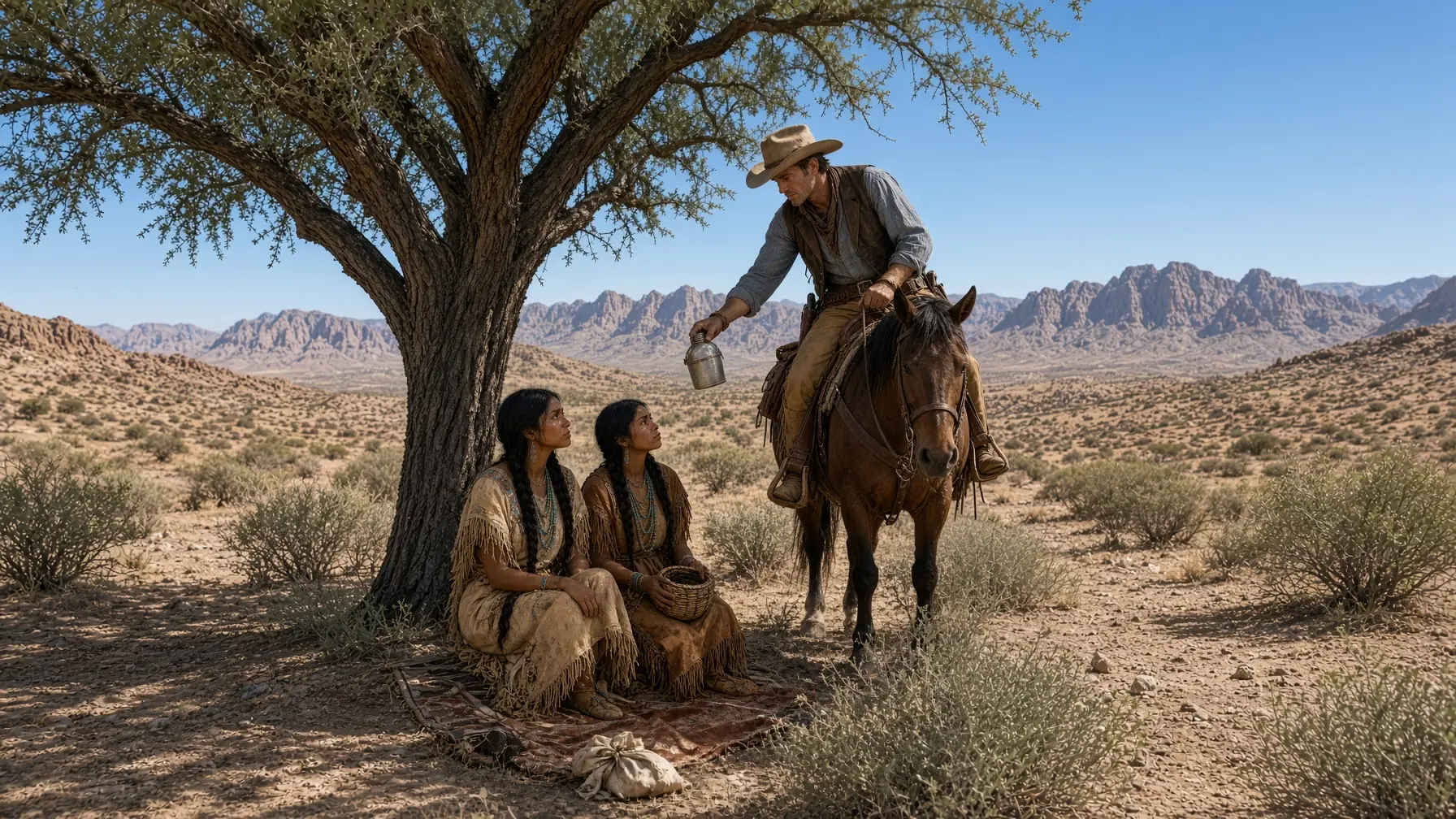
At first, he assumed it was a wounded animal, but as he approached cautiously, he discovered two exhausted women barely able to stand. Their faces revealed days without proper food or water, and fear filled their tired eyes. They expected another man carrying suspicion instead of mercy. Yet, Silas lowered his rifle, removed his hat as a sign of peace, and offered his canteen without asking a single question. That small act of kindness broke something inside both women.
They had prepared themselves for rejection once again, but instead found simple humanity. Silas shared dried beef, fresh bread, and cool water beneath the shade of a mesquite tree. Although language separated them, gratitude required no translation. He understood enough gestures to realize they had nowhere left to go. Looking toward the lonely road leading back to his ranch, he faced a choice that could change every remaining year of his life.