My grandmother used to tell me I could bloom even in the driest ground. She was wrong. Maybe she wasn't. Maybe you just haven't found the piece of earth that was meant for you yet. Folks said the young Apache woman was too wild to ever belong anywhere, and that a lonely rancher had done nothing more than give her a horse before watching her ride straight into the life fate had been saving for her.
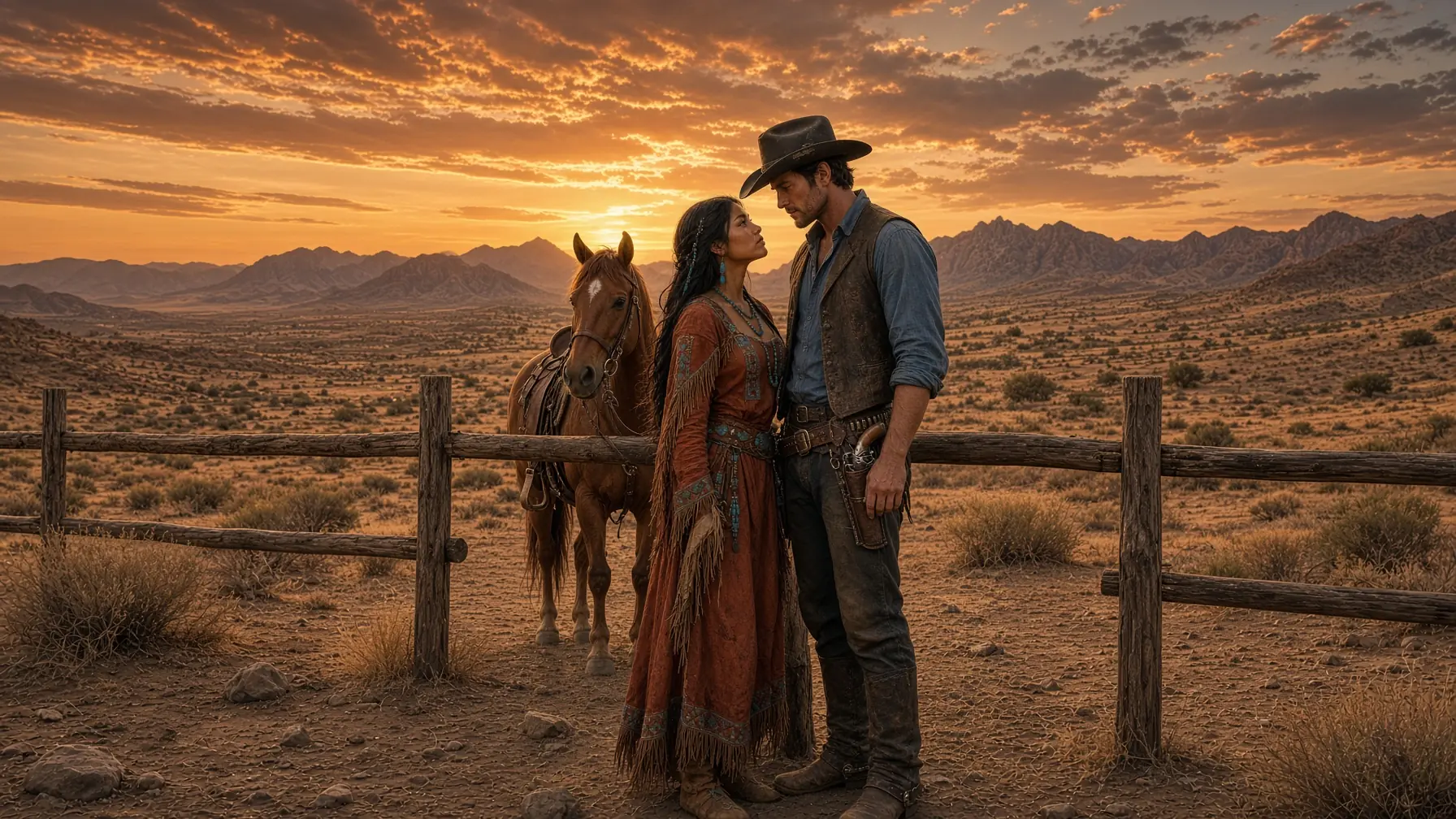
Beneath Arizona's deep blue sky, the San Pedro River Valley stretched wide and quiet. A vast sweep of sunburned earth beneath distant mountains. It was hard country, dry, unforgiving, and almost endless. A land as empty as the life Wade Harland had built for himself. 15 years had passed since Wade walked away from the bloody fields of the Civil War, searching for some forgotten corner of the West, where silence might finally close the wounds men carried home from battle.
For a while that silence had felt like mercy. But year after year, it grew heavier, settling over him like an old wool blanket until the man beneath it had nearly disappeared from the world. His days rarely changed. Wind whispered through the cracks around the cabin door. Pine logs snapped and hissed in the hearth.
Horses chewed lazily beside the watering trough, while leather tack creaked beneath the Arizona heat. Morning became afternoon, afternoon became night, and each day looked so much like the one before it that Wade sometimes wondered whether he was living at all or simply refusing to die. The routine comforted him. It punished him, too. That evening, the sun was slipping toward the western horizon, turning the distant mountains the color of old gold.
Wade sat in a weathered wooden chair on the porch, one hand loosely wrapped around a dented tin cup. The cup was one of the few things left from a time when his life had been filled with voices, laughter, orders shouted across smoke, and men whose names he could still remember when sleep refused to come. He lifted the cup and swallowed the last of the cold coffee. Its bitterness spread across his tongue like one of those memories he had spent 15 years trying to bury. Then something broke the stillness: hooves, heavy wagon wheels, the grinding sound of iron rims rolling over dry ground.
Wade slowly lowered the cup. The noise grew louder, rolling through the valley until a thick ribbon of dust began rising above the road. He narrowed his eyes. The tired, distant look he usually carried vanished in an instant, replaced by the watchfulness of a man who had once survived by noticing danger before it noticed him. A military caravan bearing the markings of Fort Lowell came into view and pulled up beside his watering trough.
The soldiers wore faded blue uniforms stained with trail dust. Their faces looked worn from heat, distance, and too many miles beneath an unforgiving sun. From the condition of the wagons and horses, Wade guessed they had been traveling a long stretch between Tucson and the San Carlos reservation. The men climbed down quickly. Some led their horses to water.
Others filled canteens, wiped dust from their mouths, and muttered complaints beneath their breath. Wade watched without moving. Then he saw her. She sat in the rear wagon, a young Apache woman. Her wrists were bound in front of her with coarse rope that had rubbed the skin raw.
Yet there was nothing defeated in the way she carried herself. Her back remained straight. Her chin stayed lifted, her dark eyes faced forward instead of lowering before the men surrounding her. She looked exhausted, but not broken. A young soldier named Deak Vance walked toward her with the careless swagger of a man who enjoyed having power over someone who could not strike back.