On August 27, 2025, officers with the Palm Bay Police Department responded to a home in the Wellington subdivision after both Nathan and Laura Forzik called 911 during a domestic disturbance. At first, the situation sounded like a troubled marriage colliding with a possible mental-health crisis. Within days, however, the focus would shift away from the argument between the parents and toward the six children living inside the house.
When officers arrived, they first made contact with 42-year-old Nathan Forzik outside. He appeared anxious and immediately asked whether they trusted him. One officer suggested they move closer to the patrol car and explained that he wanted to perform a quick pat-down so everyone could feel safe. Nathan agreed, but before officers could get a clear answer about why police had been called, he began talking rapidly about several different concerns at once.
Nathan said he was afraid Laura's father might come to the house with a gun. He referred to past tension with his in-laws and repeatedly circled back to something Laura may have told her father after police had visited the night before. Officers kept trying to bring him back to the immediate question: what had happened between him and Laura that day?
Nathan explained that he had tried to take Laura's phone because he wanted to know what she had told her father and what she had said to police during the previous visit. His account was fragmented, and he repeatedly described himself as fearful that Laura was trying to portray him as dangerous. He also told officers that Laura's father had brought a gun to the property in the past, though the context of that earlier incident was unclear from the conversation.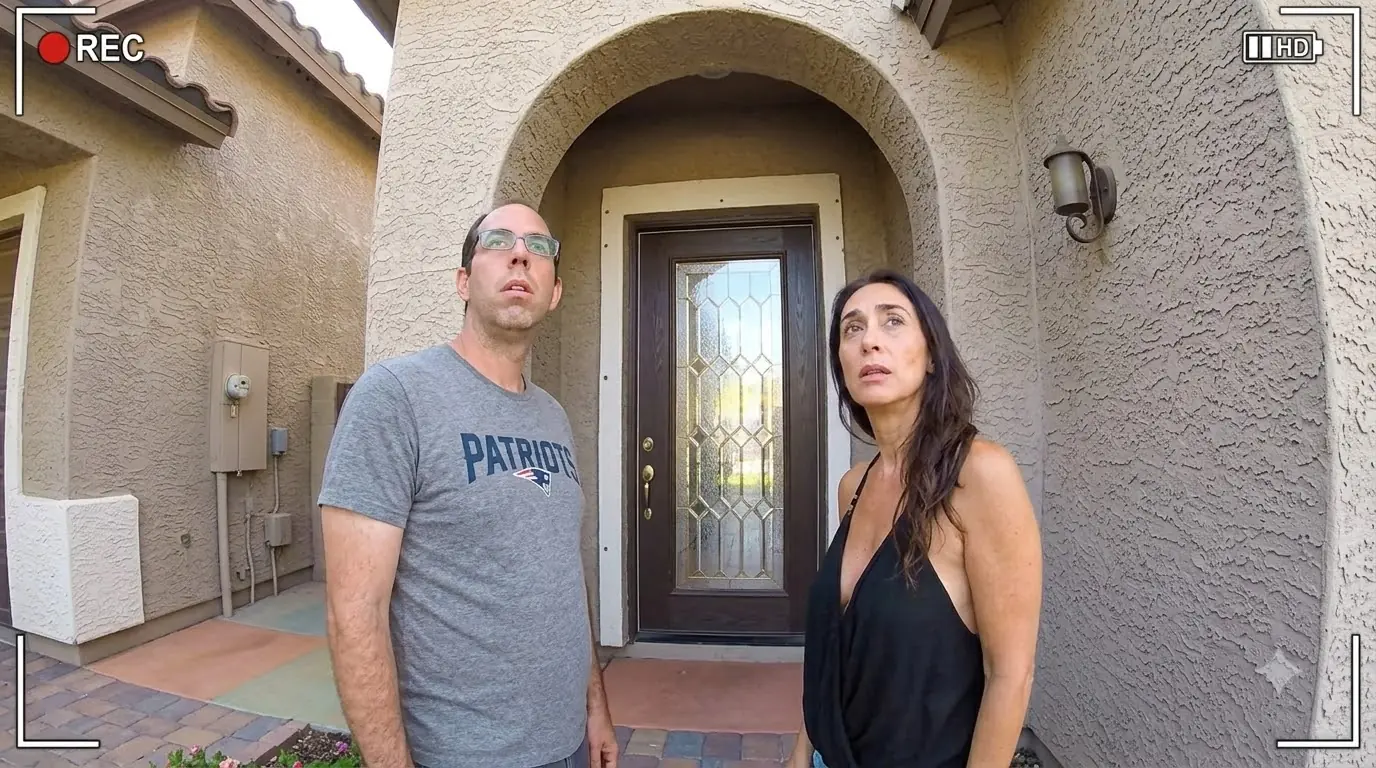
The officers kept narrowing their questions. They asked what Laura had said, what Nathan had said, and what specifically had happened that morning. Nathan repeatedly returned to the previous night's police response, saying Laura's version of events seemed very different from what he believed had actually happened. He wanted to know exactly what words she had used to make officers come to the house.
When an officer told him to slow down, Nathan tried to explain that he believed the situation was escalating beyond a normal marital argument. He said the fear was not simply that Laura was angry with him, but that she was communicating with her father in a way Nathan believed could put him in danger. The officers did not adopt that conclusion; they continued treating it as Nathan's belief while trying to determine whether anyone had actually made threats or displayed a weapon.
Nathan's agitation showed in the way he jumped from one subject to another. One moment he was discussing the phone, the next Laura's father, then a previous visit from police, then his own employment and the children inside. Officers repeatedly told him they were not choosing sides and only needed a clear account of what had happened.
As they continued speaking, Nathan disclosed that six children were inside the house. That immediately increased the officers' concern. When they said they needed to speak with Laura as well, Nathan became much more insistent that they not go onto the property or into the home.
"Please do not go," he said when officers started toward the residence. He warned again about the dog and said officers were not trusting him. When they told him Laura had also called 911 and therefore needed to be interviewed independently, Nathan argued that she should be brought outside instead.
He then tried a different approach, saying he was invoking his rights and specifically asking officers not to enter the property without a warrant. The officers answered that they were responding to a disturbance call and were not conducting a general search. Nathan continued insisting that Laura would use the dog to create a dangerous confrontation because, in his view, she knew how much he cared about it.
The exchange became circular. Officers told Nathan no one was under arrest and nobody had been declared the "bad guy." Nathan answered that this was exactly what Laura wanted them to believe about him. The officers kept him near the patrol car while another team prepared to speak with Laura.
Nathan then described the couple as being headed toward divorce. He said Laura was the one with bipolar disorder and suggested that her behavior was part of the problem. When officers asked whether he had any medical issues they should know about, he did not answer directly. Instead, he emphasized that he worked full-time from home, earned about $177,000 a year, held a PhD in economics, and had previously taught highly educated people.
Officers did not treat his education or income as proof that the home was safe. They continued asking the same basic questions about the morning's argument, whether anyone had been threatened, whether anyone had access to weapons, and whether the children were safe. Nathan's answers remained difficult to follow, which reinforced their decision to speak with Laura separately rather than rely on either spouse's version alone.
He also acknowledged that the family had already had contact with CPS and said he wanted services in the home, even while expressing distrust of the system. That contradiction would become important later, when DCF arrived and officers learned the family had previously refused investigators access to the interior.
The officers again asked what had happened that morning. Nathan said he had awakened believing Laura was trying to get her father to kill him. When asked whether drugs or alcohol were involved, he denied that framing and said he actually felt calmer speaking with police than he did around Laura.
He also mentioned that child protective services had been involved about two months earlier and said that experience had "started" something in his mind. His statements moved between worries about Laura, fear of her parents, the children, his work, and the previous welfare check. Officers told him to breathe, remain calm, and let them speak with Laura separately.
Nathan continued to resist the idea of officers approaching the house. Rather than answering questions directly, he emphasized his education, income, work history, and constitutional rights. To the officers, the intensity of his effort to keep them away from the residence raised a new question: was there something inside he did not want them to see?
Eventually, officers made contact with 41-year-old Laura Forzik inside the home. She secured the dog and told them that she was there with the children. When asked what had happened, Laura gave a very different account from Nathan's.
Laura said Nathan had been experiencing what she described as a psychological crisis for several days, possibly a couple of weeks. She told officers she had never seen him act this way before. Rather than framing the call as an ordinary domestic dispute, she said Nathan needed a psychiatric evaluation.
She told officers that three of the six children were still sleeping and repeatedly asked them not to leave the doorway open because she needed to keep the children contained and the dog secured. The officers asked whether anyone had been injured. Laura said no one needed treatment for a physical injury; what she wanted was a mental-health intervention for Nathan.
The officers asked her to explain what made this day different from every other day in the marriage. Laura said the change had been developing over a period of weeks. She described work stress, unusual beliefs, and an emergency therapy appointment, then contrasted that with the previous night, when she had still believed rest might be enough.
She also told them that she and Nathan had been together for more than a decade and that the current behavior was completely out of character from her perspective. She did not describe him as a chronically violent spouse. Instead, she portrayed the current crisis as a sudden break from the man she knew.
According to Laura, work stress had first pushed Nathan into what she described as a manic episode, and that had developed into paranoid beliefs. She said he had attended an emergency therapy appointment earlier in the week after a regular therapy session the previous Friday. She had hoped talk therapy would be enough, but she now believed the situation had worsened.
Laura said Nathan had become convinced that she was trying to kill him. She explained that her parents, who lived in Jupiter, had requested a welfare check the previous night. During that earlier police visit, Laura said she had told officers she did not feel threatened and believed Nathan mainly needed sleep.
After the officers left, however, she said Nathan interpreted their presence very differently. Because the officers carried guns, he allegedly became convinced that Laura's father had tried to use police to get him killed. According to Laura, that belief then expanded into the idea that Laura herself was part of the plan.
She said Nathan took her phone that morning and continued questioning her about what she had told her parents and police. She also said she had contacted his workplace and learned he had no sick or vacation time remaining. Officers asked whether Nathan had any formal diagnoses.
Laura said Nathan had been diagnosed with autism and ADHD. She also said schizophrenia had been raised as a possibility, but she made clear that he had not been formally diagnosed with schizophrenia. She wanted a medical professional to evaluate him rather than relying on her own interpretation.
Officers clarified the distinction several times. "So he's not diagnosed?" one asked regarding schizophrenia. Laura agreed that he was not. She said that was exactly why she wanted a psychiatric professional involved rather than simply guessing based on what she had read online.
She said Nathan had seen a therapist regularly and had also had an emergency session. The transcript contains some broken references to medication and dose changes, but it does not clearly establish which medication was prescribed, when it changed, or whether Nathan was taking it as directed. The officers therefore focused on what they could observe and what each spouse was reporting.
Laura also told them that after the previous night's welfare check, Nathan began interpreting the police presence itself as evidence of a plot. In her account, the fact that officers carried firearms became part of his belief that her father wanted police to kill him.
When officers asked why this day felt different from the previous one, Laura said it was the first time in their roughly ten-and-a-half-year marriage that she had felt threatened by Nathan. She referenced his tone and the way he had gripped her shoulder the night before. She stressed that this was not how he normally behaved and described their marriage, outside the current crisis, as a happy one.
Laura acknowledged that she had been reading about possible causes of sudden psychiatric symptoms online, but she repeatedly said she was not a doctor. She suggested stress, trauma, or substances as possibilities without claiming to know the answer. The officers focused on immediate safety and asked whether anyone had been injured or needed emergency medical treatment.
No one appeared to have suffered an acute physical injury in the domestic incident. The question became whether Nathan needed to be evaluated voluntarily or placed into protective custody. At the same time, officers had begun noticing the condition of the home itself.
Away from the couple, officers quietly compared what they had seen. They described a strong smell of urine and feces, damaged walls, a heavily soiled living space, and an overflowing litter box. They said some children appeared to be playing near areas that were extremely dirty.
One officer called the interior "disgusting" and another said the health hazard, rather than the domestic argument, was now what concerned him most. They talked about urine and feces on the floor, damaged sheetrock, and the general condition of the living room. The officers emphasized that the smell and filth were not isolated to a single spot.
They also discussed the pantry and refrigerator. There was food, and officers did not claim the children had no food at all during this first visit, but the refrigerator was described as filthy and the overall kitchen condition raised concern. The litter box was so full that officers believed the children were playing close to contaminated material.
The discussion was cautious because the officers had not yet completed a full welfare inspection. They had seen enough to call DCF, but they also knew they could not simply convert a domestic call into an unlimited search of the residence without consent or another lawful basis.
One officer said Laura had shown them a pantry with food and snacks, and there was food in the refrigerator, but the refrigerator and surrounding areas were filthy. Sheetrock appeared torn from some walls. To the officers, the condition of the home looked like a health hazard rather than simple clutter.
They also noted that Laura was pregnant and that six children were living there. According to the discussion among officers, Nathan was diagnosed with autism but not schizophrenia. There was also some confused discussion about prescribed medication and whether any dosage had recently changed, but the transcript does not establish a clear medication history.
The officers tried to separate the mental-health question from the welfare of the children. They told Nathan that Laura and the children were safe. Nathan asked whether someone was making sure she would not do something dangerous while leaving, and officers reassured him that she was being monitored.
Nathan then said he no longer knew what to do with the day. Officers reminded him that he had talked about contacting an attorney and about wanting child protective services to help provide services in the home. They asked whether he wanted help reaching someone for a mental-health evaluation.
Nathan agreed that he needed help, though he remained frustrated by previous experiences trying to obtain care. Officers explained that he could voluntarily go speak with professionals at Circles of Care and that he was not being arrested for the domestic call. Nathan complained that whenever he tried to get help, he was put on a schedule or told people were busy, even when he had taken time away from work.
By then, officers had concluded that the marital dispute was only one part of a much larger problem. There were conflicting stories about each spouse's mental health, a history of welfare concerns, and a house containing six children in conditions that officers believed required a closer look. The Florida Department of Children and Families was contacted.
A child protective investigator then filled officers in on the family's prior history with welfare agencies. According to that investigator, there had been two previous Florida reports and another case in Georgia involving environmental concerns. The recurring allegations involved strong odors, urine, feces, and generally unsanitary conditions.
The investigator said the previous Florida contacts had gone nowhere because the family refused entry. On both occasions, according to the discussion, investigators were told to leave the property before they could verify the inside conditions. That history made the current glimpse into the residence particularly important.
The DCF worker also described prior attempts to offer services. The children were said to have significant developmental needs, and the investigator referenced behavioral therapy, counseling, and child-care resources. According to the conversation, those offers had not produced sustained cooperation in the past.
There was also a complicated web of claims made by each spouse about the other. Nathan had raised concerns about Laura's mental health and possible relationships outside the marriage. Laura, in turn, said Nathan was in the middle of a new psychiatric crisis. Officers treated those accusations as background while DCF focused on the children's physical environment.
The investigator said that in the two previous Florida cases, the family had refused investigators access to the interior. They had been told to leave the property, which limited what could be verified. The investigator also described complicated allegations made by the parents against each other, including Nathan's concerns about Laura's behavior and Laura's resistance to DCF involvement.
According to the investigator's account, all six children were described as nonverbal and autistic, and the family had previously been offered services. There was discussion about specialized behavioral therapy and other resources. Nathan, the investigator said, appeared more open to those services during the current encounter than he had been during earlier contacts.
The DCF worker also repeated information attributed to Nathan about Laura being diagnosed with bipolar disorder and refusing medication. Because that information came through Nathan rather than independent medical records in the footage, officers treated it as part of the conflicting family narrative rather than a settled fact.
One officer mentioned seeing an older child come downstairs without clothing after being awakened. The child was told to put clothes on. The conversation suggested that nudity within the home had come up in previous discussions about finding appropriately trained caregivers, although the exact significance of that issue was not established during this visit.
What mattered most to DCF was that prior environmental complaints had not been fully verified because investigators had not been allowed inside. This time, Nathan himself had asked officers to reach out for resources. That opened a path for a more direct follow-up.
Later, with Nathan taken to Circles of Care for evaluation, officers returned to the home alongside DCF investigators. They explained to Laura that Nathan had asked for additional help and that DCF wanted to speak with her and check on the children.
Laura again raised concerns about allowing anyone into the house. She said Nathan, when stable, was extremely strict about constitutional rights and did not want government officials entering without a court order. She described him as having a strong libertarian view of privacy and search protections.
The officer responded carefully. He told Laura he was not dismissing those rights and was not pretending the family had no legal protections. He explained that the current visit was a continuation of the welfare investigation and that DCF wanted to ask questions and verify the children's condition.
Laura said previous DCF involvement had been "extremely bad" from her perspective. The officer acknowledged that history but urged her not to assume every contact would end the same way. He said agencies sometimes provided practical services rather than punishment and reminded her that caring for six children with substantial needs could require more support than two overwhelmed parents could provide alone.
Laura wanted the interaction accelerated. She said she had children to care for and did not want a prolonged scene outside. The investigator repeated that he needed to see each child, even if the children were nonverbal and the contact was brief.
An officer told her that everyone had rights and that he was not ordering her to surrender them. He also explained that DCF was not always there to remove children and could sometimes provide services to a family struggling with multiple high-needs children.
Laura responded that the family's previous experiences with DCF had been extremely negative. She wanted the interaction completed quickly because she still had to care for the children. The investigator explained that he nevertheless needed to see the children and make sure they were safe, healthy, and appropriately cared for.
Laura said the crisis involving Nathan had never happened during their eleven years together. She repeatedly said she loved him and believed he was a good man. In her view, what officers were seeing was an acute psychiatric episode, and she hoped Circles of Care could help her get her husband back to his usual state.
Rather than allow DCF unrestricted access to the home, Laura brought the children outside one at a time. Investigators observed them and asked basic questions about their care. One small child was described as learning to climb but having trouble getting down from a low trampoline, and Laura explained a minor mark as the result of that behavior.
Even after seeing the children, DCF still had concerns about the environment inside. But without consent, a warrant, or another legal basis for entry, officers did not force their way into the house. They left the property with unanswered questions.
Those questions did not remain unanswered for long. On September 2, 2025, roughly a week later, officers were called back to the same residence after another report involving the family. This time, DCF had received allegations that Nathan was highly intoxicated, making threats, and that there were serious concerns about the condition of the home.
Before making contact, officers summarized what they understood. Multiple people had reportedly expressed concern. One officer said Nathan had been drinking heavily over the previous two days and was referring to Laura as a demon. They were also aware that Laura was pregnant and that prior DCF contacts had still not resulted in a full inspection of the home.
When Laura came to the door, she immediately assumed her parents had called police again. Officers said they had not. They explained that DCF had requested law-enforcement assistance based on new allegations, including threats toward the children and extreme intoxication.
Laura told them Nathan was fine and begged them to leave because their presence would feed his belief that she was trying to have him killed. The officer reminded her that he had spoken calmly with Nathan before and said he wanted to clarify what had changed, not create a confrontation.
Officers already knew from prior visits that getting inside could be difficult. One officer said they had received repeated reports but had never been able to fully inspect the interior. Laura was also believed to be pregnant again, adding another layer of concern about the household.
When police approached, Laura immediately asked them not to make the situation worse. She assumed her parents had called again. Officers told her that the current contact came through DCF, not her parents, and that the report involved allegations about Nathan's behavior and threats toward the children.
Laura insisted Nathan was fine and asked officers to leave. She warned that he would assume police were there to kill him and would believe she had called them. An officer reminded her that during the previous visit, Nathan had spoken with police without violence and that officers wanted to clarify the situation, not provoke him.
Laura replied that Nathan now held a false memory of her running outside during the earlier incident and shouting about a gun so police would shoot him. She asked the officers whether she had actually done that. They told her she had not.
The officer then asked a direct question: what had changed since the last visit? Laura said the change traced back to the earlier welfare check requested by her parents. According to her, Nathan's paranoia had continued after that incident, and he was still psychologically disconnected from reality.
The officer told Laura that leaving the property without resolving the concerns was no longer realistic. Police and DCF had genuine reasons to worry about the household, and the concerns would not disappear simply because the parents did not want investigators involved.
Laura said what she most needed was child care. DCF explained that this was an initial visit connected to the new report and that the investigator was expected to see all six children and inspect the home for basic necessities and dangerous living conditions.
Laura again said there was no warrant to search the house. Officers agreed that they were not conducting a criminal search-and-seizure operation, but DCF still needed to evaluate the environment in which the children were living. Laura corrected herself while discussing constitutional rights, shifting from the First Amendment to the Fourth Amendment.
The officer told her that the investigator's responsibility went beyond simply looking at the children on the porch. He needed to determine whether there was food in the house, whether the living space was safe, and whether the children were being secured in a way that created additional hazards.
Laura pushed back, saying they could bring the children outside. The investigator then asked specifically about the bedrooms. He wanted to know whether the children were still being locked in rooms and how the parents prevented children described as "runners" from leaving the property.
Laura said the children were fine and initially resisted the word "locked." Another adult tried to explain that the question was not necessarily accusing the parents of imprisoning the children, but asking whether the bedrooms were being used as secured spaces. The answer, eventually, was yes: some rooms were configured so the children could not freely exit.
The conversation moved to how the children were kept secure. An investigator asked whether they were still being locked in rooms. Laura first said the children were fine and denied that they were being locked upstairs as a form of imprisonment. The discussion then reframed the question around whether bedrooms were being used as secure locations because some of the children were prone to running from the home.
Eventually, the parents relented enough for investigators and officers to enter. The first look inside immediately changed the tone of the case.
One room contained a child who was not fully toilet trained. The adults explained that if a toilet was available, the child would use it, but otherwise she might relieve herself elsewhere. The officers quickly realized that if the child's bedroom door was locked from the outside, access to a bathroom could become a serious problem.
As officers entered, one adult openly acknowledged the odor. "It just smells like poop in here," she said. The officers were invited farther into the room and tried to interact gently with the child while observing the space.
They asked how nighttime confinement worked and whether the door had to be blocked or locked to keep the child from wandering. The adults said running behavior had been an issue and suggested the security measures were used less often than before. Officers did not accept that explanation at face value; they documented the physical setup instead.
The scene mattered because it transformed an abstract argument about parenting a child with developmental needs into something officers could physically see. The locks, the bathroom-access problem, the odor, and the room's condition all had to be evaluated together.
The smell inside the rooms was strong enough that officers commented on it immediately. One adult warned that the room smelled like feces. Investigators walked through spaces with damaged walls, exposed areas, scattered belongings, and conditions they believed were unsafe for young children.
After the initial walkthrough, officers stepped away to compare what they had seen. At that point, one said they were no longer looking at a difficult or chaotic family home. In their view, there was probable cause to treat the situation as child neglect.
A DCF worker had a key ring with individual keys associated with multiple bedroom doors. Officers discussed that the doors were being locked in a way that could keep children inside. The parents' explanation was that several of the children were "runners" who could leave the house unexpectedly, but investigators did not believe that explanation justified the conditions they were seeing.
One officer described the key ring as having doors individually identified, making it clear the locking system was not incidental. Another officer said the locks needed to be photographed because they were central to understanding how the children were being contained.
The officers debated the parents' explanation. They understood why a family caring for children prone to elopement would need safety measures, but they said there was a difference between securing an exterior door and locking a young child alone in a bedroom without ready access to food, water, or a normal bathroom.
That distinction became one of the most important parts of the case. Investigators were not simply documenting locks; they were documenting how the locks interacted with the rest of the environment.
One officer focused on the ages of the children. He could not reconcile locking a three-year-old or a nine-year-old inside a bedroom with no independent access to food or water. Officers said small training toilets were being used inside some rooms so children could relieve themselves without leaving.
They also discussed the amount and accessibility of food. There were eggs, meat, and other items in the home, but some officers questioned whether there was enough readily accessible food for a family with six children. They also noted that food was kept behind locked areas.
The oldest child was said to be nine, and officers were told that the seven- and nine-year-olds were prone to running. During the visit, officers said the children repeatedly tried to move toward the front door. That behavior was part of the parents' justification for using locks, but it did not erase the other hazards investigators were documenting.
Officers began photographing the house room by room. They recorded bedroom doors, locks, reversed doorknobs, damaged walls, exposed outlets, loose wiring, and areas where children appeared to have picked at drywall or insulation. They also photographed bathrooms, closets, counters, stairs, and other parts of the home.
One officer asked another to make sure the door handles were photographed from the correct angle so it was clear which way they operated. They also documented cleaning products and bottles placed on ledges or counters that could potentially be reached by a child.
In a bathroom, officers photographed the tub, sink, and counters. In closets, they documented how little was stored in some rooms. On the stairs and walls, they photographed damage and areas where building materials appeared exposed.
At one point an officer asked whether a material on the wall was insulation. Another agreed that it looked like it. They also noticed what appeared to be nail marks or scratches on a wall, another detail they wanted preserved in photographs rather than left to memory.
In one room, an officer found a young girl watching an iPad. In another, investigators heard crying and tried to soothe a child while continuing the inspection. Several closets were nearly empty. The overall condition of the rooms, combined with the smell, made a strong impression on the officers.
They asked one another repeatedly whether every room had been photographed. The goal was to create a record that showed not just a single dirty area but the condition of the residence as a whole. Officers moved from room to room, checking closets, bathrooms, doors, stairs, and the children's sleeping spaces.
They also discussed the food supply again. There were eggs and meat, but officers questioned how much food was readily available for six children and noted that some supplies were behind locked doors. The concern was not simply the existence of food somewhere in the house, but whether the children could access basic necessities safely.
The children themselves moved through the scene in ways that reinforced the parents' description of them as difficult to contain. Officers said several repeatedly headed toward the front door. That behavior made the safety problem more complicated, but investigators still believed the solution being used inside the home created its own serious risks.
They specifically photographed cleaning products and other items that appeared accessible to children. One officer emphasized the importance of documenting the way some door handles had been reversed so that children could not open them from the inside.
Another officer pointed to marks on the wall that looked like fingernail scratches. There was also discussion about insulation and exposed parts of the structure. The transcript includes references to a smear on a wall and other stains, but officers did not identify every mark with certainty.
The condition of the home went well beyond clutter. Officers described strong odors, urine and feces, damaged sheetrock, exposed electrical hazards, and rooms arranged in ways that they believed restricted the children's movement. At least one officer said the smell could not be captured on body-camera footage and had been even worse earlier.
During the walkthrough, investigators also worried about access to potentially unsafe substances. The footage describes one of the children reaching for an exposed item on a low surface and trying to put it in their mouth. Officers took that as another example of why the environment itself posed a risk.
They compared which doors opened normally and which appeared configured to keep children from leaving. Some doors were not reversed, including the parents' bedroom and another room, while others were. The officers photographed the differences.
One officer looked through the images and said he could not believe he had been at the same house a week earlier without being able to verify what was inside. Another said the conditions were among the worst he had personally seen.
The officers were careful not to claim that every disturbing thing in the house had the same explanation. At one point someone asked whether a dark mark was blood, and another officer clarified that it appeared to be makeup or nail polish. Even so, the accumulation of documented hazards was enough to move the case toward criminal charges.
The stairs, exposed outlet areas, damaged flooring, wires, and other structural risks were photographed. Officers repeatedly described the home as unsafe. One said he suspected there could be more going on than simple neglect, although the source does not establish additional charges based on that speculation.
By the end of the search, investigators believed there was probable cause to arrest both parents. A little more than an hour later, Laura and Nathan were taken into custody.
Laura appeared confused when she saw the number of officers outside and repeatedly asked why she was being arrested. She also asked to get dressed and requested the opportunity to speak with an attorney. Officers told her she would be able to contact a lawyer and that they first needed to secure the scene and care for the children.
"Why am I under arrest?" she asked more than once. The officers initially told her they would explain once the immediate scene was under control. Laura kept returning to the children, reminding officers that toddlers and an infant were still inside and asking whether someone would help with them.
One officer reassured her that the children were not being abandoned. He then explained, in general terms, that the condition of the home had led investigators to believe probable cause existed for child-neglect charges. Laura was told that the legal process would determine what happened next and that an arrest itself was not a conviction.
Because Laura said she was about eight weeks pregnant, officers also discussed how she was being restrained and tried to avoid unnecessary pressure while still maintaining custody.
Nathan, meanwhile, was in the backyard with loud music playing before officers brought him forward. When he learned what was happening, he asked whether police were arresting both him and Laura. The answer was yes.
He immediately wanted to know what the charge was and whether officers had believed Laura over him. An officer told him this was not a matter of choosing one spouse's story over the other; Laura was already being taken into custody as well.
Nathan then said he did not have a lawyer available and complained that police had gained his trust only to use that cooperation against him. "From my perspective, you guys lied to me completely to manipulate me to get me arrested," he said.
The officer did not argue with Nathan about his perception. Instead, he told him he had every right to believe that and then returned the discussion to the condition of the children. When Nathan agreed that the living conditions were terrible, the officer urged him to work with DCF, lawyers, and the court process rather than continue the argument at the scene.
Nathan then worried aloud about missing a legal appointment scheduled for the next morning because he was being arrested. The officers did not resolve that question at the scene.
According to the source, both Nathan and Laura Forzik were charged with six counts of neglect, one for each of their six children. Investigators alleged that the children had been living in hazardous conditions and that some were being locked inside separate bedrooms without proper independent access to basic necessities.
The children were removed from the home. Nathan and Laura were arrested and later released on bond while the case remained pending.
The source says the family's legal troubles did not end there. Months later, authorities were called back to the same residence after an incident involving the couple's 16-month-old toddler and the backyard pool. The transcript is incomplete at that point and does not preserve the exact description of what happened.
Following that later incident, the source says Laura was arrested again on an aggravated child-related charge, but the final word or full statutory charge is cut off in the transcript. Because the source does not preserve the exact wording, it would be misleading to supply a more specific charge name.
As of July 2026, according to the source, the original criminal proceedings against Nathan and Laura remained ongoing. No conviction is established in the supplied transcript, and the allegations from the September search therefore remained matters for the courts to resolve.