The Arizona territory was already dark when Clara Bennett finally stopped running. She had not gone far. Her legs had given out before she reached the old creek bed. And now she lay beneath a cottonwood tree with one cheek against the cold earth. The stars above her looked impossibly distant.
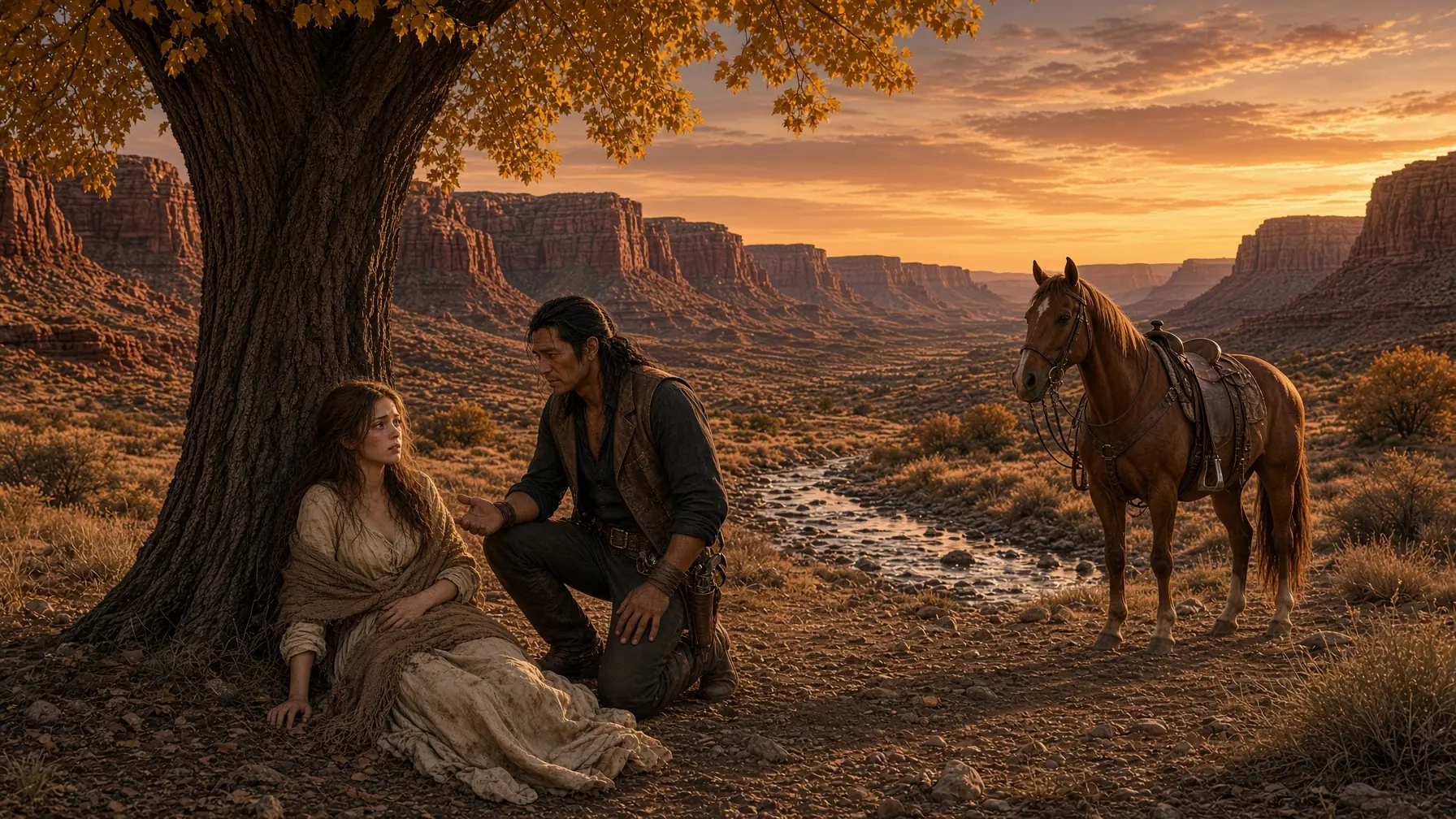
Somewhere behind her, beyond the hills and scattered wooden buildings of Red Hollow, stood the house she had spent most of her life trying to survive. Clara was only 19, but exhaustion had made her feel much older. For years, she had worked from sunrise until long after sunset. She cooked meals, carried water, washed clothes, cleaned rooms, fed animals, and cared for everyone around her. Yet nobody in that house ever called her hardworking.
They called her useless. They called her a burden. And whenever something went wrong, Clara was the easiest person to blame. That evening, a valuable dish had slipped from her trembling hands and shattered across the kitchen floor. Clara had immediately dropped to her knees, trying to gather the pieces.
"I'm sorry," she had whispered. But her apology had not mattered. Her stepfather had grabbed her arm and demanded to know why she could never do anything properly. Her stepsister had stood nearby, watching without sympathy. Clara had tried to explain that she had been carrying water all afternoon and had barely eaten.
Nobody listened. The punishment that followed left Clara too weak to defend herself. Later, they had pushed her outside and told her not to come back until she learned gratitude. So Clara had walked. She did not know where she was going.
She only knew she could not return. Now beneath the cottonwood, she tried to move her arms. Nothing happened. She swallowed hard. I can't.
Her voice disappeared into the night. For the first time, Clara wondered if anyone would even notice if she never returned. Then she heard something. A horse. Slow hoof beatats approach from the trail.
Clara's heart began pounding. She tried to crawl away, but her arms shook beneath her. The sound grew closer until a large chestnut horse appeared between the trees. A man sat on its back. He was tall and broad-shouldered, dressed in dark frontier clothing.
His long black hair was tied behind his head, and his face was clean shaven, weathered by years beneath the desert sun. Clara had heard stories about him. Everyone in Red Hollow had his name was Taza. Some called him an Apache rancher. Others called him Dangerous.
Nobody seemed to know exactly where he had come from or how he had acquired the enormous valley he owned several miles outside town. People said he rarely visited Red Hollow. They said he spoke little. They said his eyes could make a grown man reconsider an argument. Clara had never met him.
Now she wished he would simply ride past. Instead, Taza stopped. His horse lowered its head. Taza looked toward the cottonwood and saw Clara lying beneath it. He dismounted.
Clara immediately tried to pull herself backward. "Please," she whispered. Taza stopped. He did not approach her. He simply stood several feet away.
"You are hurt," he said quietly. Clara looked down at herself. I'm fine. It was the answer she had learned to give whenever someone asked. Taza studied her for a moment.
No. The simple word made Clara's eyes fill with tears. Nobody had said it that way before. Not angrily, not accusingly, just honestly. Taza slowly removed his coat.
He placed it on the ground between them. You are cold. Clara stared at the coat. She wanted to reach for it, but even that felt impossible. I can't stand.