In the early hours of January 29, 2024, what began as a welfare check in Largo, Florida, carried an urgency that officers could not fully understand at first. Thirty-two-year-old Suela Salage lived at the apartment with her eight-year-old daughter, Allesia Muhaj, and family members were suddenly afraid that something had gone terribly wrong. The concern did not begin with Suela herself, but with the behavior of her former boyfriend and Allesia's father, thirty-four-year-old Ronaldo Muhaj. By the time Largo officers approached Suela's door, Ronaldo had already been involved in a frightening confrontation at his parents' home in nearby Clearwater.
Ronaldo's parents told dispatchers that he had become aggressive with them, taken their phone so they could not easily call for help, and then left in his yellow Kia. They sounded frightened and said they had hidden from him because they believed he was chasing them and might hurt them. More than anything, they feared where he might go next, because Suela and their granddaughter were still at the apartment. Their request was simple: send police to check on them before Ronaldo got there, or before something even worse happened.
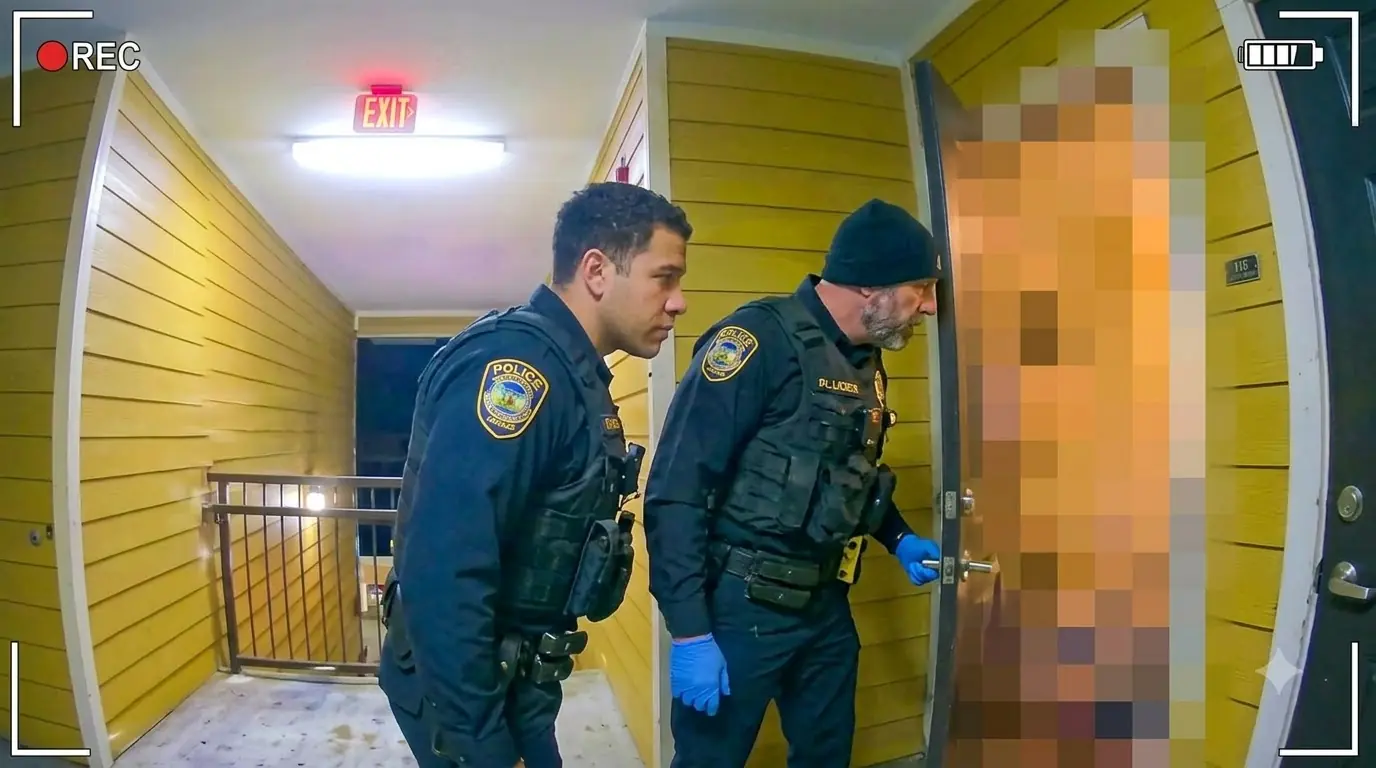
When officers reached the apartment complex, no one answered Suela's door. The silence immediately felt wrong, and what they saw around the entrance only increased their concern. There appeared to be blood on the floor and near the door, and a bloodied knife was found on the stairs outside. Officers prepared to enter while repeatedly announcing themselves as Largo police, listening for any voice or movement from inside.
The apartment was quiet. Officers moved carefully through the living area and toward the bedroom, calling out again and again for anyone inside to answer. There were more signs that something violent had happened, including blood inside the residence and on the bed. When they finally reached the bedroom, they found Suela on the floor, unresponsive, with injuries so severe that officers quickly understood they were no longer conducting a welfare check.
The apartment was cleared room by room, but no one else was there. That raised a second urgent question because Allesia, Suela's eight-year-old daughter, should have been inside. Ronaldo was missing, and so was the child. In a matter of minutes, officers went from checking on a worried family to confronting a homicide scene and a missing child whose father had already frightened his own parents earlier that morning.
An Amber Alert was initiated as multiple law-enforcement agencies joined the search. Officers gathered Ronaldo's driver's-license information, vehicle description, and any data that might help locate him quickly. Investigators also began working with his parents, who were being treated for the confrontation at their Clearwater residence while officers tried not to tell them more than necessary before the situation was confirmed. Every minute mattered because police did not yet know whether Allesia was safe, injured, or in immediate danger.
A location tied to Ronaldo's cell phone gave investigators their first meaningful break. The information narrowed the search area, and within hours officers spotted the yellow Kia. They approached with extreme caution because of what had already been discovered at Suela's apartment and because Ronaldo's parents had described him as unstable and dangerous. Officers surrounded the vehicle and began giving loud, repeated commands for the occupants to show their hands.
The first priority was Allesia. Officers ordered the window down, directed Ronaldo to keep his hands visible, and coordinated so that someone could safely reach the child. Allesia was removed from the vehicle while officers reassured her that she was safe. Ronaldo was then ordered out, placed on the ground, and taken into custody without a prolonged struggle.
The manhunt had ended, but the most important part of the case had only begun. Allesia was alive, and officers now knew that she had been present during at least part of what had happened at her mother's apartment. Her account would eventually help detectives understand the morning in a way Ronaldo's own words never would. For the moment, however, investigators still needed to determine what had happened before Suela died, why Ronaldo had gone to the apartment, and whether his behavior reflected a genuine break from reality or something far more deliberate.
For officers at the apartment, the discovery of Allesia alive changed one urgent problem but did not simplify the homicide scene. They still had to preserve the residence, document the blood found around the doorway and bedroom, recover the knife from outside, and establish which evidence belonged to the attack and which might have been transferred afterward. The scene itself had already contradicted any hope that Suela might simply be injured or hiding somewhere in the apartment. By the time Ronaldo was transported for questioning, investigators had a victim, a child witness, a weapon recovered near the residence, and a suspect who had been found away from the scene with visible blood on him.
The morning also had a second crime scene in Clearwater. Ronaldo's parents had described an altercation inside their home shortly before he fled, and their statements mattered because they gave police a picture of his behavior before the welfare check was requested. They did not call because they had already been told Suela was dead. They called because Ronaldo had frightened them badly enough that they feared for Suela and Allesia before police ever reached the apartment. That distinction became important when detectives later tried to understand whether the morning had been an isolated explosion of anger or part of a broader and increasingly disturbed pattern of behavior.
His parents' account also helped officers reconstruct Ronaldo's movements. They said he had left only minutes before speaking with police and that he was driving a yellow Kia registered to him. The information allowed agencies to move quickly from a vague welfare concern to an active search for a specific vehicle. Once officers realized Allesia was missing from Suela's apartment, the urgency of locating that Kia increased dramatically.
The child was treated first as someone who needed protection, not simply as a source of evidence. Officers reassured her during the vehicle stop and separated her from Ronaldo as soon as it was safe to do so. Only afterward would investigators begin learning what she remembered from inside the apartment and from the drive away. Her account carried unusual weight because, unlike every adult investigator who arrived later, Allesia had been there before police knew anything was wrong.
Detectives sat down with Ronaldo after advising him of his constitutional rights. They began gently, explaining that they wanted to understand what had happened and giving him an opportunity to tell his own story. Officers had already spoken with people who knew him, including relatives and friends, and they knew there had been stress surrounding his work and efforts connected to a roofing contractor certification. They also knew there had been an altercation with his father earlier that morning and that something had happened at Suela's apartment.
Ronaldo did not begin with an explanation. Instead, he responded as though he did not understand why he was sitting in an interrogation room in handcuffs. When detectives referenced the roofing issue, he acknowledged that he had been disappointed, but he resisted the idea that it explained what had happened. He turned questions back on the detectives and asked them to tell him why he was there.