The wind that moved through the borderlands of the Arizona and New Mexico territories did not blow. It scoured. It was a living breathing thing composed of grit, heat, and the scent of ozone from distant thunderheads that piled high against the southern horizon, but rarely broke their promises of rain. The earth here was cracked and sunburnt, a vast patchwork of ochre and burnt umber that stretched endlessly toward the jagged spine of blue mountains in the distance. Dust devils danced maniacally on the open plains, spinning towers of brown earth that rose and fell like the breath of a dying giant.
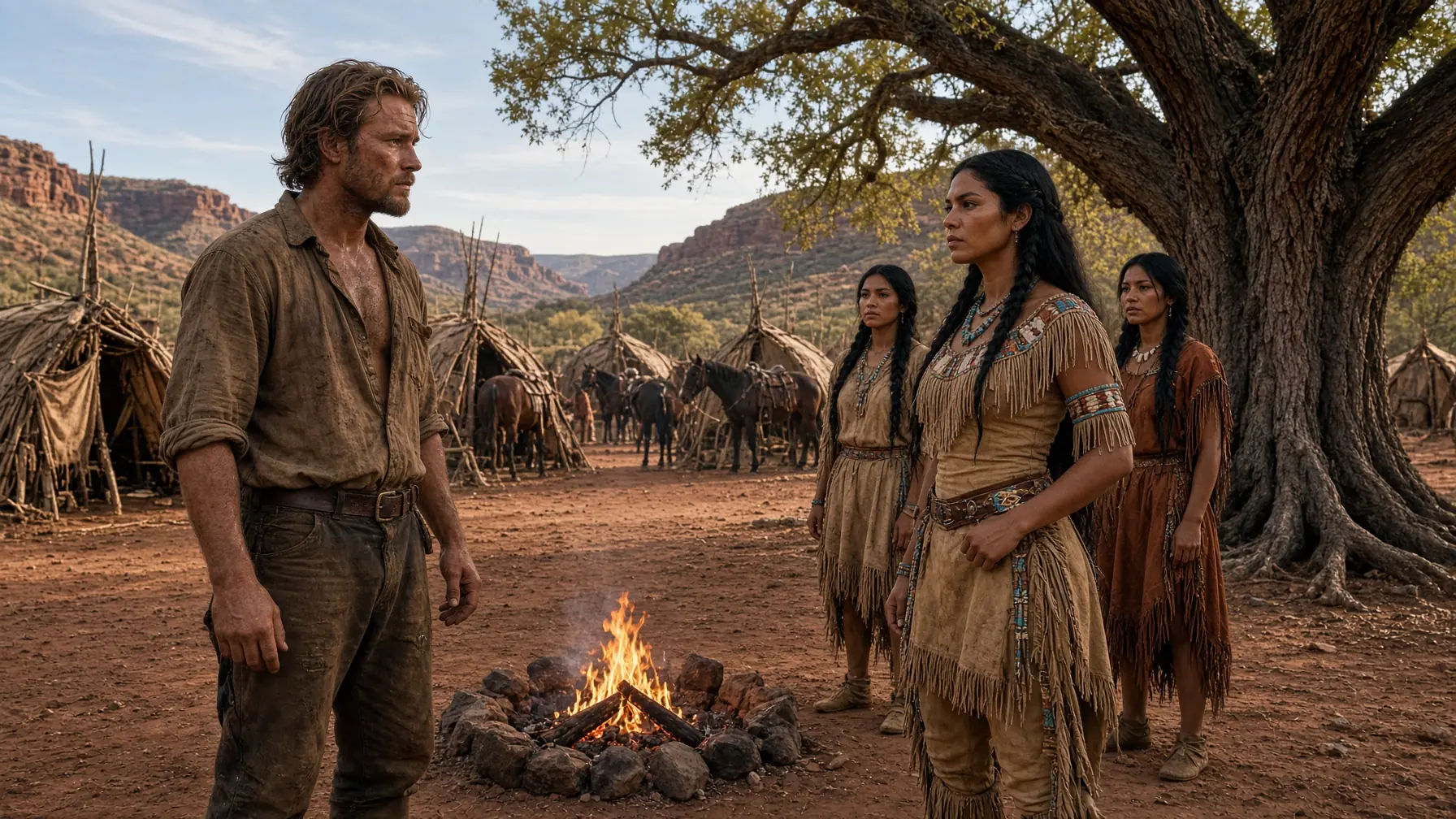
Luke Carver sat astride his bay gelding, his hat pulled low against the glare. He was a man etched by the country he lived in, his face a map of lines deepened by 32 years of squinting into the sun. He rode the fence line of his property, a struggling spread that seemed to shrink a little more with every season of drought. The cottonwoods along the thin, miserable creek were shedding leaves early, their branches rattling like dry bones. He pulled the gelding up at the third water hole.
It was little more than a muddy depression. The water evaporated down to a scummy sludge that smelled of alkali and rot. Luke stared at it, his gloved hands resting on the pommel of his saddle. Around him, the cattle were thinning. He counted 19 head in this pasture, ribs showing through their dusty hides like the staves of a barrel.
There should have been 40. He turned the horse toward the homestead, the animal stepping carefully over the rocky ground. Luke's home was a small cabin of rough-hewn logs with a porch that sagged on the left side, as if tired of holding itself up against the relentless western gravity. There was no smoke from the chimney. There was no one waiting to boil coffee or ask him how the fence line looked.
Luke dismounted and tied the horse to the rail. He did not go inside immediately. Instead, he walked up the gentle rise behind the cabin, his boots crunching on the dry grass. Two wooden crosses stood there, weathered gray by three winters. The names were carved deep, though the wind was doing its best to smooth them away.
William Carver, Sarah Miller. Luke took off his hat, twisting the brim in his hands. The silence here was different than out on the range. It was heavier. I checked the south ridge today.
Will, Luke said, his voice a low rasp that barely carried past his own boots. The wire is down again. I think it is rustlers, or maybe just the coyotes dragging carcasses through. I will fix it tomorrow. He shifted his weight, looking at the second cross.
Sarah, he said, softer this time. The irises you planted are gone. The sun took them. I tried to haul water, but the creek is so low I can barely keep the stock alive. I am sorry.
He stood there for a long time, the guilt sitting in his gut like a swallowed stone. It was a familiar weight. He told them what he always told them in the quiet moments, that he was sorry he had ever taken that contract with the army. He told them that if he had been here instead of scouting for General Crook, maybe he could have stopped the skirmish that killed them. He told them he knew the faces of the men who did it, because he had helped the army hunt their families first.
It was a jagged, ugly truth. Luke had been a scout, a tracker who sold his knowledge of the land to the men in blue coats. He had justified it as a job, a way to build a stake for this ranch, for the life he wanted to give Sarah, but the cost had been paid in blood, Apache blood. And then, in retaliation, the blood of his own kin. He put his hat back on and walked down the hill, the shame walking in step with him.