The encounter began as the kind of traffic stop that could have ended with a warning and a conversation. Officers with the Crystal Lake Police Department had received more than one complaint about a vehicle that appeared to be swerving, and when they made contact with the driver, an 18-year-old woman named Ellie, they initially approached her with questions rather than accusations. One officer explained that they had been told she might have been drifting on the road and asked whether she had been distracted by her phone. Ellie denied that explanation and instead offered a simpler one: “I’m just a bad driver. I failed driver’s ed twice.”
The officers asked Ellie to step away from the vehicle so they could speak with her more safely. She appeared nervous and apologized repeatedly, telling them she had only been pulled over once before and was stressed by the situation. When asked her age, Ellie said she was 18, and when an officer asked what time she thought it was, she guessed around 6:30 even though the actual time was closer to 7:15. That difference did not prove anything by itself, but it became one of several observations officers considered as they tried to determine whether she was safe to drive.
Ellie tried to make her behavior sound ordinary rather than suspicious. When officers asked where she had been, the conversation referenced Target, and Ellie said there would be cameras that could support her claim that she had not been drinking there. She repeatedly said she was okay and asked the officers to trust her, while also admitting she spent a lot of time adjusting or listening to music while driving. The officers did not accuse her of intoxication at that point; they kept returning to the same concern, that two independent people had apparently noticed enough unusual driving to call police.
When the questions became more specific, Ellie answered them one by one. She said there was no alcohol in the car, no marijuana, no fentanyl or pills, and no prescription medication that did not belong to her. When she struggled to remember the word “supplements,” an officer helped her finish the thought and clarified that ordinary over-the-counter vitamins were not what they were asking about. That exchange made her later denial of the vodka bottle especially important to the officers, because they believed they had given her several opportunities to disclose anything that might be inside the vehicle.
The questioning then turned to alcohol, drugs, and medications. Ellie denied drinking that day and told officers she had been sober from alcohol for six and a half months. She acknowledged using marijuana, but said the last time had been a day or two earlier and insisted it could not be affecting her driving now. She also denied having alcohol, cannabis, illegal drugs, or prescription medication that did not belong to her inside the vehicle, mentioning only ordinary supplements when officers asked whether she had taken anything else.
Then one officer told her there was a problem. When Ellie had opened the driver’s door, the officer said she had seen what appeared to be a bottle of vodka in the door compartment. Ellie immediately denied having any vodka there and said the officer must have been mistaken. She offered to let the officer open the door and look, apparently confident that nothing would be found.
The tone changed almost instantly. The officer told Ellie that the situation was now more serious because what she had just said did not match what the officer believed she had already seen. Ellie continued to insist that the bottle had not been there, while the officer reminded her that the encounter was being recorded. The officer then told Ellie she was going to remain with the other officers while they searched the vehicle.
Ellie objected immediately. “You don’t have a warrant to do that,” she said, repeatedly insisting that officers had no right to search her car without one. The officer responded that she believed probable cause existed based on what had been observed in plain view and explained that vehicle searches can fall under legal exceptions that do not always require a warrant. Ellie was not persuaded and continued repeating that she knew her rights and would not consent.
As the argument continued, another observation complicated the encounter. Officers indicated that there appeared to be marijuana and a pipe or smoking bowl visible inside the center console area. Ellie still insisted that the officers could not search the vehicle and said she had looked up the law before. The officers kept telling her that they were not asking for permission at that point and warned that she needed to step away from the car and cooperate.
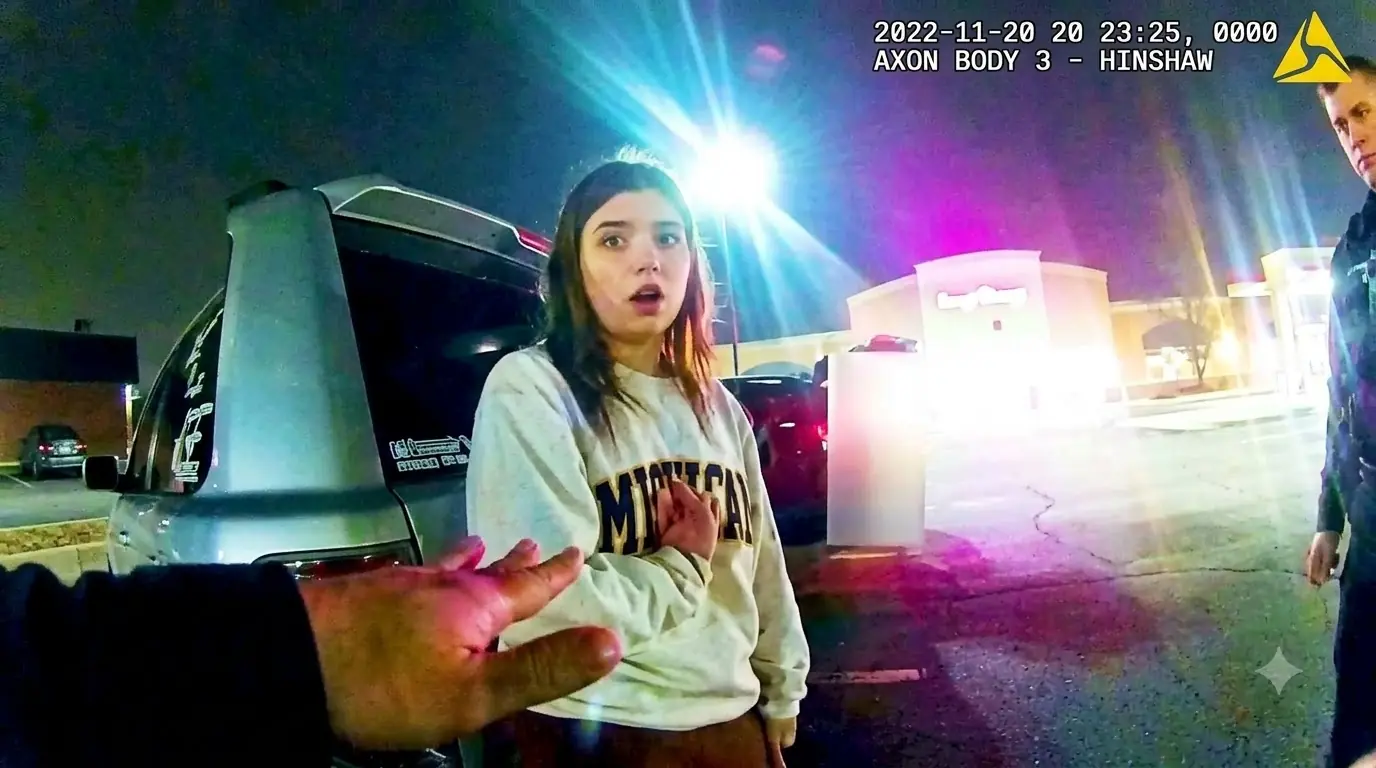
Ellie’s objection to the search was not a single protest. She repeated, in different forms, that she knew officers could not search a car without a warrant and said she had researched the issue because she had been pulled over before. The officer responded that what was visible from outside the vehicle mattered and referred to both probable cause and the automobile or mobile-conveyance exception. Ellie countered that seeing a bowl or marijuana did not give them the right to search everything, while the officer kept telling her the legal argument would not be decided by continuing to stand beside the car.
The exchange became circular. “I have a right to not let you search my car,” Ellie insisted, while the officer replied that, under the circumstances, she did not have the ability to stop the search simply by withholding consent. The officer repeatedly tried to separate two issues: whether Ellie agreed with the search and whether she would physically comply with instructions to step away from the vehicle. Ellie continued treating them as the same issue, which is why the officer eventually stopped debating the law and gave her the choice between standing with the other officers or being handcuffed.
One officer tried to give Ellie two clear choices. She could stand near the patrol car with the other officers while the vehicle was searched, or she could be placed in handcuffs if she refused to follow their directions. Ellie did not accept either option and continued arguing that the search was illegal. The officer repeatedly told her they were not going to debate the issue on the roadside and directed her to turn around.
Only then did Ellie begin pleading not to be handcuffed. She said she would walk to the patrol car and cooperate if they would just leave the cuffs off. By that point, however, officers believed the situation had escalated too far to continue informally. Ellie was placed under arrest while the officers worked through exactly which charges would apply, including the possibility of illegal possession or consumption of alcohol by a minor.
The moment the handcuffs went on, Ellie’s emotional state changed dramatically. She began shouting that she could not be in handcuffs and repeatedly demanded that they be removed. Officers tried to calm her, telling her to take deep breaths and stop pulling against the restraints. Ellie said she had a scar and insisted that being cuffed was causing her distress, but officers told her they could not remove the restraints while she was actively fighting and refusing to calm down.
One officer explained that department policy required Ellie to remain secured during transport. She promised that if Ellie would sit in the patrol car and stop resisting, they could get to the police station quickly and deal with the handcuffs there. Ellie alternated between agreeing to sit in the car and immediately demanding that the cuffs be removed first. At one point she even said that if officers took the cuffs off, she would remain seated, but if they did not, she might run.
That statement only increased the officers’ concern about leaving her unsecured. A supervisor was called, and Ellie was warned that if she continued fighting, officers might have to use a restraint device designed to prevent someone from injuring themselves or others during transport. The officers repeatedly told her they did not want to do that. Their goal, they said, was simply to get her safely into the car and then to the station.
As officers tried to place Ellie in the patrol car, they continued negotiating with her rather than immediately moving her. She promised she would sit quietly if the cuffs were removed and asked them to let another officer buckle her seat belt. One officer explained that the very fact Ellie had been fighting, threatening to run, and refusing instructions was why they could no longer safely leave her unrestrained. They repeatedly told her that the fastest way to get the cuffs removed was to stop struggling, ride the few minutes to the station, and let the booking process begin.
The officers also tried to address practical concerns she raised. Ellie asked them not to call her parents and instead wanted her sister contacted, and an officer agreed. She asked for her phone because she did not know the number from memory, and officers said they would retrieve it. These moments briefly reduced the tension, but almost every time the conversation seemed to settle, Ellie returned to the handcuffs and began pleading or shouting again, forcing officers to stop the transport process and calm her down.
While Ellie remained detained, officers discussed what had brought them to that point. They referenced the driving complaints, her behavior when they contacted her, the alcohol they believed they had seen, and the smoking paraphernalia inside the vehicle. Ellie then offered another explanation, asking what would happen if she had not been drinking while driving but had consumed alcohol only after arriving at the location. She argued that a breath test would then show recent alcohol consumption even though she had not driven under the influence.
A supervisor was updated on the sequence of events. The officers described the original driving complaint, their contact with Ellie after she stopped, the alcohol and smoking bowl they said were visible, and the increasingly combative behavior that followed the attempted search. Ellie could hear at least part of that discussion and continued trying to reinterpret the situation. She asked whether it would matter if she had consumed alcohol only after parking, emphasizing again that she wanted a breath test and believed the timing could show she had not been impaired while actually driving.
The officer told her that was an argument she could raise later in court, but it did not change the immediate arrest decision. Ellie said she would claim she had planned to have someone else pick her up and asked whether the officers could call her sister instead of her parents. The officer agreed to contact her sister and also offered to retrieve Ellie’s phone from the vehicle so she would have the number if needed. For a short period, the conversation became calmer again.
The calm did not last. Ellie became focused on a vape that officers had taken from the immediate area and repeatedly argued that they could not keep it because her parents had bought it for her. She emphasized that it had cost her $27 and demanded that it either be returned or left inside her car. The officer told her the vape could be placed back in the vehicle, but Ellie asked if she could use it first because she was stressed.
The officer refused. Ellie then argued that if she could not use the vape, officers should not touch it at all. She continued talking about how much it had cost, how little money she had, and how her parents had purchased it. Officers tried to move past the issue and again told her to calm down so they could complete the arrest process.
The argument over the vape became another example of how difficult it was to move the encounter forward. Ellie said her parents had paid for it, reminded officers that it cost $27, and demanded money back if they were going to take it. When an officer agreed to place it back inside her vehicle instead of keeping it with her in the patrol car, Ellie immediately asked to use it first. She said she needed nicotine because she was stressed, and when that request was denied, she again accused officers of taking something they had no right to take.
The officers kept telling her the vape itself was not the central issue and that they were simply trying to secure loose property before transport. Ellie continued bargaining over it even as they were trying to seat her. The fixation seemed minor compared with the arrest, but it became important because it prolonged the roadside interaction and preceded the moment when an officer noticed her reaching toward her clothing, prompting the decision to conduct a more complete search.
During that exchange, an officer noticed Ellie reaching toward or adjusting something near her clothing and told her not to reach. The officers then indicated they had discovered another issue that they believed could support a retail theft allegation. Because of the new concern and Ellie’s continued movement, they decided a more thorough search was necessary before transport. That decision triggered another confrontation.
Ellie repeatedly shouted that she did not consent to being touched. She told the officers that wearing a badge did not give them permission to search her body and became especially upset at the possibility of male officers assisting. The officers told her she was under arrest and that they were going to conduct the search regardless of her consent, while also trying to keep her from moving her hands toward areas they had not yet checked.
The situation became physical as Ellie resisted. Officers told her over and over to stop fighting while they tried to control her arms and legs. Ellie shouted insults, accused them of hurting and abusing her, and threatened to take them to court. She complained that the handcuffs were digging into her wrists, while officers responded that her pulling and twisting was making the restraints hurt more and that they were trying to check the cuffs safely.
One officer warned Ellie not to dig her fingernails into the officer’s skin. Ellie responded angrily, saying that the officers were hurting her first. The struggle continued long enough that the officers decided they could no longer rely on ordinary handcuffs and verbal instructions alone. They moved to secure Ellie in the additional restraint device that had been discussed earlier.
As officers lifted and repositioned her, Ellie repeatedly cried that her wrists and stomach hurt. She insisted she had told them from the beginning that she could not tolerate being handcuffed and demanded to be taken to the regular police station and allowed to call her sister. Even during transport preparations, her attention shifted back and forth between the restraints, the vape, whether her boyfriend would be angry, and how much it might cost for someone to bail her out.
Once the officers began the more thorough search, Ellie’s language became openly hostile. She said she did not want male officers touching her, called the officers names, cursed at them, and repeatedly told them she would sue. The officers continued directing her to stop kicking, pulling, and twisting long enough for them to check the handcuffs and finish securing her. At one point an officer tried to explain that the pressure Ellie felt on her wrists was getting worse because she kept pulling against the restraints, but Ellie interpreted every attempt to reposition her as additional force being used against her.
The struggle affected the officers as well. They had to coordinate who was controlling her legs, who was checking the cuffs, and who would help lift her after the additional restraint was applied. Ellie repeatedly said her stomach and wrists hurt, while officers continued asking what specifically was injured and told her they were trying to make adjustments. The footage, as reflected in the transcript, records a chaotic sequence of commands, complaints, and attempts to calm her rather than a single clean moment when the resistance began or ended.
Eventually, officers got Ellie into the patrol vehicle. She continued asking who had her vape and said her boyfriend might break up with her. She repeatedly asked whether her sister could bail her out for $100 and became frustrated when officers did not immediately answer every question. At several points, she complained that she was stuck or hurting and asked to be let out.
An officer reminded her that they were almost at the station and told her not to hit her head while moving around in the back seat. Ellie said she wanted them to get there as quickly as possible so the restraints could come off. She continued asking about bond and demanding answers, while officers told her they would explain the process once they arrived and she had calmed down.
At the station, Ellie remained highly agitated. Officers worked to remove her from the patrol vehicle and move her into the booking area while keeping control of the restraints. Ellie complained that she could not breathe, said she was thirsty, and repeatedly demanded that equipment near her face be removed. Officers told her that the booking process would move forward once she demonstrated that she could calm down and follow instructions.
Ellie insisted she needed to go home immediately. The officers told her that was not an option and that she would remain in custody until the process was completed. One officer explained that when Ellie settled down, they would allow her to use the phone and move through the next steps. The encounter that had begun with a roadside conversation about swerving had now become an arrest involving multiple officers, additional restraint, and several possible charges.
Later, according to the source, Ellie provided a breath sample that indicated a blood alcohol concentration of .091. The result placed her above the .08 threshold referenced in the charging information. The source states that she was charged with driving under the influence, DUI with a blood alcohol concentration of .08 or more, aggravated battery to a peace officer, resisting or obstructing, illegal transportation or possession of alcohol, retail theft, and illegal possession of liquor by a person under 21.
Those charges represented the prosecution’s allegations, not a final determination of guilt. The source specifically notes that Ellie is presumed innocent unless and until proven guilty in a court of law. What the body-camera footage captures is the progression of the encounter itself: an 18-year-old driver initially telling police she was simply a poor driver, officers becoming suspicious after observations at the vehicle, a dispute over the search, and an arrest that escalated as Ellie resisted the restraints and officers attempted to transport her safely.
The most striking part of the incident is how quickly the tone changed. At the beginning, Ellie was apologetic, conversational, and eager to explain the reports of swerving as ordinary clumsiness. Minutes later, once officers confronted her with something they said they had seen inside the car, the conversation became a legal argument about search authority, then an arrest, then a prolonged physical struggle. Every new decision seemed to create another issue that had to be addressed before officers could move on.
The body-camera recording also shows how Ellie’s explanations shifted over time. She first denied drinking that day and said she had been sober from alcohol for months. Later, after officers said they had seen alcohol in the vehicle, she suggested the possibility that she had consumed it only after arriving and had not driven under the influence. Whether that explanation could affect the case would be a matter for the legal process, but on the roadside it did not persuade officers to reverse the arrest.
By the time Ellie reached the station, the original complaint about swerving had become only the first piece of a much larger case. Officers had documented what they believed they observed in the car, Ellie’s statements, her resistance during the arrest, the items found during the encounter, and eventually the breath-test result. The source ends not with a conviction, but with a list of charges and the reminder that the allegations still had to be resolved in court.