There were 37 cents sewn into the hem of her dress, a sleeping child on her hip, and a long day's road behind her. And none of that is what nearly turned her back at the gate. It was the sign. Nailed crooked to the post, the paint gone gray and peeling, th
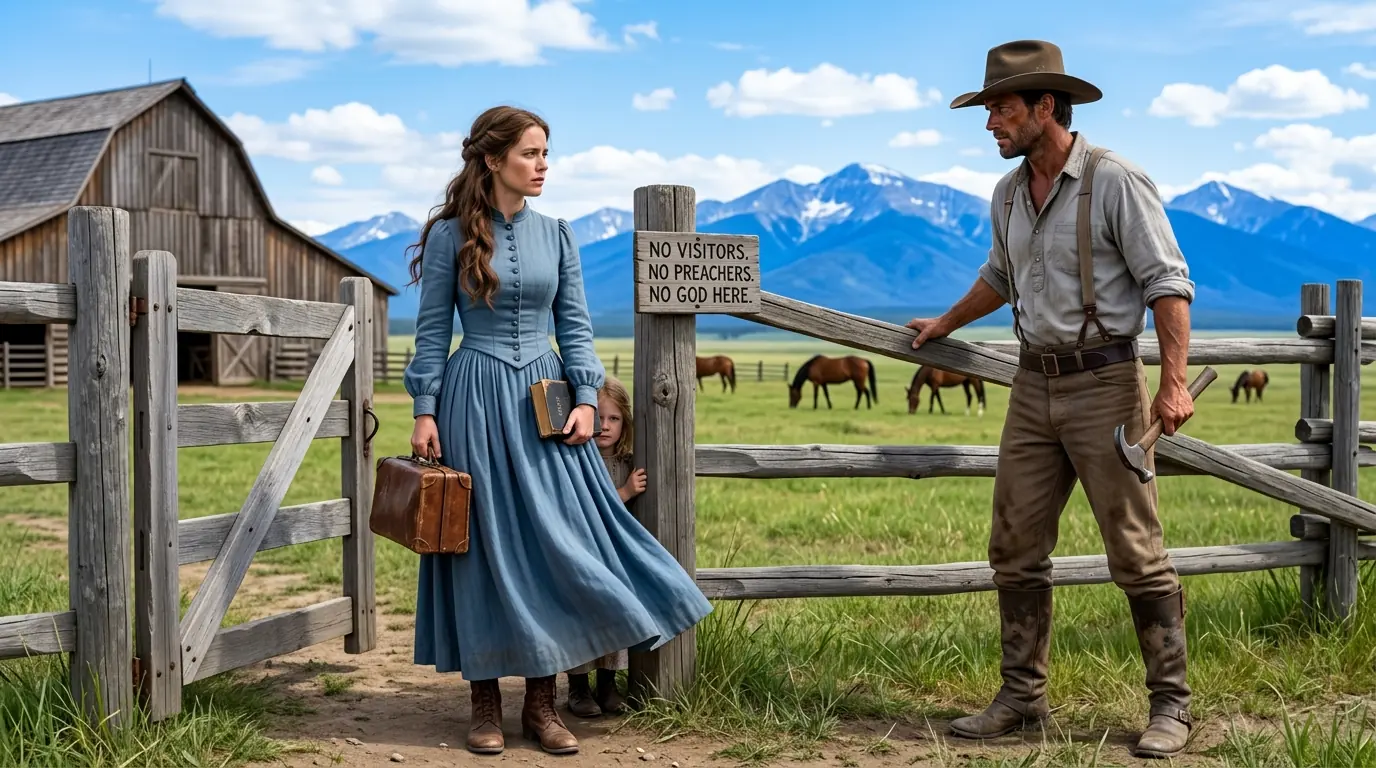
e words cut deep by a hand that carved them in anger. No visitors.
No preachers. No God here. Ruth Callaway stood there and read those three lines twice, and a cold went through her that had nothing to do with the October wind. Because of all the doors on the whole Kansas frontier where she might have knocked that failing afternoon, she had been brought to the one house on earth that had posted, in letters a foot tall, that it did not want the very God she was carrying in against her chest. She did not know the man who lived behind that sign.
She knew only what the town said of him in a lowered voice, that he needed hands and could keep none. And that grief had turned him hard as a hinge left out in the weather. She did not know why a man would take a chisel to a fence post and cut those particular words. She did not know what he had lost or how, or that the worn Bible she held to her heart was the one thing on earth he could no longer bear to look at. She knew only that her little girl had not had a real meal in two days, that the light was going, and that she had walked a long way and had nowhere left to walk to.
So, she drew a breath and pushed the gate open. Because what that man said when a widow asked him for a place to stay was not what she expected, and not what he had planned. And what grew out of it is one of the truest testimonies I know of a God who keeps working long after we have stopped believing he is there. The dog rose out of the dust of the yard and stood watching her come. It did not bark.
It growled once, low, and then it simply sat, ears forward, the way an old dog sits when it has been waiting a long while for something and cannot say what. Behind it the place told its own quiet story. A barn bigger than the house, a garden gone to seed on the east side, tended once and then let go. A single chair on the porch, two horses in the near pasture and one more, a gray, standing off by itself in a far paddock as though it had been set apart on purpose and forgotten there. Ruth took it all in the way a woman takes in a room she may have to survive in.