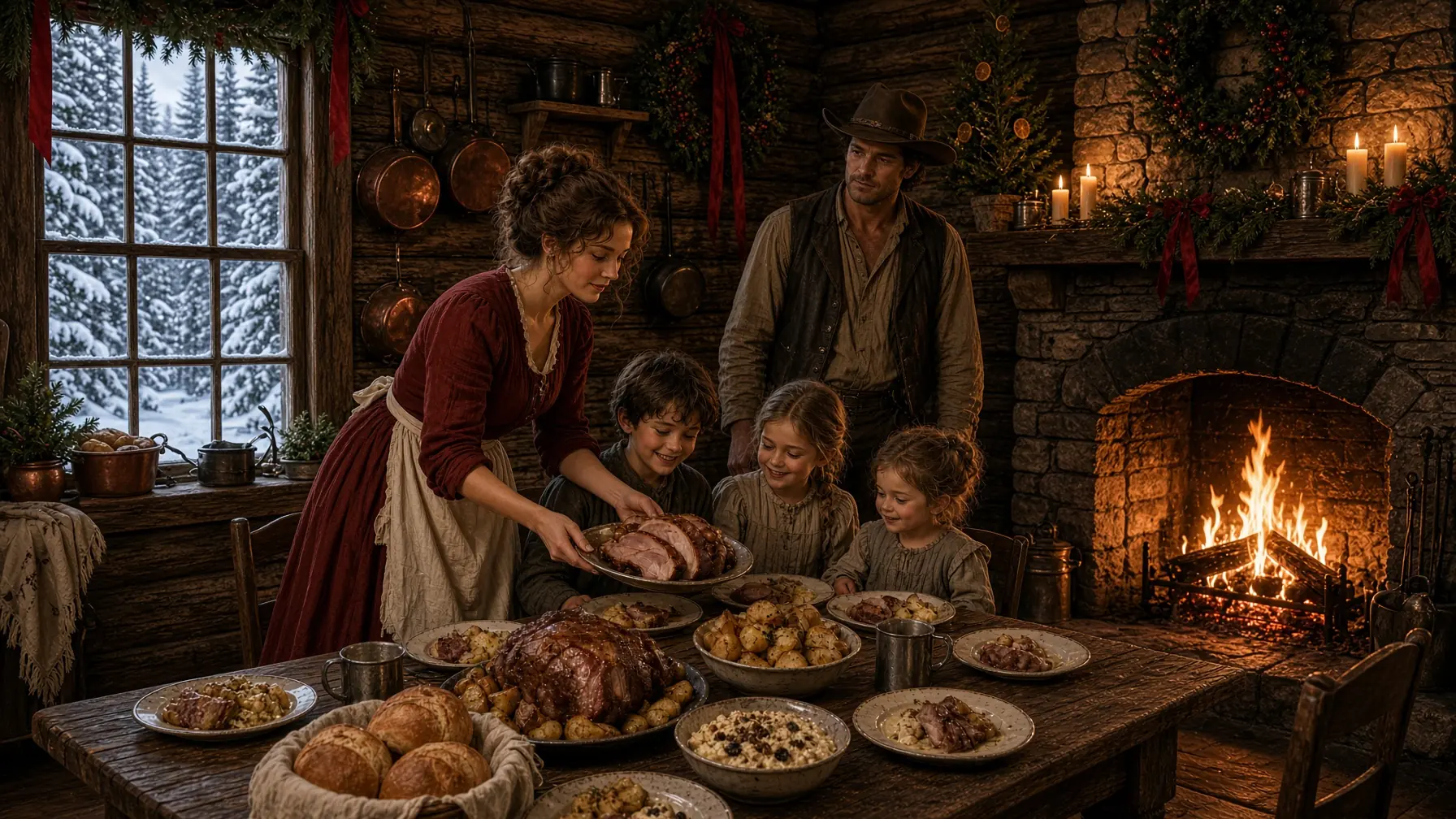
The plate was empty, and it should not have been. Caleb Hart stood in the doorway of his own kitchen on Christmas night with a lantern in his hand and looked at the long table where his three children sat with color back in their faces for the first time in a hard month, and he counted the plates the way a man counts a thing he cannot quite believe. Four had been set. Three held the ruins of a real supper, gravy wiped up with the last of the bread, the good clean emptiness of children who have eaten their fill. And the fourth plate, her plate, the one at the foot of the table where the new woman sat, was empty, too.
But it was the wrong kind of empty. It had not been eaten from. It had been given away. He had seen it happen and not understood it in the moment. He had watched all through that supper as she moved food from her own plate to theirs, a little at a time, so quietly and so cleverly that a hungry child would think the extra had simply appeared, the way a mother makes a scarce thing seem plentiful by the slate of her own going without.
He had thought, at the time, that she was only seeing to the little ones the way any decent woman would. He had not understood, until he stood in the doorway with the lantern and did the plain arithmetic of it, that she had given them all of it. Every bite. That she had sat at his table on Christmas and served the finest meal that house had seen in a year and had eaten none of it herself. And she had done it so that no one would notice.
That was the part that stopped his breath. Not that she had gone hungry. That she had gone hungry on purpose and hidden it so that three children she had known for all of three weeks could have a Christmas. To understand how the woman came to be at that table, a person has to go back to the autumn, and to understand the autumn, a person has to understand what the fever had taken. The fever had taken Sarah Heart in the second week of a wet November, and it had taken her fast, the way those things came through that country, and it had left Caleb Heart with a middling ranch, a note at the bank, and three children who did not yet fully understand that their mother was not coming back in from the next room.
There was Samuel, who was nine, and who had gone very quiet and very old in the weeks since, taking on chores too big for him without being asked. Because a boy of nine who has lost his mother will often try to become a man overnight, thinking that is what is wanted of him. There was Grace, who was six, and who asked every few days, in a small, hopeful voice, whether Mama might be back by such and such a day, some birthday or some holiday, as though death were a long trip a person took and returned from if you only waited politely enough. And there was little Ruth, who was three, and who did not ask anything at all, and who had taken to sleeping badly, and who no longer sang the small tuneless song she had sung all day long before the fever came. And it was Ruth's silence more than anything that Caleb could not bear, because a house is truly emptied when the youngest stops singing.