On May 22, 2019, police in Sturgis, Michigan, received an anonymous 911 call that gave them a specific address and a disturbing claim. The caller said that inside the apartment they would find 42-year-old Kelly Jean Warner Miller, known to many people as KJ. KJ had been missing since April, but her disappearance had not immediately triggered the kind of frantic response that often accompanies a missing-person case. She lived a transient life, had been estranged from parts of her family, and struggled with untreated mental-health issues, so periods in which relatives did not hear from her were not entirely unusual.
That history made the call difficult to evaluate. There had been no public search, no obvious emergency at the address, and nothing about the ordinary-looking apartment suggested what officers might be walking into. Still, the caller had provided enough information that police could not simply ignore it. Close to midnight, several officers went to the address and knocked on the door.
A 35-year-old man named Wade Allen eventually answered. One officer recognized him from previous casual contact and greeted him by name. Wade appeared surprised to see police and initially seemed confused when they asked about a woman named Kelly. When they clarified that they meant KJ, a woman he knew from a shelter in Kalamazoo, he acknowledged knowing her but said he had not heard from her in months.
“I haven’t heard from that person in some months,” Wade told them. “The last time I saw her was a couple months ago. The last I heard, she was in Kalamazoo.” He suggested that the shelter would probably be the best place to contact if officers wanted to locate her.
The officers explained that they only needed to verify that KJ was not inside. Wade did not immediately refuse, but he was clearly uncomfortable with the idea of police entering his apartment. He said the place was messy, that he did not like people coming and going through his home, and that he would rather they return another day after he had time to clean.
The officers told him they did not care about the condition of the apartment. They were there because someone had specifically reported that KJ might be inside, and they needed to make sure she was safe. One officer explained that if Wade would not allow them to check, they could attempt to obtain a search warrant, but that would take time and likely mean Wade would be detained while they waited.
“If she’s in there, could you just have her come out and say, ‘I’m fine’?” an officer asked.
“She’s not, though,” Wade replied. “That’s the thing.”
He even offered to call KJ’s name into the apartment from the doorway as proof. Eventually, after more discussion, Wade agreed that one officer whom he already knew could come inside. The officer entered while Wade walked him through the rooms. Wade pointed out a spare sleeping area, explained that he sometimes had guests, and showed the officer around. Nothing immediately obvious suggested that KJ was present.
Then the officer noticed a large cooler in the apartment.
“What’s in the cooler?” he asked.
Wade gave an odd answer. He said it was something he was saving for summer, when he planned to have parties. The officer asked him to open it so they could finish the welfare check and leave. Wade resisted. He said he wanted to save it for later and repeatedly insisted that he had already shown the officer enough to prove KJ was not there.
The officer’s concern grew. Wade had been willing to let him look through much of the apartment, yet he suddenly became protective of one large container. When the officer asked to see inside the refrigerator as well, Wade again questioned why that was necessary. The officer explained that he had no idea what circumstances KJ might be in and needed to check places where a person could conceivably be hidden.
Wade continued arguing that there was no point. The officer finally told him to put on his shoes because he was being detained. Wade seemed surprised and frustrated. He insisted that he had cooperated and shown them around, but police told him that his cooperation had been only partial.
Outside the apartment, Wade was placed in handcuffs. He asked what was happening and was told that officers wanted an opportunity to finish checking the apartment. Wade then offered to go back inside and show them more rather than sit in a patrol car while officers prepared a warrant.
The group returned to the apartment. The officer checked the refrigerator and found nothing connected to KJ. He again asked about the large cooler.
“All I want to do is open it, say, ‘KJ, you in there?’ and then close it right back up,” the officer explained. “You’ll be out of handcuffs and we’ll be gone.”
Wade still resisted. He said that area was private and suggested that police should obtain a warrant if they wanted to search further. The officer told him that his refusal was making him increasingly suspicious because the cooler was large enough to conceal a person, and the original 911 call had specifically sent officers to this apartment looking for a missing woman.
Wade was then asked to wait in a patrol car while a search warrant was considered. He complained that he felt claustrophobic and tried to remain outside the vehicle. Officers explained that he could either sit in the cruiser or be taken to a holding area while the warrant process was completed.
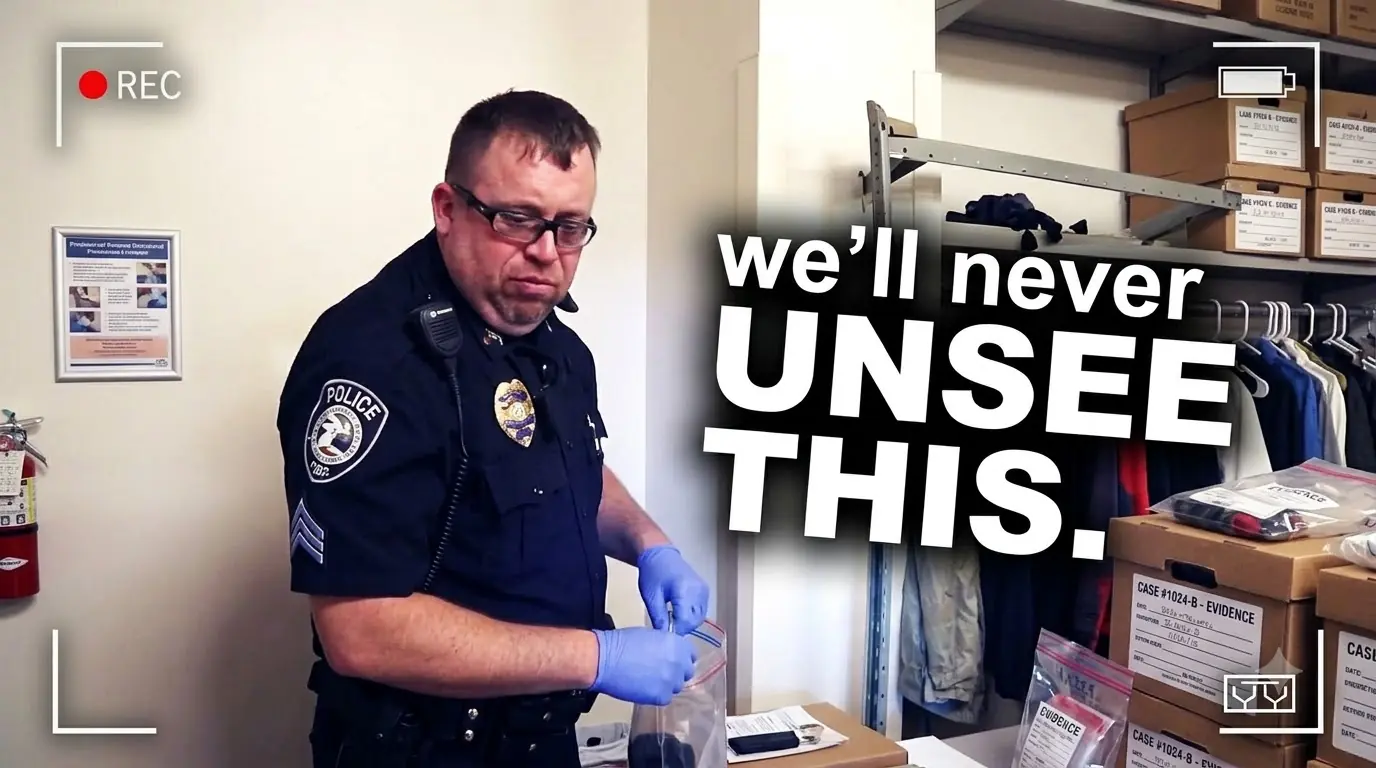
After several minutes, Wade changed his mind again. He offered to take the officer back inside and let him finish. This time, when the officer asked to open the cooler, Wade finally said yes.
“Can I pop it open, just take a peek?” the officer asked.
“Well, yeah, if you want,” Wade answered.