In 1806, a wealthy white slave trader walked into a slave market in Spanish Florida and bought a young African woman. Her name was Antamagene Jai. She had been taken from West Africa and carried across the Atlantic into a world where her freedom could be bought and sold with a piece of paper. But nobody at that market could have known what would happen next.
Because the man who purchased her would eventually do something that seemed almost impossible for a wealthy slave owner of his time. He would set her free. He would make her his wife. And when the laws of America later threatened to take away everything they had built together, he would fight the government itself to protect her.
This is the extraordinary story of Zephaniah Kingsley and Anna Magajin Jai. This story is not simply about a plantation owner and an enslaved woman. It is about a family that crossed oceans, survived changing governments, and discovered that freedom could disappear almost as quickly as it had been gained. In the early 1800s, Florida was a very different place from the Florida Americans know today.
It was not yet a state of the United States. It was Spanish Florida. The Spanish government controlled the territory, and its laws regarding race, slavery, marriage, and free people of color were different from those developing in the United States. That difference would become extremely important because in this strange borderland, people of African descent could sometimes possess rights that were becoming increasingly difficult to obtain in neighboring American states.
Free black people could own property. They could operate businesses. Some could accumulate wealth. And under certain circumstances, enslaved people could eventually purchase or receive their freedom.
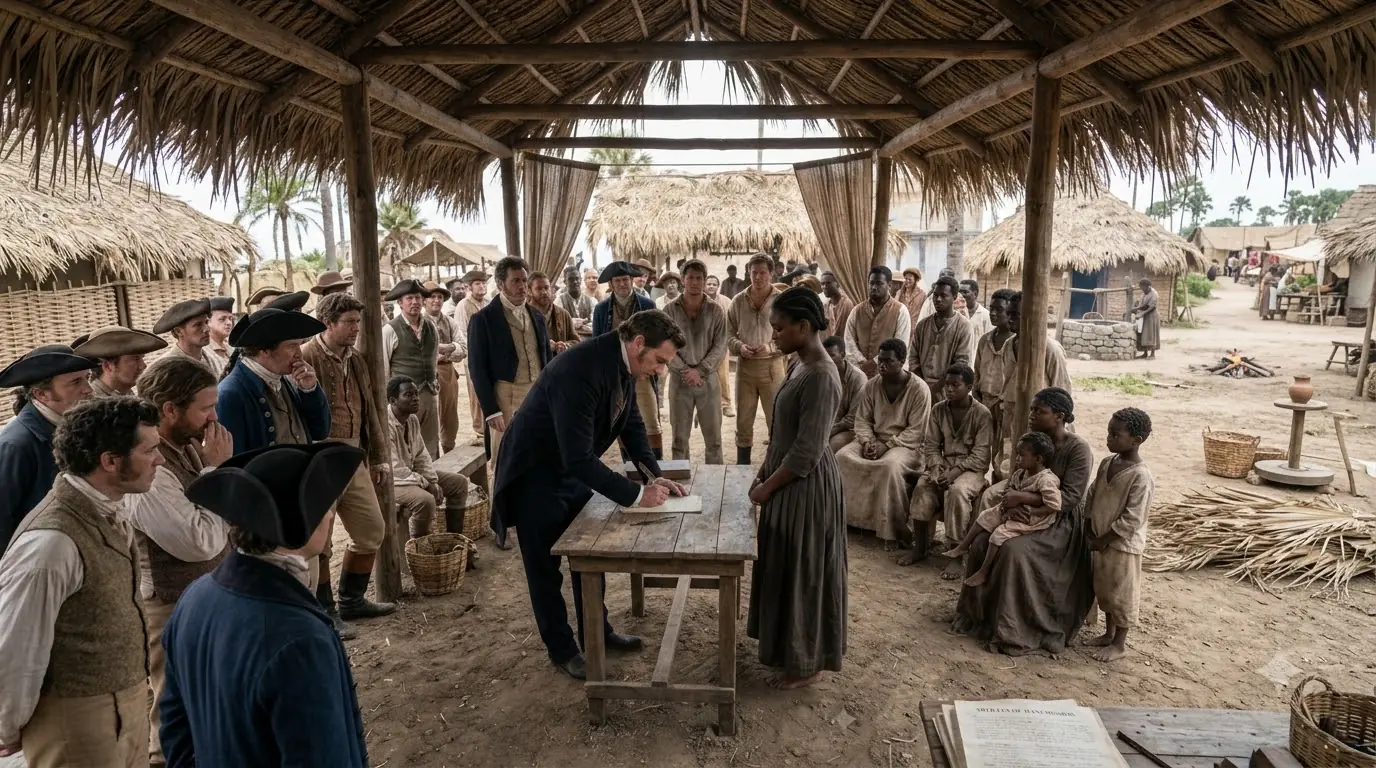
But none of this meant life was easy. Slavery was still very real. Human beings were still bought and sold. And across the Atlantic world, the slave trade continued to tear families apart.
It was into this brutal system that a young African woman named Antamagene Jai was brought. She had been born in West Africa in the region of present-day Senegal. Historical accounts describe her as a woman of Wolof background and later records associated her with a prestigious family. But whatever her position had been before slavery, the Atlantic slave trade reduced her identity to something much simpler.
Commodity, price, possession, she was transported across the Atlantic and eventually reached Spanish Florida. And there in 1806, her life collided with the life of one of the most unusual men in the territory. His name was Zephaniah Kingsley. Kingsley was a wealthy white planter and slave trader.
He had been born in England and had become deeply involved in commerce and plantation agriculture in the American South. He understood the slave economy. He participated in it. He bought enslaved people.
He sold enslaved people. He owned plantations and he made money from a system that treated human beings as property. That is what makes what happened next so complicated. Because Kingsley's relationship with Antamagene would eventually challenge many of the racial assumptions of his own society.
But it did not begin as a love story. It began with a purchase. In 1806, Kingsley purchased Antamagene. She was still very young and she was now legally under his control.
Imagine what that moment meant from her perspective. She had already lost her homeland. She had been separated from the world she knew. She had crossed an ocean under conditions she did not choose.
And now another man possessed the legal power to determine where she lived, what work she performed, and what happened to her future. But something changed. Instead of keeping Antamagene enslaved forever, Kingsley eventually granted her freedom. And that decision transformed their relationship and she became known by another name in the records, Anna Magajin Jai.
And she was no longer simply Kingsley's enslaved property. She became a free woman. But freedom was only the beginning. Because Kingsley did not merely free Anna.
He married her. And their marriage was not simply a private relationship hidden away from society. They built a life together. They had children.
They acquired property and Anna herself became an important figure in the family's economic life. This was extraordinary in a society where interracial marriage was deeply controversial and where white men were often permitted to exploit enslaved black women without giving those women equal social or legal status. Kingsley and Anna's relationship was different, at least in important ways. Kingsley recognized Anna as his wife, and he wanted her and their children to have property and inheritance.
But there was a problem. The world around them was changing. For years, Spanish Florida had offered a legal environment that was comparatively more favorable to free people of color. Kingsley understood this.
He also understood something else. Florida's political future was uncertain. And if the territory ever became part of the United States, the laws governing his family could change dramatically. At first, however, Kingsley and Anna seemed to have found something that looked almost like peace.
They established themselves in Florida. They raised their children. Anna learned to manage property and agricultural operations. And Kingsley increasingly trusted her with economic responsibilities.
She was not simply standing beside him. She was building something of her own. This was especially important because Anna's freedom could never be separated completely from the racial laws surrounding her. A white woman married to a wealthy white planter might have been expected to inherit property without much question.
A free black woman faced a very different world. Her legal status could be challenged. Her children's rights could be questioned. And property that belonged to the family could become vulnerable if the government changed its definition of who was allowed to own land.
Kingsley knew this and he began taking steps to protect his family. He arranged property and financial matters in ways designed to preserve Anna's independence. But the greatest threat was still several years away. In 1821, Spain surrendered Florida to the United States.