Clara Whitmore is 7 months pregnant, alone on 40 acres of raw Colorado mountain wilderness in the summer of 1882, and every man in the county has already written the last line of her story for her. They watch from the road when they pass. Some pull their wagons slow to get a better look. A heavy set widow with a dead husband's land claim, a carpenter's tool chest, and a child pressing hard against her ribs. And she is up at first light swinging a felling ax in 100-degree heat like she has already decided how this ends and they are not part of the deciding.
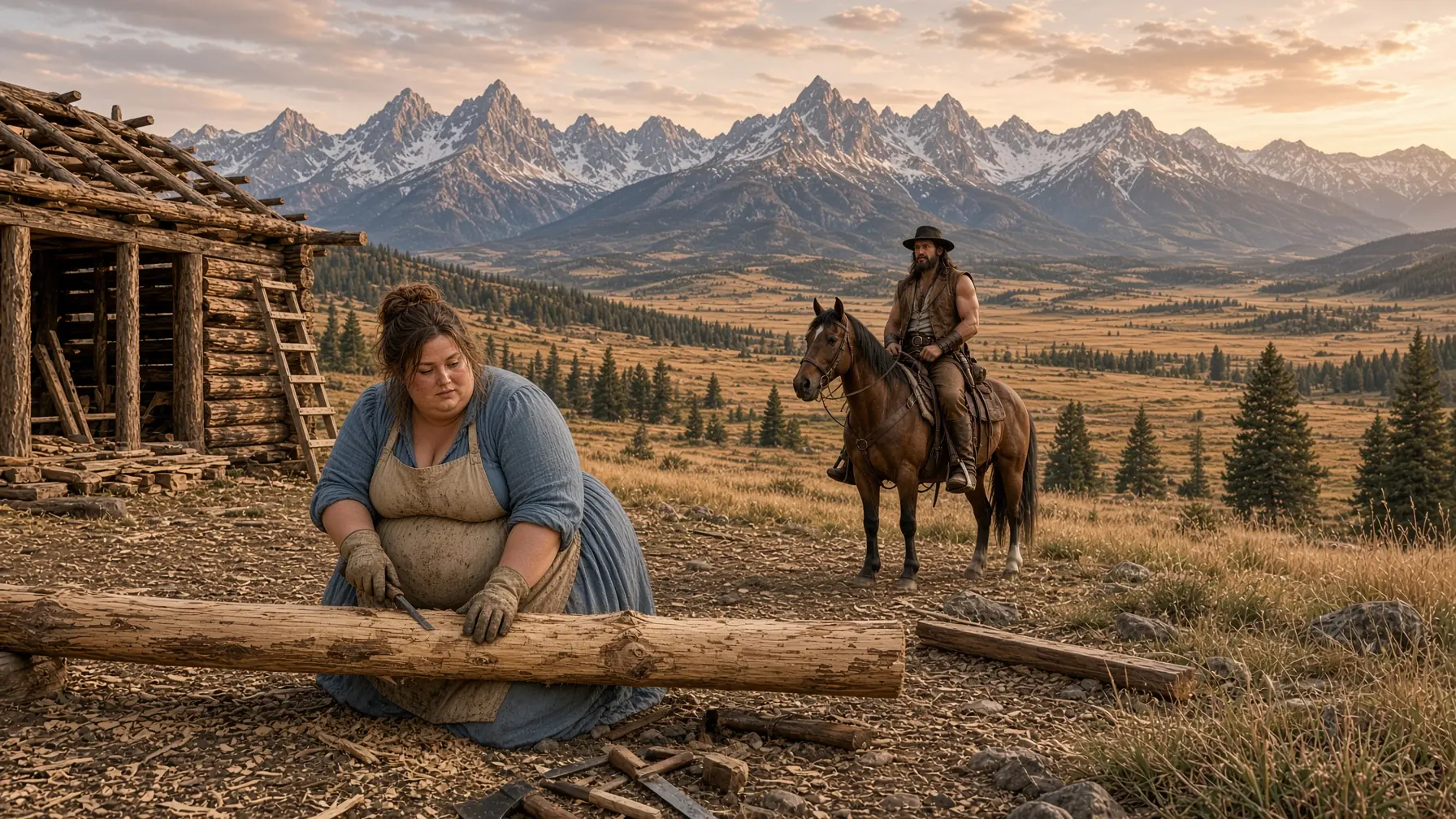
Her husband Henry Whitmore died of fever 8 weeks ago in the boarding house in Durango 3 days after he registered the land claim. He had been a Finnish carpenter out of Kentucky. Patient, precise, a man who knew wood the way some people know music, and he had believed genuinely and completely that 40 acres of mountain ground in the San Juan country was the thing that would make their life real. He had shown Clara the homestead advertisement in a folded newspaper the year before with that particular light in his eyes that appeared when he had already made up his mind and was only now telling her about it. A man can build something that lasts on 40 acres.
She had corrected him then the way she always did. A family, she said, a family can build something that lasts. He had laughed. He always laughed when she corrected him. He is gone now.
The claim is valid for 60 days under territorial provisions. After that, without active settlement, it reverts. Clara reads the notice twice in the boarding house room. She folds it along its original creases. She sets it on top of Henry's tool chest, which sits in the corner of the room they had shared for 3 weeks, waiting to be something more than a boarding house room.
The landlady, Mrs. Ruth Baxter, knocks that evening with soup and an expression full of prepared sentences about practicality and limitation, and what a woman in Clara's condition can and cannot reasonably be expected to accomplish. Clara eats the soup carefully because the child needs her to eat. She says, "I haven't decided yet." She has already decided. She has decided because there is no version of staying that makes sense.
The boarding house costs money she does not have. Henry's savings are nearly gone. She has no family in this territory, no trade that will employ a woman who cannot hide her pregnancy, and no patience left for being managed. The land is the only thing that belongs to her outright. She thinks about Henry, not the end of him, not the fever and the cot, and the way he tried to smile so she wouldn't see how frightened he was.
But 3 years earlier in their kitchen in Kentucky, showing her that advertisement, certain of everything, she makes the decision before she finishes the soup. The wagon driver who takes her north. A suncracked man named Odell Burch who runs supplies between Durango and the mountain ranches says almost nothing for 10 hours except to ask once whether she needs to stop. She says no. She needs to get there before she has time to fully calculate what she is doing.