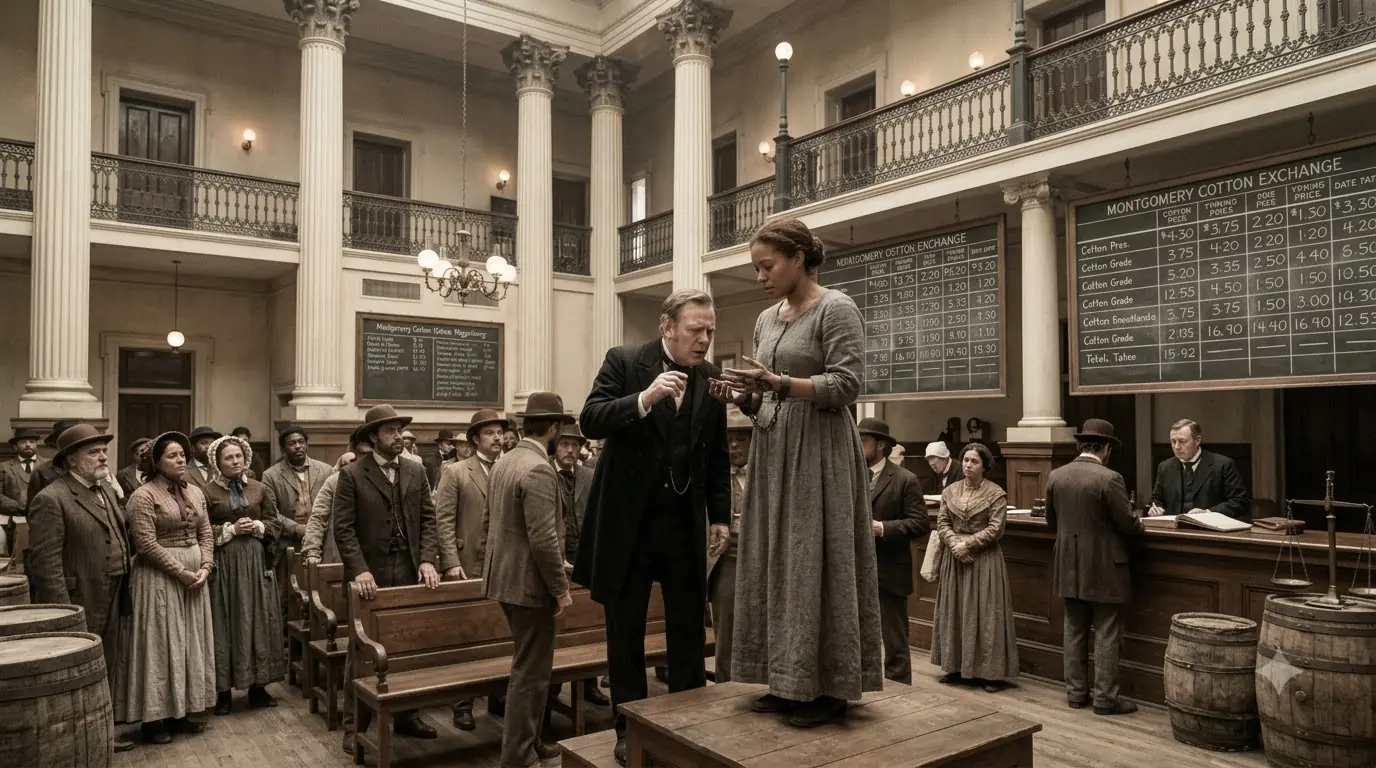
Instead, he did something none of the veteran auctiongoers present had ever witnessed. He broke the seal on the envelope he carried and began reading aloud, his voice growing quieter with each sentence, as though he hoped that speaking softly might somehow lessen the impact of what he was revealing. The seller provides the following sworn statement executed before Judge Harrison Mitchell of Montgomery County on October 4th of this year. The property designated number 47 possesses knowledge of significant value to parties concerned with financial transactions, property ownership, and matters of personal reputation. Said knowledge has been verified through demonstration to five witnesses whose identities must remain confidential for their own protection.
The purchaser will receive along with standard documentation of sale a private letter explaining the nature and extent of this knowledge along with recommendations for its proper utilization. The crowd's confusion began curdling into something darker. Men started shouting questions. What knowledge? What demonstration?
What's in the letter? Whitmore raised his hand for silence, then continued reading, and the words that followed would be whispered about in Montgomery parlors for years afterward, always in voices too low for servants to overhear. The seller states that the property in question possesses complete and perfect recall of every document, ledger, letter, contract, promissory note, deed, will, and financial record she has ever observed. Her memory operates with precision equivalent to photographic reproduction. She can recite word for word, page by page, any text she has seen, regardless of complexity or length.
She can reproduce numerical calculations, account balances, and transaction details years after initial observation. This capacity has been tested extensively and found to be without error or limitation. A new quality of silence claimed the auction floor, this one heavy with implications that every man present understood immediately. In an economy built on credit, where vast fortunes rested on paper promises, where property deeds might be disputed and debt obligations conveniently forgotten, where wills could be challenged and contracts reinterpreted, a person with perfect memory of financial documents represented power of a type that transcended ordinary commercial value. Whitmore wasn't finished reading.
The seller further states that during her years of service in various households and commercial establishments in Montgomery and surrounding counties, the property has been present during the preparation, review, and storage of thousands of documents, many of which their creators believed were private or would remain confidential. She has observed account books, personal correspondence, financial agreements, and other materials whose contents, if disclosed to interested parties, would prove valuable beyond easy calculation. Now the implications became explicit, and the auction floor erupted into chaos. Men were shouting, some in anger, some in fear, some with a kind of hungry excitement that suggested they were already calculating what they might gain from possessing this walking archive of secrets. Others were pushing toward the exits, their faces pale, presumably terrified that their own documents might be among those this woman had memorized.
Silas Whitmore waited for the noise to subside, then delivered the final and most disturbing portion of the seller's statement. The property will cooperate fully with her legal owner, providing any information requested in complete and accurate detail. She has been conditioned to understand that her well-being depends entirely on her usefulness and discretion. The seller guarantees the accuracy of all information she provides and accepts no responsibility for consequences arising from her owner's use of such information. The opening bid remains $8,000.
“Do I hear $8,000?” For ten seconds, no one moved. Then a hand rose in the back of the room belonging to a cotton factor named James Deloqua, whose operations extended across four counties. “$8,000,” he said, his voice steady. “$9,000,” came immediately from another bidder, a merchant banker named Thomas Sheridan, who handled loans for half the plantations in the Black Belt. What followed was unlike any auction Silas Whitmore had ever conducted.
The bidding escalated with terrifying speed, driven not by commercial calculation, but by fear and desperate hunger for the power this woman represented. “$10,000. $12,000. $15,000.” Men who had come to purchase field hands found themselves competing for something infinitely more dangerous: a human being who contained enough secrets to destroy reputations, bankrupt families, and overturn property claims that had seemed secure for generations. At $18,000, only five bidders remained, and the crowd had divided into two groups: those still competing, their faces showing the strain of betting their entire financial futures on a single purchase, and those watching with expressions ranging from horror to grim satisfaction, understanding that whoever won this auction would become the most dangerous man in Montgomery, armed with knowledge that could be weaponized in a thousand different ways.
“$20,000,” announced a man whose identity would remain disputed for years afterward. He stood near the sidewall, his face partially obscured by the brim of a planter's hat, his clothing suggesting wealth but offering no clues about his specific occupation or origin. His voice carried absolute certainty, the tone of someone placing a final bid they knew could not be exceeded. The four remaining competitors looked at each other, performing rapid mental calculations about credit limits, available capital, and whether any amount of potential blackmail value justified financial suicide. One by one they lowered their hands, their faces showing relief mixed with something that might have been disappointment or might have been terror at what they had almost purchased.
Silas Whitmore brought his hammer down. “Sold to the gentleman against the wall for $20,000. Please come forward to complete the transaction.”
The winner moved through the crowd with deliberate slowness, and as he approached the platform, men stepped aside, creating space around him, as though proximity might prove dangerous. Up close, he appeared to be in his late 40s with the weathered face of someone who spent considerable time outdoors, but the soft hands of a man who didn't perform physical labor himself. His clothes were expensive, but not ostentatious, the kind of careful anonymity that wealthy men sometimes cultivate when they don't want to be remembered. The transaction took 90 minutes to complete. Bank drafts had to be verified.