IMPORTANT VERIFICATION NOTES
This compilation contains three separate child-welfare cases drawn from body-camera narration and police interviews. The first case can be independently matched to a January 2022 West Palm Beach, Florida, child-neglect investigation in which an eight-year-old girl ran from home; public reporting confirms that four children, ranging from seven months to eight years old, were described by police as dirty, frail, underweight, and not enrolled in school, and that the Florida Department of Children and Families removed them from the home.
The first public report does not identify the mother by name, so this account does not invent one. It also confirms that the eight-year-old reported being punished for taking food, locked in her room, forced to brush her teeth repeatedly, and placed in an ice-cold shower; the mother was arrested on a child-neglect charge and later released on bond.
The second case can be matched to a publicly indexed body-camera video about a boy who fled a home with open injuries on his back after being struck with an extension cord. That upload describes the child as eleven years old, while the supplied transcript repeatedly calls him twelve, and no authoritative public court record was located that resolves the age discrepancy; for that reason, this retelling refers to him primarily as the boy rather than treating either age as conclusively verified.
The same public video states that the legal outcome in the second case was unknown at the time of publication. The transcript shows officers arresting the mother and telling her she was facing domestic-violence and assault-related consequences, but the exact final filed charge and later court disposition could not be independently verified, so this account does not claim a conviction.
The third case could not be reliably matched to an authoritative public case record from the information in the transcript alone. The body-camera account identifies the mother only as Pauline and describes an eleven-year-old girl who was interviewed after witnesses said they saw the mother repeatedly strike her; the transcript supports an arrest and child-protective intervention, but not a verified final conviction or sentence.
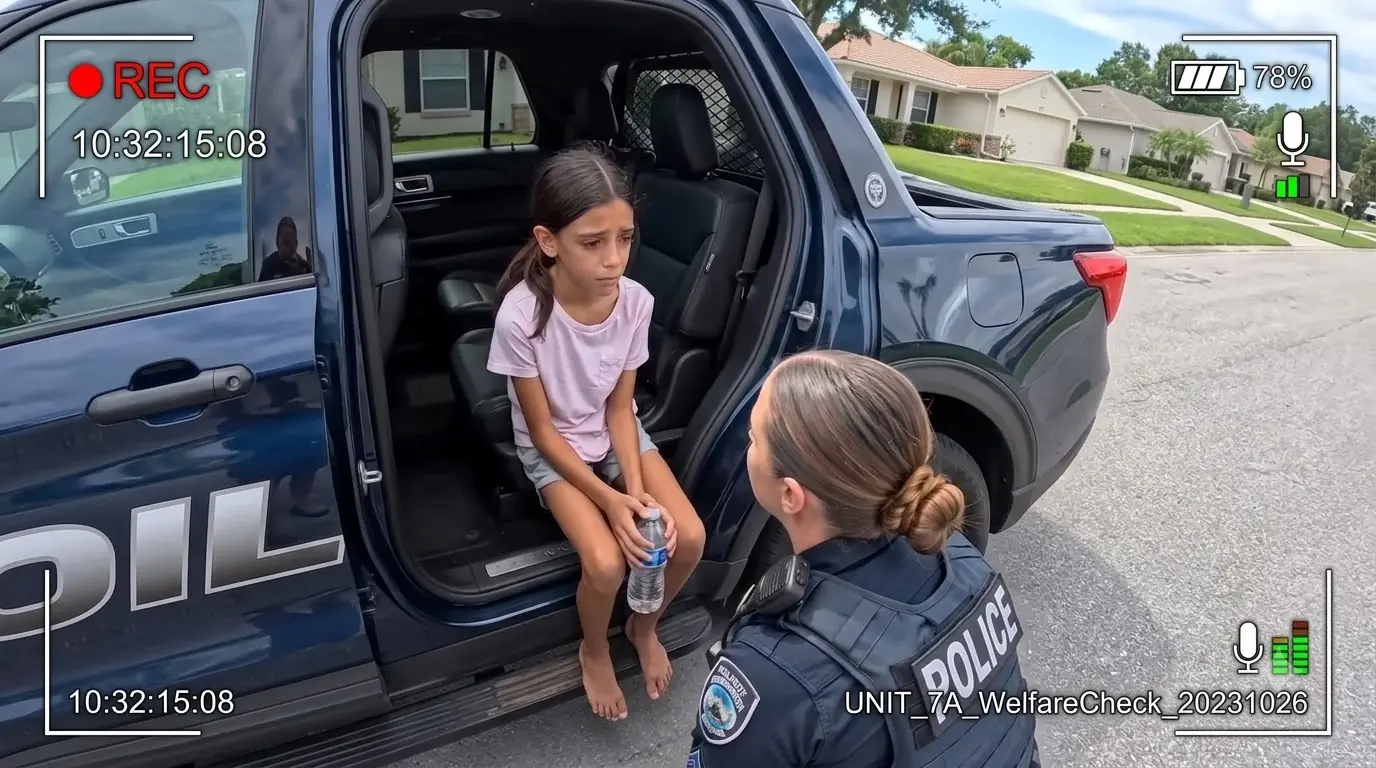
CASE ONE: THE EIGHT-YEAR-OLD WHO DID NOT WANT TO GO HOME
The first case began with what sounded like a missing-child call. A mother told officers that her eight-year-old daughter, Eliana, had left the house early in the morning, and she described the behavior as part of an ongoing pattern rather than a sudden emergency.
The mother told an officer that at around 8:15 a.m. she noticed Eliana was not in her room and then heard her near the back door. She said the girl had what she described as a processing disorder and claimed that Eliana had a history of running away and hoarding things.
When the officer asked where Eliana usually went, the mother said that was exactly what had the family confused. From her account, the disappearance was unusual only because they did not know where Eliana had gone this time.
Police began searching. According to contemporaneous public reporting from West Palm Beach, officers used multiple resources, including officers on foot and K-9 teams, and the child was found safe after an extensive search.
Once officers were able to speak with Eliana away from the home, the reason she had left began to sound very different from the explanation her mother had given. She told officers she did not like going back home.
One officer spoke gently to her and asked why she had been hiding. Eliana answered, “Because I just always have to go back home, and I don’t like it.”
She said she wanted to be with someone named Glenn and mentioned that her grandmother lived in Connecticut. As the conversation continued, however, she began describing things at home that immediately changed the nature of the police response.
Eliana said food could be withheld and told officers that she was locked in her room at night. She also described being placed in a shower with her clothes on.
An officer asked, “They put you in the shower with your clothes on?” Eliana answered yes.
Public reporting on the West Palm Beach investigation later supported the broad substance of those allegations. Police said the eight-year-old had been punished for taking food when she was hungry, locked in her room, forced to brush her teeth repeatedly, and placed in an ice-cold shower.
That meant officers were no longer dealing simply with a child who had wandered away. They now had a child actively telling them that returning home frightened her, and department policy required them to look more closely at the welfare of every child in the house.
The mother was informed that Eliana had been located only a short distance away. An officer then explained that the allegations automatically required a Department of Children and Families response and asked to look through the home to make sure the other children were safe.
The mother questioned what the officers wanted to see. She asked whether they were looking for beds or food and immediately insisted there was food in the home.
She told police, “That’s a symptom of her disorder. She will lie and say we have not fed her. She will say she’s hungry. She will say whatever.”
The mother also said the family was vegan and explained that Eliana was allergic to dairy. When an officer mentioned that the girl’s father was a chef, the mother responded that he was a professional chef and again insisted food was available.
At that stage, officers had two competing accounts. The mother said the child’s statements were symptoms of a disorder; Eliana said hunger and confinement were part of why she did not want to go home.
Police did not simply choose one account based on the emotion of the moment. They continued checking the home, speaking with the child separately, and waiting for child-welfare authorities to respond.
When the mother was brought near Eliana again, she tried to speak with her. She asked where the girl’s shoes were, offered a hug, and told her that both parents had been worried for hours.
The father was also on the phone. He told Eliana that it was time to tell the truth and said that on previous occasions she had told police things that were not true.
That interaction gave officers another reason to separate the child from the family while they continued asking questions. They wanted Eliana to answer without a parent standing beside her or a father speaking through the phone.
The officers also had to manage the emotional reunion carefully. When the mother approached, she asked Eliana whether she wanted a hug; Eliana declined, and the conversation quickly turned toward why she had left without shoes, breakfast, or telling anyone where she was going.
The mother repeatedly emphasized that the family had been frightened for more than three hours. The father, speaking by phone, reminded Eliana that police had talked with her before and insisted she tell the truth now, while officers listened to the exchange and watched how the child responded.
That was precisely why investigators did not treat the parents’ statements as a substitute for a private interview. Once Eliana was moved away from them, the officer told her again that she was not in trouble and asked what she believed would happen if everyone simply left and sent her home.