A rifle cracked across the empty canyon, sending a flock of hawks soaring into the bright blue afternoon sky. A rider on a chestnut horse froze on the narrow trail, realizing too late that the gunshot had not been aimed at him, but at the steep rocks above. Massive boulders thundered down the mountainside, sealing every path behind him. Before the dust had settled, dozens of Apache warriors emerged silently from behind towering red cliffs with bows drawn, rifles raised, and painted faces showing neither hatred nor mercy. At their center stood an aging chief whose piercing eyes held the weight of generations.
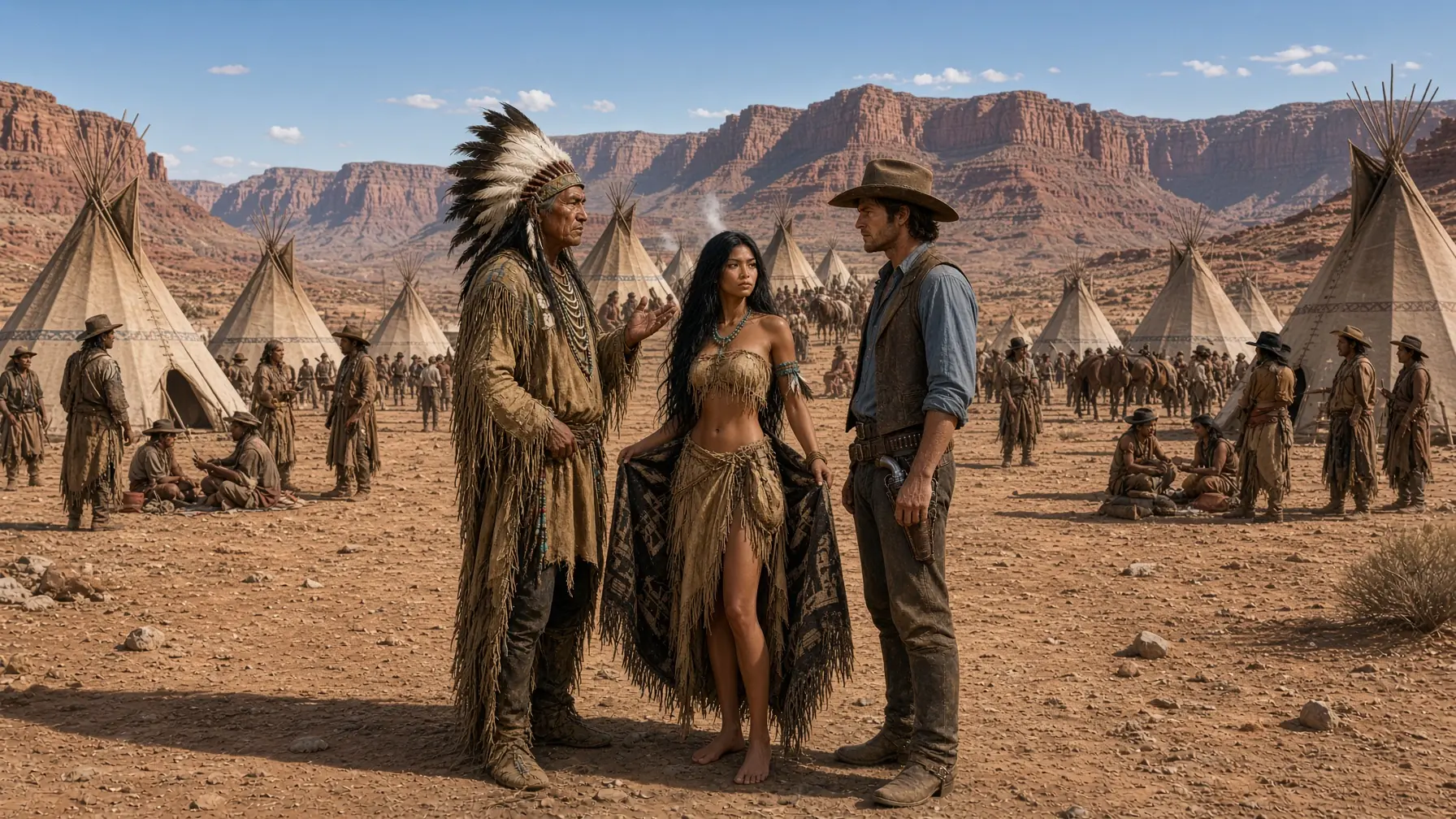
Without raising his voice, he delivered a command that would shatter everything the cowboy believed about freedom, honor, and destiny. The words echoed across the canyon with terrifying certainty. Marry my rejected daughter or leave this land forever. The cowboy stood frozen in complete disbelief, knowing that every decision from this moment forward would determine not only his future, but the fate of two worlds that had spent decades tearing each other apart. The cowboy was 29-year-old Nathaniel Brooks, a quiet drifter whose weathered gray hat had traveled farther than most stagecoaches.
His worn leather coat carried years of dust from Arizona, New Mexico, Colorado, and Texas. He had survived cattle stampedes, ruthless bounty hunters, and ruthless winters in mountain cabins, but nothing had prepared him for standing unarmed before one of the most respected Apache leaders in the Southwest. Nathaniel had not entered Apache territory seeking trouble. Three days earlier, he had escorted a merchant caravan through dangerous desert country before discovering that a notorious outlaw gang known as the Black Buzzards had murdered the traders and stolen every wagon. Following their tracks had unknowingly led him across tribal lands where strangers were rarely welcomed after years of broken promises from soldiers, dishonest traders, and greedy land speculators.
Chief Tecumseh was a man whose broad shoulders still reflected the strength of countless battles despite the gray woven through his long black hair. His people trusted him because he valued wisdom above anger. His daughter, Ayana, stood several steps behind him wearing a beautifully handcrafted buckskin dress decorated with careful beadwork that reflected generations of Apache artistry. Unlike many stories whispered through frontier saloons, there was nothing frightening about her appearance. She carried herself with remarkable dignity despite the sadness resting quietly behind her dark eyes.
Nathaniel noticed immediately that the other young women avoided standing beside her while several young warriors deliberately looked elsewhere. Something painful surrounded her presence though nobody spoke of it openly. The chief explained that years earlier Ayana had been promised to the son of White another respected Apache leader in hopes of strengthening peace between neighboring bands. Before the ceremony could happen, the young warrior abandoned the agreement believing that marrying into another family would limit his own ambition. His rejection humiliated Ayana before dozens of families and shattered her confidence.
Worse still, gossip spread among rival tribes until many believed she carried terrible bad luck despite having done nothing wrong. Suitors disappeared one after another leaving her increasingly isolated while her father silently watched her spirit fade beneath whispers she never deserved. Nathaniel listened carefully as the chief described another reason behind the impossible demand. Scouts had reported that miners, railroad surveyors, and outlaw gangs were steadily pushing deeper into Apache lands. Violence seemed unavoidable.
Tacoda believed his people needed someone capable of understanding both the native world and the expanding settlements beyond the mountains. Nathaniel had unknowingly earned the chief's respect weeks earlier after rescuing an injured Apache child from a flash flood without expecting payment or recognition. The child had returned safely home carrying Nathaniel's old silver pocket watch proving the stranger had acted purely from compassion. The cowboy found himself trapped between conflicting loyalties. Marriage could never be accepted simply because someone demanded it.
Yet refusing meant abandoning innocent people who faced growing danger from both criminals and corrupt officials. As he struggled to answer, distant gunfire interrupted every thought. Scouts raced back across the canyon reporting that the black buzzards had discovered the Apache settlement and intended to seize fresh horses, food supplies, and captives before disappearing into Mexico. The peaceful canyon instantly transformed into organized determination. Warriors mounted horses while elders hurried children toward hidden caves.