On September 17, 2023, police officers in Romeoville, Illinois, responded to a well-being check at a home on the 500 block of Concord Avenue. What began as a routine call quickly became one of the most devastating cases the department had faced. By the end of the investigation, detectives would be questioning an apparent lover, examining a second woman's shifting alibi, tracking vehicles across state lines, and untangling a web of fake online identities. At the center of it all were Zara, her husband Alberto Rolon, their two young sons, and a relationship that had become far more dangerous than anyone around them understood.
The first call came at about 9:00 p.m. that Sunday from Zara's mother. She told the dispatcher that she had been unable to reach her 32-year-old daughter, Zara's 38-year-old husband Alberto, or either of their children all day. Alberto's employer had also called because he had failed to show up for work, something the family considered highly unusual. "He never does that," the caller explained, asking officers to go to the home at 512 Concord Avenue and make sure everyone was all right.
A second family member called soon afterward with the same concern. She identified Zara as her sister and again explained that multiple relatives had been trying to contact the family without success. Alberto's no-call, no-show at work made the situation even stranger because family members spoke to them regularly and knew their routines. Dispatchers sent officers to the address without delay.
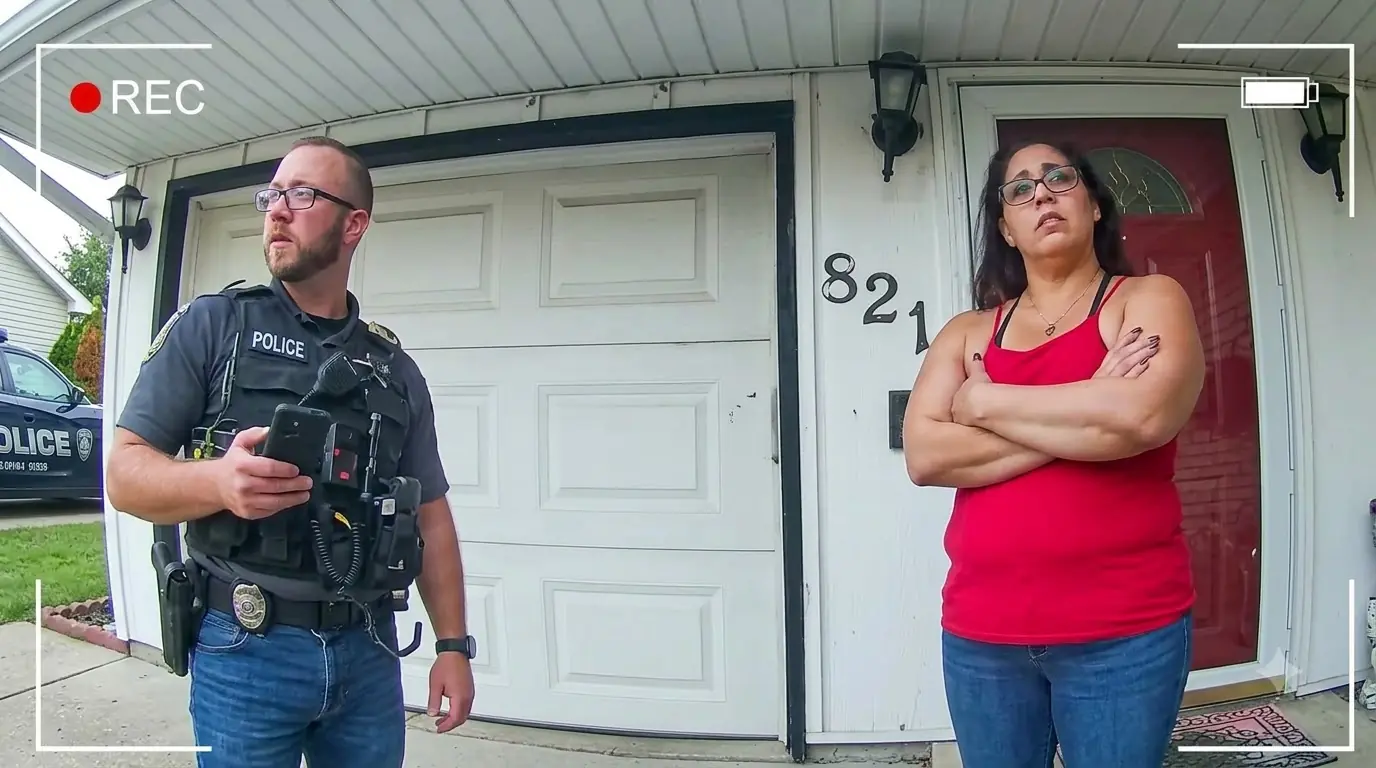
At first, the house did not clearly reveal what had happened. Officers walked around the exterior, shining flashlights through windows and trying to determine whether anyone was inside. One officer could see a television knocked over and a coffee table out of place in the front room, while several vehicles remained parked outside. The lights were mostly off, although officers thought they could see illumination farther toward the back of the house.
The officers continued checking windows and doors rather than assuming the family had simply gone somewhere together. Through another window they noticed something that changed the tone of the call immediately: two family dogs appeared lifeless inside. One officer radioed for additional units, reporting the overturned furniture and the dogs, and the team stepped back to regroup. They no longer treated the situation as an ordinary welfare check.
More officers arrived, and the group prepared to enter cautiously. They coordinated positions around the house, watched the doors and windows, and called out for anyone inside to answer. The source transcript contains a long series of radio commands and officers warning one another to move carefully as they entered. Those exchanges show how uncertain the scene still was: they did not know whether a dangerous person remained inside, whether someone was injured, or whether there was any immediate threat to the responding officers.
Once inside, the situation became clear. Police found Alberto, Zara, their 9-year-old son Adriel, and their 7-year-old son Diego dead inside the residence. The family dogs were also dead, and investigators determined that the family had suffered fatal gunshot injuries. The entire house immediately became a major crime scene.
The body-camera recording captures how quickly the officers' tone changed after the first discovery. Before entry, they had still been discussing windows, lights, vehicles, and whether someone might simply be asleep or away from the front room. After seeing the dogs and the disturbed furniture, they called for more units and waited until there were enough officers to enter together. One officer repeatedly reminded the others that they did not know whether anyone else was still inside.
The transcript also preserves the fragmented nature of the entry itself. Officers called out, "Anybody here?" while moving room by room and warning each other about doors, windows, and areas they could not yet see. Radio traffic became shorter and more urgent once one officer reported a body. Within moments, the welfare check had become a homicide scene involving an entire family.
The calls from Zara's relatives took on a different meaning after that discovery. Her mother had not described a dramatic argument, a threat, or an obvious reason to fear a crime; she had simply said that nobody was answering and that Alberto had failed to show up for work. The second relative had emphasized the same thing: the silence was abnormal because family members spoke with them every day. The ordinary nature of those concerns made the scene inside the home even more shocking.
Investigators began collecting evidence, speaking with relatives and neighbors, and reviewing available Ring doorbell footage and other digital information. Within roughly a day, the investigation produced a person of interest: 32-year-old Nathaniel Huie Jr. Officers located Nathaniel at his workplace and brought him in for questioning. Detectives already knew enough to believe he had some connection to Zara, but they wanted to hear him explain that relationship himself.
At first, Nathaniel's answers were guarded. Asked when he had last spoken with Zara, he said Thursday and then explained that she had called him on Friday while he was sick, but he had not answered because he was asleep. He said he tried to contact her again later. As the conversation continued, however, the detectives learned that Zara was not simply a coworker.
Nathaniel said he and Zara had worked together for about a year at an engineering company in Glendale Heights. Their relationship had become romantic around May 2023, a few months before the killings. When detectives asked whether they had still been discussing a future together, Nathaniel acknowledged that they had. He also said Zara had told him she intended to leave her husband.
The detectives then asked how often they actually saw each other. Nathaniel said the relationship had to fit around Zara's schedule and the fact that both of them were trying not to get caught. He described Snapchat and other indirect social-media contact as safer than ordinary communication tied closely to their public profiles. He also gave detectives the username he remembered Zara using so they could compare it with the account information recovered from her devices.
They asked whether he had saved messages, screenshots, or other material from those conversations. Nathaniel did not offer a clear archive and repeatedly suggested much of their communication had been temporary or indirect. That answer increased the importance of the later forensic-phone request. Detectives wanted evidence that did not depend on either participant's memory.
The investigators also went through Nathaniel's work schedule in detail. He said he generally worked five days a week on an early shift and had been sick around the end of the week. Zara called while he was ill, according to him, but he did not answer because he was sleeping. The detectives compared those statements with work records and the emerging timeline from the victims' home.
The detectives wanted to know whether Alberto knew about the affair and whether he had ever confronted Nathaniel. Nathaniel denied having contact with him. He said he and Zara tried to communicate discreetly, using social media rather than relying only on ordinary text messages. Snapchat was one of the platforms they used, and he described their communication as intentionally indirect because Zara's relationship at home made secrecy important.
When the detectives asked whether Zara had mentioned other romantic relationships outside her marriage, Nathaniel said he knew she had been unfaithful before but did not provide specific names. They also asked whether his own wife or girlfriend knew about Zara. Nathaniel said she did not. He portrayed Alberto as someone Zara described as relaxed and inattentive, a husband who spent time on the computer and supposedly did not pay close attention to what she was doing.
That account did not match information police were gathering elsewhere. Investigators learned that Alberto had discovered the affair, had confronted Nathaniel, and had even slashed Nathaniel's tires in retaliation. Nathaniel nevertheless continued denying that he had ever spoken with Zara's husband. The discrepancy immediately gave detectives a reason to question how much of his story they could trust.
As the interrogation continued, Nathaniel admitted the relationship with Zara had been physical. Asked directly whether they had been sleeping together, he said yes, although he described the meetings as infrequent and dependent on when they could avoid being caught. He acknowledged that hotels were sometimes involved. Detectives made clear that they were not asking out of curiosity; they were trying to reconstruct the final months of Zara's life and identify every source of conflict around her.
One investigator told Nathaniel, "You know your number is going to be in her phone. We're going to find the messages. I don't want to be surprised later that you were fighting or that something was going on between the two or three of you." Nathaniel insisted nobody had been threatening anyone and said he and Zara had not been fighting. When asked if he had anything to do with the killings, he answered no. He also said he would consider a polygraph and agreed in principle to provide a DNA swab if investigators needed one.
The detectives explained that they were speaking with relatives, neighbors, coworkers, and anyone else close to the victims. Nathaniel seemed surprised that Zara's family apparently knew enough about the affair for police to find him so quickly. "I didn't think she was talking to any family like that," he said. One detective pointed out that if they were sitting in Nathaniel's workplace asking him about Zara less than two days after the discovery, somebody clearly knew about their connection.
According to the narration in the source, Nathaniel showed little visible emotion during the early questioning despite having just learned that someone he described as a romantic partner was dead. A few hours later, detectives returned to speak with him again. This time, the focus was less on establishing that the affair existed and more on obtaining digital evidence that could either implicate or eliminate him. The investigators repeatedly emphasized that they wanted his side of the communication, not just what could be recovered from Zara's devices.
They asked Nathaniel for consent to extract relevant information from his phone. One investigator explained that, in a homicide, detectives naturally begin with spouses, partners, and lovers, then work outward as evidence eliminates people. "Anytime somebody dies, you look at the husband, the boyfriend, the wife, any kind of lover," he said. "We start there."
Nathaniel did not want to surrender the phone. He told them they could get information from a computer or from Zara's side of the conversation. The detectives responded that her phone could only show one side and that they needed his device to verify whether messages had been deleted, whether threats existed, and whether the relationship had changed before the killings. Nathaniel proposed bringing the phone to them after work instead.