Back in 2018, police were asked to conduct a welfare check on William Musach after his son reported that he had not spoken with his father in several weeks. William's daughter, Dana Jennings, had moved into his home only a few months earlier, and she answered the door when an officer arrived. At first, the call looked like a routine missing-person concern involving an adult who might simply have chosen to disappear for a while. Dana immediately offered an explanation that seemed designed to make William's absence sound ordinary.
"Where's your dad at?" the officer asked.
"I'm not sure," Dana replied. She said William only came by every couple of weeks and had been spending time in the mountains with a girlfriend, although she did not know exactly where the property was. Dana also explained that she had recently broken her foot and was having trouble getting around, apologizing for being scattered while she spoke. When the officer asked whether William actually lived at the house, Dana gave a qualified answer: technically he did, but she described him as someone who mostly passed through between trips.
The officer then asked how anyone could contact William. Dana said her father had lost his cell phone and that she had found it at the house, meaning it was not with him. She mentioned that a cousin believed William had once described the mountain property where he had been staying and was trying to narrow down its location. Dana could not provide an address, did not know the girlfriend's last name, and emphasized that she and her father were not particularly close even though they shared the same residence.
That explanation did not fully answer the officer's next question. If William routinely disappeared for weeks, why were both his son and his brother worried enough to contact police? Dana said they were concerned because William normally texted them and his phone had been left behind. She added that this was supposedly the fourth time he had lost the phone, so she personally did not consider a couple of weeks without contact especially alarming.
"To me it's not that big of a deal to not hear from him for a couple weeks," she said. "For them, I guess they talk to him more than I do."
The officer asked for permission to enter and make sure William was not inside. Dana agreed, warning him that the house was a mess. Almost immediately, the officer noticed a strong, putrid odor. Before he could press her about it, Dana volunteered that a toilet in the basement had backed up and that she had been dealing with sewage.
As they moved through the home, the officer asked whether William had a bedroom there. Dana said he did not really have one. According to her, when William stayed overnight he sometimes slept on her massage table, but most of the time he simply came by, picked up belongings or mail, and left again. Dana apologized repeatedly for the clutter and again blamed her broken foot for making it difficult to keep up with the house.
When the officer asked whether he could check the basement, Dana allowed it. She again warned him about the toilet overflow and said she had done her best to clean it while living there alone. Clothing and other belongings were piled around the house, but the walkthrough did not reveal William. That left another question hanging over the visit: if William had gone away voluntarily, why had he left not only his phone but also his vehicles behind?
Dana tried to explain that, too. She said William owned cars, but he had asked her to have a friend's mechanic pick up two of them for repairs. She said she had been spending more time at the house because of her injured foot, while normally she worked and stayed busy enough that she would not necessarily know all of William's movements. She estimated that the last time she had personally seen him was roughly two weeks earlier, around the 11th or 12th.
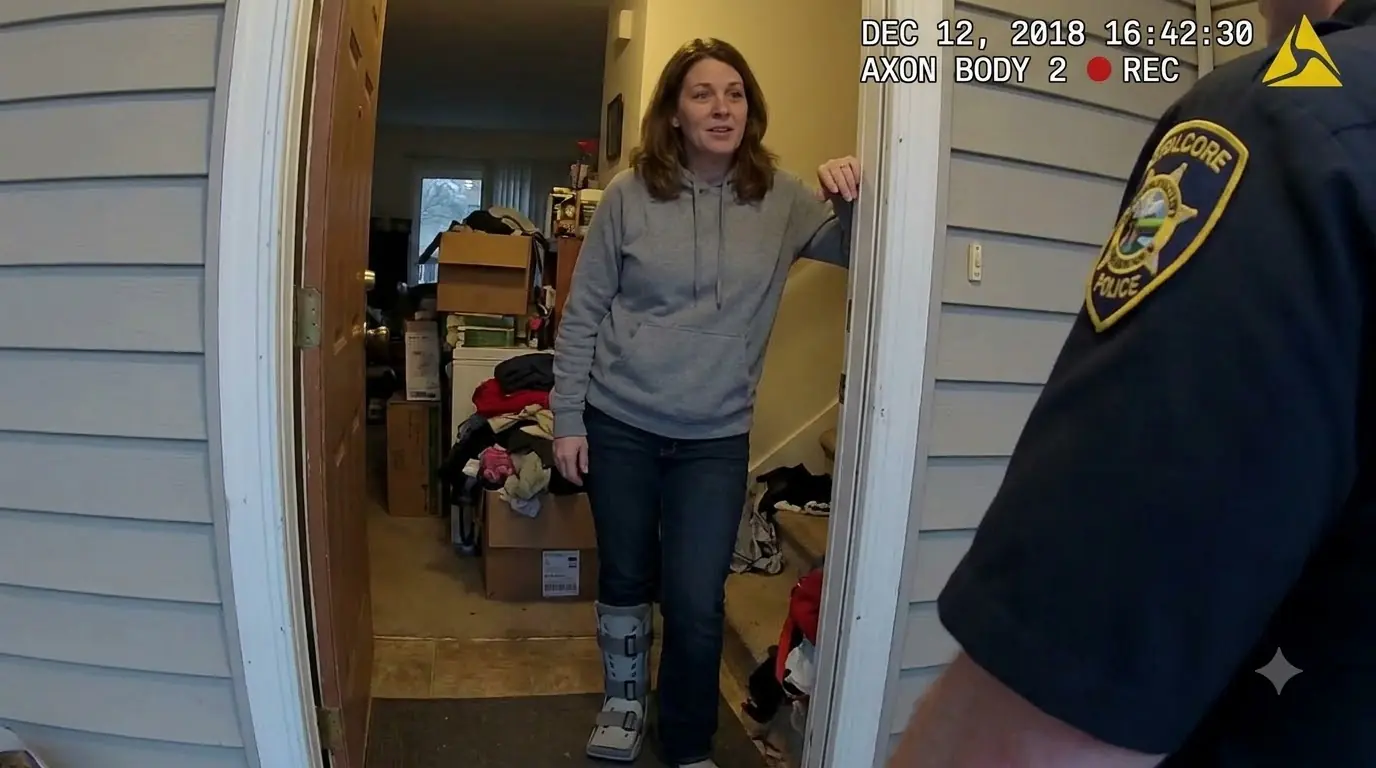
The officer asked whether William drove away that day or whether someone picked him up. Dana said he was picked up. She then complained that her brother would not believe anything unless he actually heard William's voice and had threatened to keep calling police until that happened. Dana insisted she had no control over whether her father contacted anyone and said she had been distracted by her foot and the sewage problem in the basement.
Dana also tried to make William's pattern sound so routine that the officer should have expected nothing unusual from the silence. She said the mountain trips were only one example of him disappearing without much explanation, and that he had increasingly become the kind of person who would come and go on his own schedule. When the officer pointed out that William's own brother and son clearly did not view the absence as ordinary, Dana kept returning to the missing phone as the main reason they were overreacting. She even said her brother had warned that he would keep calling the police until someone actually heard William speak.
The officer asked again whether there was any practical way to trace where William had gone. Dana had no address, no full name for the woman he was supposedly staying with, and no phone in William's possession that police could call. She could only repeat that a cousin might know something about property in the mountains. The lack of a destination, transportation, or direct communication did not prove anything by itself, but it meant nearly every part of Dana's explanation depended on information only she was providing.
Before leaving, the officer told Dana that if William returned, he should contact both his family and the police department. Dana said she had already left a note with a pile of his mail telling him to call her brother. She promised to leave another reminder. The officer left the residence and filed a missing-person report, but the investigation quickly became more complicated than a simple case of an adult choosing not to answer his phone.