Todd A. Morgan was a 41-year-old assistant professor in the Department of Management at Cleveland State University’s Monte Ahuja College of Business. The original transcript repeatedly refers to the school as the “University of Cleveland,” but the correct institution is Cleveland State University. Morgan was a two-time CSU alumnus who later earned a Ph.D. in business administration from Kent State University before returning to CSU as a faculty member.
The woman ultimately convicted of killing Morgan was Terreionna Shavonn Paschal of Cleveland. Her name appears in the transcript in several incorrect forms, including “Teriana Pashelle.” She was 31 when she was indicted in May 2023 and 32 when she was sentenced in September 2024.
Morgan was found dead inside his Hudson, Ohio, home on April 19, 2023 after he failed to pick up his young daughter from school. Investigators later determined that he had been shot seven times. Although eight shell casings were reportedly recovered during the investigation, the number of casings should not be confused with the number of gunshot wounds.
The transcript also presents several theories about motive as though they are settled. Publicly released investigative records established that Morgan and Paschal met through a dating app, that she was at his home during the relevant time period, and that financial transfers occurred that morning. However, authorities have not publicly established a definitive motive explaining exactly why Paschal killed him. Any discussion of money, robbery, or the nature of their meeting must therefore be distinguished from the still-unanswered question of what triggered the shooting.
Paschal was initially indicted on multiple charges, including aggravated murder with a firearm specification and tampering with evidence. Her case did not go to a jury. On September 18, 2024, as trial was about to begin, she pleaded guilty to aggravated murder with a firearm specification. The following day, Summit County Common Pleas Judge Alison Breaux sentenced her to life imprisonment with parole eligibility after 23 years. That structure reflects the underlying life sentence plus a mandatory three-year firearm specification served first; parole eligibility is not a guarantee of release.
A Father Fails to Arrive
On the afternoon of April 19, 2023, a routine parenting responsibility became the first sign that something was terribly wrong. Todd Morgan was supposed to pick up his four-year-old daughter from school, but he never arrived. The school tried to reach him, and the child’s mother, who was separated from Morgan, also attempted to contact him without success.
Morgan was known to be involved in his children’s lives, so simply forgetting the pickup did not seem normal. His daughter’s mother contacted Hudson police and requested a welfare check. She explained that the school had called her because the child was still there and that Morgan’s phone rang when she called, but no one answered.
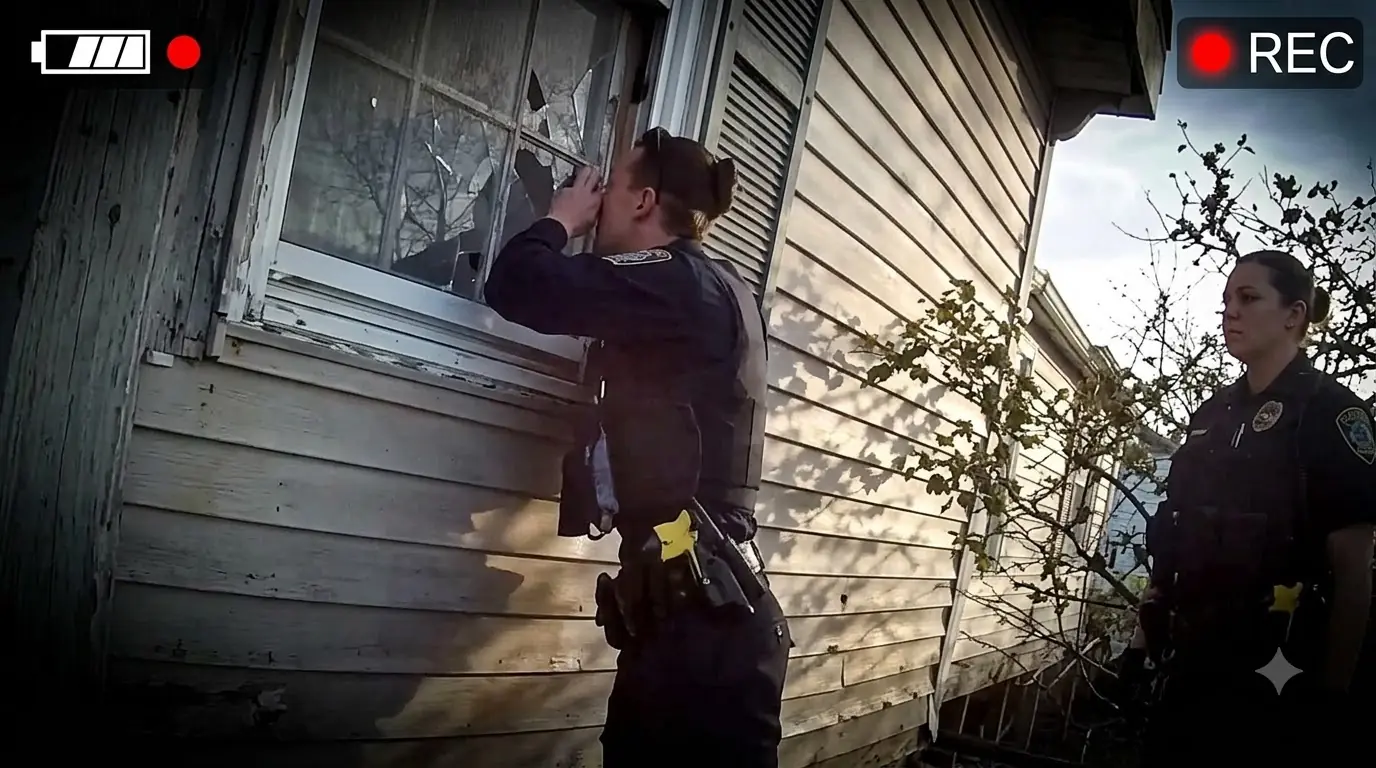
Officers were dispatched to Morgan’s home on West Streetsboro Street that evening. At first, the visit still had the character of a welfare check: knock, call out, look for signs that the homeowner was inside and perhaps unable to respond. That changed when officers looked through a window and saw what appeared to be blood.
One officer immediately alerted the other and moved toward the back of the house. Emergency medical personnel were requested, but the officers also had to consider the possibility that the person responsible for whatever had happened might still be inside. They entered and began clearing the residence room by room.
A Scene That Did Not Look Like Suicide
Morgan was lying inside near the rear portion of the home, surrounded by a large amount of blood. The first visual impression was that he had suffered a severe gunshot injury. Officers initially had to consider every possibility, including suicide, accidental discharge, or homicide, but the physical scene quickly began contradicting the idea of a self-inflicted death.
Shell casings were visible near Morgan’s body. Another casing was found farther away, near the staircase. Most importantly, officers could not find a firearm positioned beside Morgan in the way they would expect in a straightforward suicide scene.
The officers repeatedly remarked on the absence of a weapon. A casing near the stairs suggested that gunfire had occurred in more than one position inside the home. As the number of casings grew, the possibility that someone else had fired the shots became increasingly difficult to ignore.
The house was searched to ensure no injured person or armed suspect remained inside. Morgan was beyond medical help, and the scene was secured. From that point forward, the welfare check had become a homicide investigation.
The House Raised More Questions
Inside the master bedroom, investigators found signs of recent adult activity: bottles, food wrappers, and used condoms. The room was disordered, but the condition did not resemble a systematic search by a burglar. Other rooms, including the children’s areas, contained ordinary clutter rather than widespread evidence of someone tearing through drawers and cabinets looking for valuables.
A cracked piggy bank and loose change caught attention because they could be interpreted as signs of theft. Yet expensive electronics and other property remained in the house. Morgan’s Porsche SUV was still outside, and investigators saw no obvious pattern suggesting that an intruder had entered simply to steal everything of value.
The rear door also appeared damaged. Part of the frame and locking area had been broken, raising an immediate question: had someone forced entry before the shooting, or had police and medics damaged the door while trying to reach Morgan? The answer mattered because forced entry could radically change how investigators understood the crime.
Officers compared the broken pieces and examined where fragments had landed. They concluded that at least part of the damage predated their entry. Even then, the direction and nature of the break would later complicate the theory of an unknown burglar forcing a way inside.
Bloody Footprints Lead Away
During a second, slower examination of the house, detectives noticed footwear impressions in Morgan’s blood. The prints moved away from the area of the body and toward the rear exit. Because officers and paramedics had already entered the house, investigators first had to rule out the possibility that the impressions belonged to a first responder.
One by one, officers displayed the soles of their boots and shoes for comparison. The pattern did not match. That made the impressions far more significant: someone other than the emergency personnel appeared to have stepped in Morgan’s blood and then walked away from the scene.
The trail continued down the back steps toward the driveway. That direction suggested that whoever made the prints may have left through the rear of the house and departed in a vehicle. The footprints would eventually become one strand in a much larger web of evidence tying a specific person to the property.
Investigators also examined the rear door damage more carefully. The physical evidence did not fit neatly with a stranger smashing a door inward to gain entry. Instead, the break appeared to have occurred in a way consistent with someone inside manipulating or forcing the door while leaving, although the exact mechanics required further scene analysis.
Who Was Todd Morgan?
Todd Morgan had built a professional identity centered on business education and research. Cleveland State University records describe him as a two-time CSU graduate who earned his BBA in 2005 and MBA in 2006, then completed a Ph.D. in business administration at Kent State University in 2015. After faculty positions elsewhere, he returned to Cleveland State in 2021 as an assistant professor in management.
His research focused on innovation, strategy, new product development, competitive advantage, and the ways firms use knowledge and resources. Colleagues and students knew him as a professor and mentor. His university biography reflected someone proud to return to the institution that had shaped his own education.
At home, Morgan was also a father of two. Family members later described his children as central to his life. That detail made the school pickup on April 19 especially significant: the failure to arrive was not merely a missed appointment but the event that caused someone close to him to realize he might be in danger.
Morgan’s personal life, however, was more complicated than his professional biography suggested. He had separated from his daughter’s mother, had previous relationships, and was using online dating platforms. Those private details would become important not because they diminished him as a victim, but because they helped investigators reconstruct who had access to him shortly before his death.
The Autopsy Changes the Case
The medical examination confirmed that Morgan’s death was a homicide. He had been shot seven times, including wounds to the head and torso. Investigators now knew they were dealing with repeated gunfire rather than a single accidental or self-inflicted shot.
Multiple cartridge casings had been recovered from different parts of the residence. Firearms were also found inside Morgan’s home, including 9mm handguns, but testing did not establish those weapons as the gun used in the homicide. The weapon that killed Morgan was not found lying beside him.
This distinction was important. Morgan owned firearms, but the mere presence of guns in the house did not explain the shooting. Ballistics and scene evidence pointed to another weapon being used and then removed from the home.
The combination of repeated shots, the missing murder weapon, the bloody departing footprints, and the valuables left behind led investigators away from suicide and away from a simple burglary narrative. The attack appeared directed at Morgan himself, even if the exact motive remained unknown.
Neighbors Heard the Morning Unfold
Detectives began interviewing people who lived around Morgan. Some had little to report. One neighbor said Morgan seemed pleasant and that nothing unusual had drawn attention before police arrived.
Another neighbor described Morgan as someone she had always found difficult to read. Her daughter had babysat for the family, and she remembered having an uneasy feeling about Morgan even though she could not point to a specific crime or threat. Investigators treated those impressions as background rather than evidence of who had killed him.
The most important witnesses were a nearby married couple who had been awake early that morning. Their recollections gave police a narrow timeline. They remembered hearing several loud sounds that, in retrospect, resembled gunshots, with a short pause separating some of them.
They also remembered an unfamiliar light-colored vehicle near Morgan’s property. One of them saw a person leave the house, go to the vehicle, retrieve something that looked like a package or box, return briefly inside, and then come back out. The person moved quickly but did not appear to flee in a panic.
A Car in the Driveway
The neighbors estimated that the activity occurred around 7:15 to 7:25 in the morning. One had a reason to remember the time because of an early meeting and a departure from home shortly afterward. The unfamiliar vehicle was already present before the observed movement and was gone by the next useful camera interval.
The witness could not confidently identify the person as male or female. What stood out was a smaller frame and hair reaching roughly to the shoulders. The car was described as a light color, possibly gray or light blue.
These details were useful but still too broad to identify a killer. The breakthrough was that a Ring camera had captured the vehicle. The footage did not provide a perfect portrait of the driver, but it gave investigators something objective that could later be compared with a suspect’s car.
The timing also overlapped with the sounds believed to be gunfire. A vehicle present at the right house, at the right time, followed by a person moving between the house and car, was exactly the kind of lead detectives could build on through phone records and digital evidence.
The 911 Call No One Understood at First
Investigators then discovered an unusual call placed from Morgan’s address at approximately the same time the neighbors heard the shooting. At 7:21 a.m., a cell phone made an emergency call to 911, but no one spoke before the call ended. Dispatch attempted to call back.
Emergency systems can be triggered accidentally, including through smartphone emergency functions. At first, the silent call might have seemed like an unrelated technical event. Its location and timing made it impossible to dismiss.
The phone connected to the call did not belong to Todd Morgan. Investigators traced it to Terreionna Paschal, a Cleveland woman who was not part of Morgan’s family and had not appeared in the initial circle of people interviewed after the welfare check.
That discovery transformed the case. Police now had a specific phone associated with Morgan’s address at nearly the precise moment of the shooting. Their next task was to determine who Paschal was, how she knew Morgan, and whether the phone’s location could be explained innocently.
A Name Enters the Investigation
Paschal was 31 years old at the time. Detectives began tracing addresses connected to her and trying to locate her. One encounter brought them to a residence where a man acknowledged knowing her but insisted she did not live there and refused permission for police to search the home.
Without legal authority to simply enter, officers left and continued building the case. Investigators followed other addresses, associates, phone information, and surveillance leads. Paschal was eventually located and arrested in late May 2023.
The original transcript makes much of an earlier Cleveland homicide investigation and suggests detectives had already viewed Paschal as a possible shooter in another case. That background appears in investigative reporting, but it did not prove anything about Morgan’s murder. The Hudson case therefore had to stand on its own physical, digital, and circumstantial evidence.
The evidence in Morgan’s case would ultimately become extensive. It included phone-location information, dating-app records, DNA, vehicle imagery, internet searches, financial transfers, scene evidence, and ballistics work. No single clue carried the entire case; the strength came from how the pieces converged.
The Bumble Connection
Digital records showed that Morgan and Paschal had connected through Bumble shortly before the killing. Their messages established direct communication and an arrangement to meet. Investigative files later indicated that April 19 was the first time they met in person.
This fact explained how Paschal could have entered the home without a classic break-in. Morgan had reason to expect her. The encounter began as a consensual meeting between two adults who had communicated through an app, not as a stranger suddenly appearing at his door.
Court and investigative records also contained messages suggesting a financial component to the meeting. Reports described Paschal as advertising paid companionship or sexual services online. Those details help explain some of the communications and money transfers but still do not establish why the encounter turned lethal.
That distinction matters. The existence of a paid arrangement does not itself prove robbery, premeditated theft, or the specific trigger for murder. Prosecutors later stated publicly that Morgan had no apparent reason to believe something violent was going to happen when he allowed Paschal into the house.
Phone Data Places Her There
Investigators obtained records showing Paschal’s phone traveling to Hudson after midnight and remaining in the area of Morgan’s residence into the morning. That data contradicted any claim that she had never been to Hudson. It also aligned with the neighbors’ description of an unfamiliar vehicle and person at the house.
The 911 hang-up call was particularly damaging because it originated from Paschal’s phone while the phone was at Morgan’s address. It occurred around the same period neighbors heard gunfire. Even if the emergency call was accidentally triggered, it created a timestamp that investigators could place against the rest of the evidence.
Morgan’s own phone became another major clue. Records indicated that after the shooting, his phone traveled away from his house along with Paschal’s device. It later stopped reporting in the area near the Interstate 271 corridor, leading investigators to believe it had been discarded while Paschal continued toward Cleveland.
Taking Morgan’s phone would also help explain why investigators did not simply find it beside his body and immediately read the communications leading to his visitor. But digital records existed outside the physical handset. Once detectives obtained account and carrier data, removing the phone could not erase the underlying connection.
The Car Matches the Camera
Investigators also focused on Paschal’s vehicle, described in the records as a silver Ford Taurus X. The light-colored vehicle was consistent with the car seen near Morgan’s home on neighboring surveillance footage. Its appearance and timing fit the witness descriptions.
The footage alone could not show exactly what happened inside Morgan’s house. It could, however, establish that a vehicle matching Paschal’s was present and left during the crucial period. When combined with her phone location, the evidence became much harder to explain as coincidence.
The neighbors had also described the person leaving Morgan’s home as having a smaller frame and long dark hair. Paschal broadly matched that description. Again, no single eyewitness made a positive identification from the window that morning, so investigators relied on corroboration rather than overstating what the neighbors had actually seen.
The vehicle evidence, phone data, and 911 call all pointed in the same direction. Detectives then turned to material left inside the house to determine whether Paschal had physically been there.
DNA Inside the House
The master bedroom contained evidence of sexual activity. DNA testing linked Paschal to items recovered there, reinforcing the digital record that she and Morgan had met in person. Investigative reporting also described DNA on two smoked cigars recovered at the residence as matching Paschal.
The cigar evidence became especially useful because detectives found social-media imagery associated with Paschal that showed similar smoking behavior. The comparison by itself would not establish guilt, but the DNA on physical items inside Morgan’s home was far more significant.
Used condoms recovered from the bedroom also became part of the investigation. The presence of Paschal’s DNA inside the home directly contradicted her initial effort to distance herself from Morgan and Hudson. It also fit the Bumble communications and the overnight phone-location data.
By this point, detectives were not dealing with a theory built on one mysterious 911 call. They had evidence that Paschal communicated with Morgan, traveled to his home, remained there overnight, left biological material inside, and had a vehicle matching the one seen departing after the shooting.
The Bloody Footprint
One of the most visually striking pieces of evidence was the bloody shoe impression leading away from Morgan’s body. Investigators examined the tread and compared it with footwear associated with Paschal. The pattern was consistent with a Nike shoe design, and investigators found social-media images showing Paschal wearing shoes they believed were relevant to the comparison.
A social-media photograph is not the same as recovering the exact shoe used at a crime scene. Investigators therefore treated the footprint as one part of the overall evidence rather than as a stand-alone identification. Its direction of travel, however, remained important because it showed someone moving through Morgan’s blood toward the rear exit.
The footprint also fit the neighbors’ account of a person leaving the home and moving toward a light-colored vehicle. It supported the idea that the shooter had not remained at the scene after Morgan was killed. The missing murder weapon and missing phone further suggested that important items had been carried away.
Together, the bloody print, surveillance image, and phone movements created a physical route from the murder scene outward. Digital evidence then extended that route away from Hudson and toward Cleveland.
The Money Transfers
Financial records added another layer. At approximately 7:04 a.m., Morgan sent Paschal $50 through Cash App. Later that morning, a much larger transfer of $1,000 was initiated to an account linked to her.
According to the investigative material, the $1,000 payment required additional verification and was not completed. Detectives questioned Paschal about why a man she claimed not to remember would be sending her money. Her answers did not provide a clear explanation.
The timing of the payments made them relevant to investigators, especially because they occurred near the period of the shooting. Yet the transfers should not be treated as a complete explanation for murder. Publicly, prosecutors have never disclosed a definitive motive showing whether the shooting resulted from an argument over payment, an attempted robbery, another dispute, or something else.
The indictment originally included aggravated-murder and robbery-related allegations, showing that prosecutors believed the death occurred in a criminal context beyond a spontaneous unexplained shooting. But because Paschal ultimately pleaded to aggravated murder rather than going through a full trial, the public never received a jury-tested narrative answering every question about motive.
Searches After the Murder
The case became even more damaging for Paschal when investigators examined her digital behavior after April 19. Records showed repeated searches for news coverage of Morgan’s killing. She searched her own name many times and repeatedly checked whether public reporting had connected her to the case.
Investigators also found searches related to phone tracking and the ability of law enforcement to obtain information from devices or accounts. One reported search asked, in substance, whether removing a SIM card would prevent police from tracking a phone. Those searches occurred after investigators believe Morgan’s phone had been taken and discarded.
A person may read crime coverage for many reasons, and an internet search is not automatically an admission. In this case, however, the pattern mattered because Paschal was already linked to the scene by phone data, DNA, dating-app communications, surveillance, and financial records.
The post-crime searches suggested awareness that law enforcement might follow the digital trail. They also undermined her effort during questioning to portray Morgan as someone she did not recognize or remember.
The Interrogation
When detectives questioned Paschal, she initially denied meaningful knowledge of Morgan and resisted the suggestion that she had been in Hudson. Investigators responded by gradually presenting the evidence they had accumulated rather than relying on a confession.
They showed her records from Bumble. They discussed searches for Morgan and his home. They confronted her with the phone data placing her at the residence and the 911 call from her device that morning.
They then moved to the Cash App transactions, her vehicle, and physical evidence. Paschal repeatedly said she did not remember Morgan or did not know how particular records could be explained. She did not confess to shooting him.
The detectives’ strategy was straightforward: if she would not provide an account, they would establish the sequence through independent records. By the end of the investigation, prosecutors did not need a confession to bring the case forward.
The Indictment
On May 26, 2023, the Summit County Prosecutor’s Office announced that a grand jury had indicted Terreionna Paschal in connection with Morgan’s homicide. She was 31 at the time. Among the charges were aggravated murder with a firearm specification and tampering with evidence.
Hudson Police described the killing as an isolated incident. Authorities credited phone records, mobile applications, DNA, ballistics, and other investigative work with linking Paschal to Morgan and placing her at his home at the time of the murder. She remained in custody as the case moved through Summit County Common Pleas Court.
For more than a year, the case proceeded toward trial. Paschal maintained a not-guilty posture, and a jury trial was eventually scheduled for September 2024. A trial could have required Morgan’s family to sit through days or weeks of graphic scene evidence, technical testimony, digital records, and arguments about his private life.
That trial never began. On September 18, 2024, Paschal changed course and pleaded guilty to aggravated murder with a firearm specification.
What the Guilty Plea Established
A guilty plea meant there would be no need for prosecutors to persuade a jury beyond a reasonable doubt. Paschal accepted criminal responsibility for aggravated murder and the firearm specification. Other factual disputes that might have been explored at trial therefore remained unresolved in public.
One of those unresolved issues is motive. Investigators clearly developed theories involving the meeting, money, and the taking of Morgan’s phone, but the prosecutor later acknowledged publicly that no complete motive had been revealed. The available evidence explains how Paschal and Morgan met and how detectives tracked her; it does not fully explain what was said or done immediately before the first shot.
The investigative files do establish that Morgan had invited Paschal into his home after they connected online. Authorities said it was their first in-person meeting. Nothing publicly released showed that Morgan knew she would arrive intending violence.
What happened during the final minutes of that encounter is known completely only to the person who survived it. Paschal did not give investigators a public confession explaining the shooting, and the guilty plea ended the possibility of hearing competing trial narratives tested before a jury.
The Sentencing Hearing
On September 19, 2024, Paschal appeared before Summit County Common Pleas Judge Alison Breaux for sentencing. Morgan’s loved ones were given the opportunity to describe what had been lost. The most painful impact was measured not in evidence markers or phone records but in the lives of his children.
The mother of Morgan’s young daughter recalled that the child had been only four years old when she waited at school for a father who never arrived. She described the confusion of repeated unanswered calls and the eventual need to explain that her father would not be coming home. In the months afterward, the child became afraid that other loved ones might disappear whenever they left the room.
Morgan’s mother, Sandy, also addressed the court. She spoke about her son’s efforts to improve his life and about the permanent effect of his death on the family. She emphasized the central uncertainty that had remained throughout the case: only Morgan, Paschal, and God knew every detail of what happened inside that house on April 19.
Paschal then made a brief statement. She apologized to Morgan’s family and said she hoped they might one day forgive her. She did not publicly provide the missing explanation for why she had killed him.
Life With Parole Eligibility After 23 Years
Judge Breaux imposed a life sentence. Under the plea, Paschal received a sentence that makes her eligible to be considered for parole only after serving 23 years. The first three years correspond to the mandatory firearm specification, followed by the minimum period attached to the aggravated-murder sentence.
Eligibility after 23 years does not mean automatic release after 23 years. A parole authority may deny release, and the life sentence remains in effect. The Summit County Prosecutor’s Office also stated that Paschal was placed on Ohio’s violent-offender registry as a result of the conviction.
The sentence formally ended the criminal prosecution without a trial. For investigators, the case demonstrated how a homicide with no obvious eyewitness inside the room could be reconstructed through the overlap of traditional scene work and digital evidence. For Morgan’s family, however, a conviction could not restore the father, son, professor, and friend who had been taken from them.
The Empty School Pickup
The case began not with a witness reporting gunfire or a neighbor seeing someone flee, but with a child waiting at school. Morgan’s failure to arrive triggered concern because it broke a routine that those closest to him understood. That concern led to the welfare check, and the welfare check exposed the homicide.
Inside the home, officers initially confronted a confusing scene: blood, shell casings, no murder weapon, a damaged door, and valuable property left behind. The clues did not explain themselves. Each became useful only when investigators began connecting the house to events outside it.
Neighbors supplied the timing and the unfamiliar car. The Ring camera preserved an image after human memory could have faded. The silent 911 call created a digital timestamp from the phone of a person investigators had not yet known to look for.
From there, Bumble records connected Morgan and Paschal. Cell-site and device data placed her at the home. DNA placed her physically inside. Cash App showed financial contact, surveillance linked her vehicle to the scene, and post-homicide searches revealed a continuing interest in whether police could trace the crime back to her.
What the Evidence Can and Cannot Tell Us
The evidence establishes that Terreionna Paschal killed Todd Morgan, and her guilty plea removed any legal dispute over that conclusion. It also establishes that they had connected online, met at his home, and that she left after the shooting. Investigators recovered enough independent evidence to build a case even though Paschal did not confess during the recorded interrogation.
What the evidence does not publicly establish is a complete motive. It is tempting to turn the $50 payment, the attempted $1,000 transfer, or the original robbery allegations into a definitive explanation. Doing so would go beyond what prosecutors ultimately disclosed.
It is also unnecessary to sensationalize Morgan’s private life to understand the crime. He was an adult using dating platforms and arranging a private meeting. Whatever the nature of that meeting, it did not make him responsible for being shot seven times inside his own home.
Likewise, the private details Paschal denied during questioning are important because they were evidentiary links, not because they provide a complete psychological explanation. The strongest account of the case is therefore the one supported by the record: the two met online, Paschal came to Morgan’s house, he was killed the next morning, and a dense trail of physical and digital evidence led investigators back to her.
Conclusion
On April 19, 2023, Todd Morgan’s young daughter waited at school for a pickup that never came. Her mother’s concern sent Hudson officers to Morgan’s home, where a welfare check rapidly became a murder investigation. Morgan, a 41-year-old Cleveland State University assistant professor and father of two, had been shot seven times.
The scene contained multiple shell casings but no murder weapon. Bloody footwear impressions led toward the rear of the property. A damaged door, untouched valuables, and the location of the evidence made a simple robbery or suicide explanation increasingly implausible.
Neighbors remembered hearing shots early that morning and seeing a person with long hair moving between Morgan’s home and an unfamiliar light-colored vehicle. Ring footage preserved an image of the car. At almost the same time as the gunfire, a silent 911 call was placed from Morgan’s address by a phone registered to Terreionna Paschal.
That call gave detectives a name. Digital records showed that Paschal and Morgan had connected on Bumble and arranged to meet. Her phone traveled to his home after midnight and remained there through the time of the homicide, while DNA evidence recovered inside the house further confirmed her presence.
Morgan sent Paschal $50 through Cash App early that morning, and a later $1,000 payment was initiated but did not complete. After the shooting, Morgan’s phone traveled away from Hudson with Paschal’s device before disappearing near the highway. Investigators also found post-homicide searches concerning police phone tracking, news coverage of the case, and repeated checks of Paschal’s own name.
Paschal denied remembering Morgan and denied the core implications of the evidence when detectives questioned her. She never supplied a public account explaining why the shooting happened. Nevertheless, phone records, mobile applications, DNA, surveillance, financial records, the 911 call, and physical scene evidence gave prosecutors a case that did not depend on her confession.
A Summit County grand jury indicted Paschal in May 2023. More than a year later, with trial about to begin, she pleaded guilty on September 18, 2024 to aggravated murder with a firearm specification. The next day, Judge Alison Breaux sentenced her to life in prison with parole eligibility after 23 years.
The guilty plea answered the central legal question of responsibility, but it did not answer every question about motive. No publicly established account explains exactly what happened between Morgan and Paschal in the moments before the gunfire. The evidence shows where she was, how she knew him, how investigators followed her trail, and who was responsible for his death; the reason the encounter became murder remains less certain.
For Morgan’s children, the case will always begin somewhere much simpler than cell-phone analysis or forensic evidence. It begins with a school day, a father who was supposed to arrive, and a four-year-old girl waiting for him. That missed pickup set the investigation in motion and ultimately uncovered the truth behind a crime that had occurred hours earlier inside an otherwise quiet Hudson home.