This documentary combines two separate serious traffic cases that were originally presented together in the source transcript. The first occurred in Grand Junction, Colorado, on June 14, 2025, when an SUV driven by registered nurse Kalynn Settle crossed into the opposing lane and struck motorcyclist Aaron Barone. Barone survived for nearly three weeks before dying from his injuries on July 4, 2025. Settle later pleaded guilty to vehicular homicide and possession of cocaine and, on April 30, 2026, received six years in prison for the homicide count and one year for the drug-possession count, with the sentences running concurrently.
The second case occurred in Madison County, Indiana, on May 11, 2024. Adriana M. Croy, who was 18 at the time of the crash, drove a Cadillac southbound on County Road 500 East and entered State Road 28, where the Cadillac collided with a GMC Acadia. Passenger Judy Gushwa died from her injuries, and driver Lewis Gushwa was seriously injured and required extensive care. Croy later pleaded guilty to reckless homicide and criminal recklessness. On April 22, 2026, she received a four-year sentence consisting of three years of incarceration followed by one year of probation.
Some details in the original narration require caution. In the Colorado case, officers at the scene initially dealt with a badly injured motorcyclist and a confusing account from Settle about another vehicle. The later criminal case established Settle as the driver responsible for the collision, but early body-camera observations should still be described as observations rather than scientific conclusions. In the Indiana case, the source transcript states that a blood test found THC in Croy's system. That toxicology allegation was part of the investigation, but her final guilty pleas were to reckless homicide and criminal recklessness, so the documentary does not treat the mere presence of THC as the sole legal explanation for the crash.
CASE ONE: GRAND JUNCTION, COLORADO
A Motorcycle Crash on North Seventh Street
On the afternoon of June 14, 2025, Grand Junction police and firefighters were sent to the intersection of North Seventh Street and Bunting Avenue after a vehicle collided with a motorcycle. The scene immediately looked severe. The rider had been thrown from the motorcycle, and bystanders were trying to keep him still while emergency crews treated life-threatening injuries.
One witness described seeing the rider launched from the motorcycle rather than simply falling over. Another person had already begun helping with first aid before officers arrived. The motorcyclist was alive, but the seriousness of the injuries was obvious enough that officers began treating the area not merely as an ordinary crash scene but as one that could later become a fatal-crash investigation.
Police quickly began asking a basic question: where was the vehicle that had struck the motorcycle? A Lexus SUV was nearby, and its driver, Kalynn Settle, was speaking with people at the scene. Settle identified herself as a nurse and initially presented herself as someone who had stopped to help after becoming involved in a secondary collision.
"Is this your car?" an officer asked.
"Yes," Settle answered. She said she had hit an involved vehicle and had pulled over, emphasizing that she was a nurse and had stopped to render assistance.
At first, her explanation was difficult to follow. Settle spoke about another woman and another vehicle, at one point suggesting that a Hispanic woman had been involved and then left the area. She maintained that she had not directly struck the motorcycle.
The Missing Vehicle Story
The physical scene quickly created problems for that account. Officers found damage on Settle's SUV that appeared consistent with the collision under investigation. They also noted red paint transfer and apparent biological material on the vehicle. The motorcycle and debris field were being documented, and no one else at the scene could confirm the existence of the mysterious vehicle Settle described.
One officer tried to clarify her story. If another car had struck the motorcycle and Settle had only hit that car afterward, where was that vehicle? Why had no witness seen it leave? Why did Settle's SUV appear to contain physical signs that it had been directly involved?
Settle continued to insist she was not the one who directly hit the rider. "I know I wasn't the one that directly hit him," she said, though she also admitted that she was confused about exactly what had happened.
Witnesses gave a very different account. One described Settle's vehicle making a sudden movement into the opposing lane even though there did not appear to be anything in the roadway that would have required such a maneuver. The motorcycle rider, according to that witness, had done nothing wrong before the impact.
Another witness remembered Settle's reaction immediately after the collision. The witness said she raised her hands in a way that seemed to suggest frustration at the rider rather than shock at what had happened. That observation was subjective, but the witnesses were consistent on the critical point: they placed Settle's SUV in the collision and did not describe another vehicle striking the motorcycle first.
The Officers Become Suspicious
As the interviews continued, officers also noticed that Settle seemed confused about familiar locations and road names. She referred to Safeway and then corrected herself to Sam's Club. She said she had just witnessed a terrible crash and was emotionally overwhelmed, which could explain some confusion, but officers also began considering possible impairment.
An officer asked whether she would perform voluntary roadside sobriety maneuvers. Settle refused.
"No, sir," she said. She argued that police were focusing on her instead of looking for the other vehicle she claimed had left the scene. She repeatedly pointed to her decision to stay and provide medical aid as evidence that she was not trying to avoid responsibility.
The refusal did not end the investigation. Officers detained Settle while they continued gathering witness statements and examining her vehicle. She became increasingly angry, repeatedly telling officers that the case could destroy the career she had spent years building.
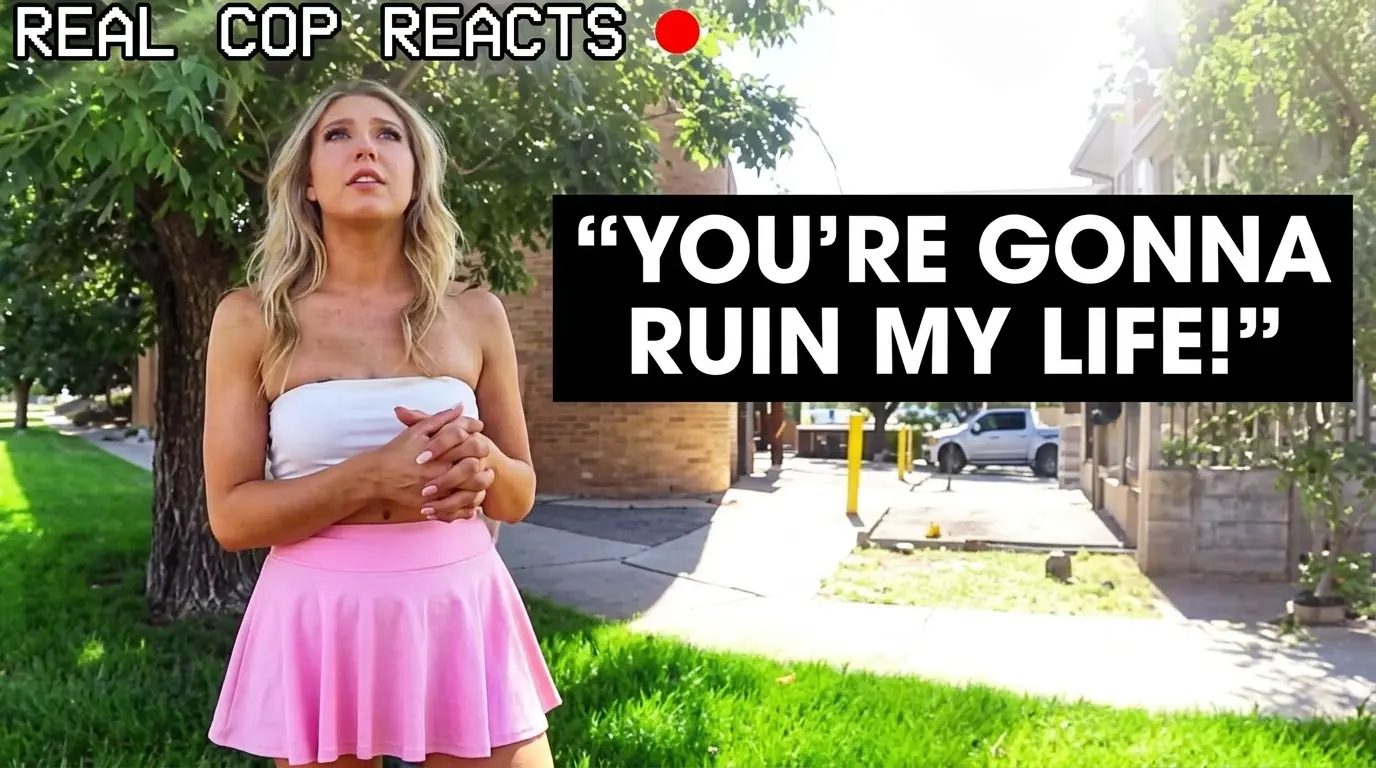
"You guys are going to ruin my career over this," she said.
For investigators, however, her profession was not relevant to determining who caused the crash. They had multiple witnesses contradicting her account, physical damage on her SUV, and growing concerns about possible alcohol or drug use.
Evidence Inside the SUV
While looking through the vehicle from outside, officers said they could see items that increased those concerns, including an alcoholic beverage container. Once officers believed they had probable cause, the vehicle became part of the evidence collection process.
Settle was initially told she was being detained while investigators worked through the circumstances. She repeatedly asked to speak with an attorney and argued about whether she should participate in roadside testing. At one point, after first refusing, she attempted to retract the refusal and said she would perform the tests.
The exchange became increasingly confrontational. Settle complained that she had stayed to help the injured rider and now was being treated as a suspect. Officers responded that remaining at the scene did not resolve the question of who caused the crash or whether the driver was impaired.
Eventually, police told Settle she was under arrest for DUI-related investigation. Officers then read Colorado's express-consent advisement concerning chemical testing. Settle continued asking for an attorney and ultimately did not voluntarily provide the requested sample at that point, leading investigators to pursue the legal process necessary for further testing.
The Roadside-Test Dispute
The discussion over field sobriety testing became one of the longest and most revealing parts of the body-camera footage. Settle initially said she would not perform the voluntary roadside maneuvers, arguing that officers were ignoring her claim that another driver had left. She told them she had been born in the area and that mixing up Safeway and Sam's Club did not mean she was impaired. She also reminded them several times that she had been one of the people helping the injured rider.
An officer explained that the crash was serious enough that they had to investigate every possibility. Settle responded that she wanted to call her attorney before doing anything further. The officer told her that the roadside maneuvers were voluntary and that she had already refused them; they were not going to pause the crash investigation while she called a lawyer to decide whether to take a voluntary roadside test.
Settle became increasingly frustrated as the handcuffs remained on. She said she had spent six years building her professional career and repeatedly complained that police were treating her like a criminal despite the fact that she had rendered first aid. One officer tried to separate those issues: helping the victim did not erase the physical evidence on her SUV or the witness statements placing her in the collision.
At one point Settle changed course. She asked whether she could retract her earlier refusal and complete the roadside tests after all. The officer confirmed that she understood the tests were voluntary, but the conversation remained combative, with Settle saying that she felt the refusal itself had caused police to assume the worst about her.
The officers were also comparing what they had heard from witnesses. One witness said the motorcycle had been traveling normally in its lane when the SUV suddenly crossed over. Another said there had been no second car between the SUV and the motorcycle. Those accounts made Settle's story about striking a different vehicle increasingly difficult to reconcile with the crash scene.
Meanwhile, investigators were checking the Lexus. From outside the vehicle, an officer reported seeing an alcohol-related container or cap and later referenced a White Claw inside. Those observations, together with Settle's demeanor, her refusal of the initial roadside maneuvers, and the witness accounts, increased the officers' suspicion that alcohol or drugs might have contributed.
Settle denied drinking. She also objected to officers searching the SUV and said they did not have her consent. Police responded that they were not relying on her consent once they believed they had probable cause to search for evidence connected to the serious-injury crash and possible impaired driving.
The confrontation then shifted from field sobriety testing to chemical testing. Settle asked whether police wanted a blood sample and again insisted she wanted her lawyer. Officers eventually informed her that she was under arrest in connection with DUI and began the Colorado express-consent advisement. The advisement explained that a driver arrested for an alcohol- or drug-related driving offense can face licensing consequences for refusing a lawful chemical test.
Settle repeatedly interrupted, at one point claiming that English was not her first language even though she had been communicating fluently with officers throughout the encounter. The officer slowed the exchange and continued explaining that silence or a refusal to answer could be treated as a refusal under the applicable process. Settle continued to demand an attorney rather than give a clear voluntary agreement at that stage.
The body-camera footage captures how quickly her role had changed. When police first arrived, she presented herself as a nurse who had stopped to help a badly injured stranger. By the end of the roadside investigation, she was the driver officers believed had crossed the center line, struck the motorcycle, given a false explanation involving another woman, and potentially driven under the influence.
The Motorcyclist Dies
The victim was later identified as Aaron Barone. Grand Junction Police initially reported that the June 14 collision left him with life-threatening injuries. Barone remained hospitalized, but on July 4, 2025, he died from those injuries.
Once Barone died, the case became a vehicular-homicide investigation. Grand Junction Police publicly identified the SUV driver as 29-year-old Kalynn Settle and said the preliminary investigation showed that her SUV had been traveling south on North Seventh Street before crossing into the northbound lane and colliding with the motorcycle.
An arrest warrant was eventually issued. The announced charges included vehicular homicide, careless driving causing death, DUI, unlawful use of a controlled substance, drug-paraphernalia allegations, drug-possession allegations, and no proof of insurance. Settle turned herself in to the Mesa County Detention Facility on September 13, 2025.
The later court case narrowed the final criminal outcome. Settle pleaded guilty to vehicular homicide and possession of a controlled substance, identified in sentencing coverage as cocaine. The plea meant the case would not proceed to a full trial over every allegation originally listed in the arrest warrant.
Sentencing
On April 30, 2026, Settle appeared before 21st Judicial District Judge JenniLynne Lawrence for sentencing. By then, she was 30 years old. The court imposed six years in the Colorado Department of Corrections for vehicular homicide and one year for the cocaine-possession conviction.
Those two prison terms were ordered to run concurrently. That means the effective incarceration term is six years, not seven consecutive years. This distinction matters because some retellings describe both numerical sentences without making clear that they overlap.
Sentencing coverage also reported that the judge considered Settle's conduct while the case was pending, including missed drug tests. Prosecutors argued that the behavior undercut claims that she had fully accepted responsibility. Settle, for her part, expressed remorse in court and acknowledged that the consequences of that day could never be undone.
The most important point is simpler than the arguments made at sentencing. Aaron Barone entered the intersection on a motorcycle on June 14, 2025. He was struck by Settle's SUV, survived for several weeks, and then died. The woman who initially told police that another driver had caused the collision ultimately pleaded guilty to vehicular homicide.
CASE TWO: MADISON COUNTY, INDIANA
A Violent Intersection Crash
The second case began on May 11, 2024, at the intersection of Madison County Road 500 East and State Road 28, just west of the Delaware-Madison county line. Adriana M. Croy was driving a Cadillac southbound on County Road 500 East and attempting to cross the state highway.
Witnesses described the Cadillac entering the intersection in front of a GMC Acadia that was already traveling along State Road 28. The resulting impact was violent enough to send vehicles off their normal path and leave the scene scattered with debris. First responders arrived to find several people injured and a complicated scene involving witnesses, family members, and a passenger whose identity initially became difficult to establish.
One witness told a deputy that the Cadillac did not appear to stop at the posted stop sign. The witness had watched the vehicle approach the highway and remembered thinking that it did not look as if the driver was going to stop at all.
"There was no way," the witness explained. He said he watched the Cadillac continue forward and then saw the Acadia hit it.
Another witness said the Acadia appeared to be traveling normally on the highway and had almost no opportunity to avoid the collision. According to the later court record summarized in sentencing coverage, investigators concluded that Croy failed to come to a complete stop before entering State Road 28.
Adriana's First Account
Croy was 18 years old on the date of the crash. Although later news stories inconsistently reported her age, Madison County jail records list her date of birth as June 5, 2005, placing her just weeks short of her nineteenth birthday when the collision occurred.
At the scene, Croy was visibly shaken. She told responders she believed she had stopped before entering the highway and had looked for traffic. She described seeing other vehicles farther away and thinking she had enough time to cross.
A deputy questioned the speed she said she reached while crossing. Croy estimated that she might have accelerated to roughly 20 or 30 miles per hour. Given the location of the stop sign and the short distance to the highway, the officer wanted to understand how she could have made a complete stop and then reached that speed before impact.
"Did you come to a full stop?" the deputy asked.
"Yes," Croy said.
The witness accounts did not support that statement. Multiple people told officers they either saw no stop or only the briefest hesitation before the Cadillac entered the path of the Acadia.
A Hidden Passenger Concern
The scene became more complicated when officers realized another young passenger had been in the Cadillac. Croy became anxious when asked where that person had gone. She eventually said her mother had taken the passenger away from the scene and expressed fear that the girl's presence might cause trouble involving foster-care or custody restrictions.
Responders tried to calm her while explaining that they needed to account for everyone involved in the crash. For a serious collision report, investigators need the names and seating positions of drivers and passengers, whether seat belts were used, and whether anyone left before police could evaluate them.
Croy eventually identified the passenger. Her fear during that exchange appeared to center as much on family and custody consequences as on the collision itself. Firefighters repeatedly reassured her that their immediate concern was making sure everyone was medically safe.
At one point, Croy asked, "What if I hurt somebody?"
The question captured the shift in the scene. This was no longer only about a damaged Cadillac or whether a stop sign had been missed. People in the Acadia were seriously injured.
The Gushwas
The GMC Acadia carried Lewis Gushwa and Judy Gushwa. Witnesses who stopped to help described the driver as conscious but injured and the female passenger as being in much worse condition. One witness stayed with Judy and said her breathing deteriorated noticeably while they waited for emergency treatment.
The witness had first checked Lewis, then moved to Judy's side when he saw how badly she was hurt. He remained with her as responders arrived. Those statements later became important because they documented how serious the injuries were from the first moments after impact.
Lewis survived but suffered major injuries. Later sentencing reporting said he required round-the-clock care for weeks. Judy did not survive the injuries she sustained in the crash.
Once a collision causes death and catastrophic injury, the investigation necessarily becomes more intensive. Officers document vehicle positions, witness statements, roadway markings, traffic-control devices, and possible driver impairment. Croy was asked to consent to a blood draw as part of that investigation.
Sorting Out a Chaotic Scene
The Indiana crash scene was crowded with people who had stopped to help, and deputies had to determine who had actually witnessed the impact and who had arrived afterward. One man immediately identified himself and his girlfriend as among the first people on scene. He described the Cadillac coming from the smaller county road and entering the state highway while the Acadia was already moving with the right of way.
A different witness told deputies he had been roughly two utility-pole lengths behind the Acadia. He said he had enough time to brake after seeing the collision but not enough time to warn the Acadia driver beforehand. In his account, the Cadillac entered the highway so abruptly that the Acadia had no realistic chance to avoid it.
Deputies repeatedly asked witnesses whether the Cadillac ever made a full stop. The answers were consistent. One witness said he watched it approach the intersection and thought, even before the crash, that the vehicle did not appear capable of stopping in time. A moment later, he realized the driver was not going to stop at all.
The force of the collision left the Cadillac overturned off the roadway. The Acadia remained badly damaged on or near the highway. Responders were simultaneously evaluating the teen driver, locating the missing passenger, helping the occupants of the Acadia, documenting the stop sign, and preserving the statements of people who had watched the entire sequence unfold.
Croy's own account evolved as the deputy asked her to walk through the approach to the intersection. She said she stopped, looked for traffic, saw a semi and a red vehicle farther away, and believed she had enough time to cross. She estimated that she had accelerated to somewhere around 20 to 30 miles per hour by the time she was in the intersection.
The deputy challenged that explanation without immediately accusing her of lying. The stop sign was only a short distance from the state highway. If she had truly come to a complete stop, he wanted to understand how the Cadillac had accelerated so quickly before impact. Croy continued to say she remembered stopping.
The witness statements increasingly contradicted her. A woman described the Acadia as simply traveling along the highway when the Cadillac came out in front of it. Another man said the Cadillac appeared to accelerate as if trying to get across before oncoming traffic arrived. Those observations later aligned with court reporting that Croy acknowledged trying to beat the other vehicle through the intersection.
The Passenger Who Left
Deputies also had to resolve the disappearance of the other young person who had been riding in Croy's Cadillac. At first, Croy was reluctant to identify her. She said her mother had taken the girl away and became increasingly upset when responders explained they needed the passenger's name and location.
Her hesitation was not presented as evidence that she caused the crash. Instead, it appeared connected to a separate family or foster-care issue. Croy said she was not supposed to be around the girl and feared that revealing the passenger's identity could cause the girl to be taken away again.
Firefighters tried to calm her. They told her the immediate priority was making sure the passenger had been medically evaluated. Nobody at that moment was threatening to arrest the missing passenger. They simply could not close a major crash investigation without accounting for everyone who had been inside the involved vehicles.
Eventually Croy provided the passenger's first name and said her mother had taken the girl to a hospital or medical facility. The exchange showed how several different crises were unfolding at once: a fatal crash investigation, a frightened teen driver, an injured passenger who had left the scene, and family concerns unrelated to the actual cause of the collision.
The Condition of the Acadia Occupants
The witness who reached the Acadia first described pulling open the driver's door and checking Lewis Gushwa. Lewis was conscious, though injured, and the witness initially had trouble communicating with him until he realized Lewis used hearing aids. He then moved around the vehicle after seeing that Judy Gushwa was in much worse condition.
The witness stayed near Judy while emergency crews were on the way. He remembered that her breathing became progressively worse. His account was not a medical diagnosis, but it documented a clear deterioration at the scene and reinforced the seriousness of the impact long before investigators knew the final outcome.
When deputies later spoke with Croy, she was beginning to understand that the crash might have caused grave injuries. She asked whether she was going to jail and then, more quietly, asked, "What if I hurt somebody?" Responders did not give her false information about the victims. They told her that accidents happen but also made clear that the investigation had to determine exactly why this one occurred.
The Blood-Draw Decision
Because the crash involved death or potentially catastrophic injury, deputies sought a blood sample from Croy as part of the investigation. Her boyfriend, who owned the Cadillac, was present at the scene and said he believed Delta-8 THC might be detected. He minimized the significance of the product, but the deputy explained that any intoxicating substance can become relevant if it impairs a person's ability to operate a vehicle safely.
Croy agreed to a blood draw. The deputy explained that she would be escorted rather than allowed to travel independently so investigators could preserve the integrity and chain of custody of the sample. Croy asked whether the draw could be done at the scene, but it was arranged through a medical facility.
The source transcript states that laboratory testing later detected THC. That finding became part of the investigative history and early charging theory, but the later plea agreement is the more reliable guide to the final legal result. Croy ultimately admitted reckless homicide and criminal recklessness, offenses centered on the dangerous driving that led to Judy Gushwa's death and Lewis Gushwa's serious injuries.
The Blood Draw and THC Evidence
Croy agreed to the blood draw and was escorted for testing so that investigators could preserve the chain of custody. The source transcript states that laboratory testing later detected THC in her blood. Her boyfriend told an officer at the scene that he believed she may have used a Delta-8 THC product.
That detail must be handled carefully. Cannabis-related products and their metabolites can remain detectable beyond the period of obvious impairment, and the existence of a laboratory result does not by itself establish exactly how impaired a driver was at the moment of a crash. The original charging theory reportedly included controlled-substance driving allegations, but the final convictions in 2026 were for reckless homicide and criminal recklessness.
The roadway evidence was independently serious. Witnesses said Croy failed to stop. Later court reporting said she admitted she was trying to beat the other vehicle across the highway. That account, rather than a simple claim that "THC caused the crash," is central to understanding the final plea.
The Cadillac also had registration and insurance issues according to the source material. Those matters added to the overall investigation but were not the reason Judy Gushwa died. The fatal event was the Cadillac entering the highway into the path of the Acadia.
The Arrest and Criminal Case
Croy was not immediately taken to prison for the eventual homicide case on the day of the crash. The investigation continued for months while officers, prosecutors, and forensic personnel assembled the evidence. Madison County jail records show a booking on September 23, 2024, roughly four months after the May collision.
The case proceeded in Madison Circuit Court 6. Public sentencing coverage later reported that Croy reached a plea agreement rather than taking the case through a full trial. She pleaded guilty to reckless homicide and criminal recklessness.
The guilty pleas are significant because they define the conduct for which she was ultimately convicted. Whatever broader charges may have been filed or considered earlier, the final judgment rested on those two offenses.
By the time of sentencing, nearly two years had passed since the crash. Judy Gushwa's family had lived with a death that began with an ordinary drive on State Road 28. Lewis Gushwa had survived but had endured serious physical consequences and an extended need for care.
Sentencing in 2026
On April 22, 2026, Madison Circuit Court 6 Judge Mark Dudley sentenced Croy. The total sentence was four years. Three years were ordered to be served through incarceration, followed by one year on probation.
Some later news coverage misstated Croy's age, but the official jail record lists her birth date as June 5, 2005. She therefore was 18 at the time of the May 11, 2024 crash and 20 at the time the court imposed sentence in April 2026.
The sentencing result largely matches the final line of the source transcript, but the charges should be stated accurately. Croy's final plea was to reckless homicide and criminal recklessness. Describing her simply as someone convicted of a THC-based DUI death offense would overstate what the final public court reporting establishes.
Two Very Different Roads to the Same Kind of Loss
The Colorado and Indiana cases began differently. Kalynn Settle was an adult professional whose initial explanation attempted to place another vehicle between her SUV and the motorcycle. Adriana Croy was a teenager who initially insisted she had stopped before entering a highway intersection and became overwhelmed as she realized someone might be badly hurt.
Their behavior at the scenes was also different. Settle was argumentative, repeatedly emphasizing her nursing career and challenging officers while they investigated. Croy was frightened and emotional, worrying about jail, the passenger who had left the scene, and whether she had hurt anyone.
But the central investigative process was similar. Officers gathered physical evidence, located witnesses, compared those accounts with what the drivers said, and waited for medical and forensic results. In both cases, what witnesses described at the scene became critical when the drivers' first explanations did not fully match the evidence.
The cases also illustrate why early body-camera dialogue should not be treated as a final court finding. Officers at a chaotic crash scene are asking questions, testing possibilities, and making provisional observations. A witness may be mistaken. A driver may be confused, dishonest, impaired, or simply in shock. The legally meaningful outcome comes later, after reconstruction, laboratory testing, charging decisions, plea negotiations, and sentencing.
For Aaron Barone's family, that process ended with Settle's guilty plea to vehicular homicide and a six-year effective prison sentence. For Judy and Lewis Gushwa's family, it ended with Croy's guilty pleas to reckless homicide and criminal recklessness and a sentence of three years incarcerated followed by one year of probation.
Neither sentence changes what happened on the road. Barone died weeks after a motorcycle collision in Grand Junction. Judy Gushwa died after the Cadillac driven by Croy entered State Road 28 in front of the Acadia carrying her and Lewis. The surviving families were left with consequences that no criminal judgment could reverse.
The body-camera footage is compelling because it captures the moments before the people involved fully understand those consequences. Settle argues that police are destroying her career while officers are still documenting a critically injured rider. Croy asks what will happen if she hurt someone while witnesses are describing an older woman whose breathing is getting worse. In both recordings, the legal case has barely begun, but the irreversible part has already happened.