This case occurred on April 7, 2022, at a home on North Ridge Drive in Beauregard Parish near DeRidder, Louisiana. The victim was 28-year-old Ashley Paige Krebsbach Fish, a mother of four daughters, and the man later convicted of killing her was Tyler N. Derochowski.
Several names in the source transcript were distorted by speech-to-text. Ashley's estranged husband was Josh Fish, not John Fish, and the lead Beauregard Parish Sheriff's Office investigator whose testimony later became central at trial was Detective Douglas Cooley.
Derochowski told a DeRidder Police Department dispatcher that he had shot Ashley and wanted to turn himself in. He was eventually indicted on one count of second-degree murder, convicted unanimously in March 2024, and sentenced to life imprisonment at hard labor without parole, probation, or suspension of sentence.
The source transcript says he was also convicted of four counts of child abandonment. The published appellate record does not support that statement, so those additional convictions are not included here.
In February 2025, the Louisiana Third Circuit Court of Appeal affirmed Derochowski's conviction and life sentence. The appellate court did order a clerical correction because the Uniform Commitment Order incorrectly reflected 999 years, while the sentencing transcript and court minutes correctly showed life imprisonment without parole.
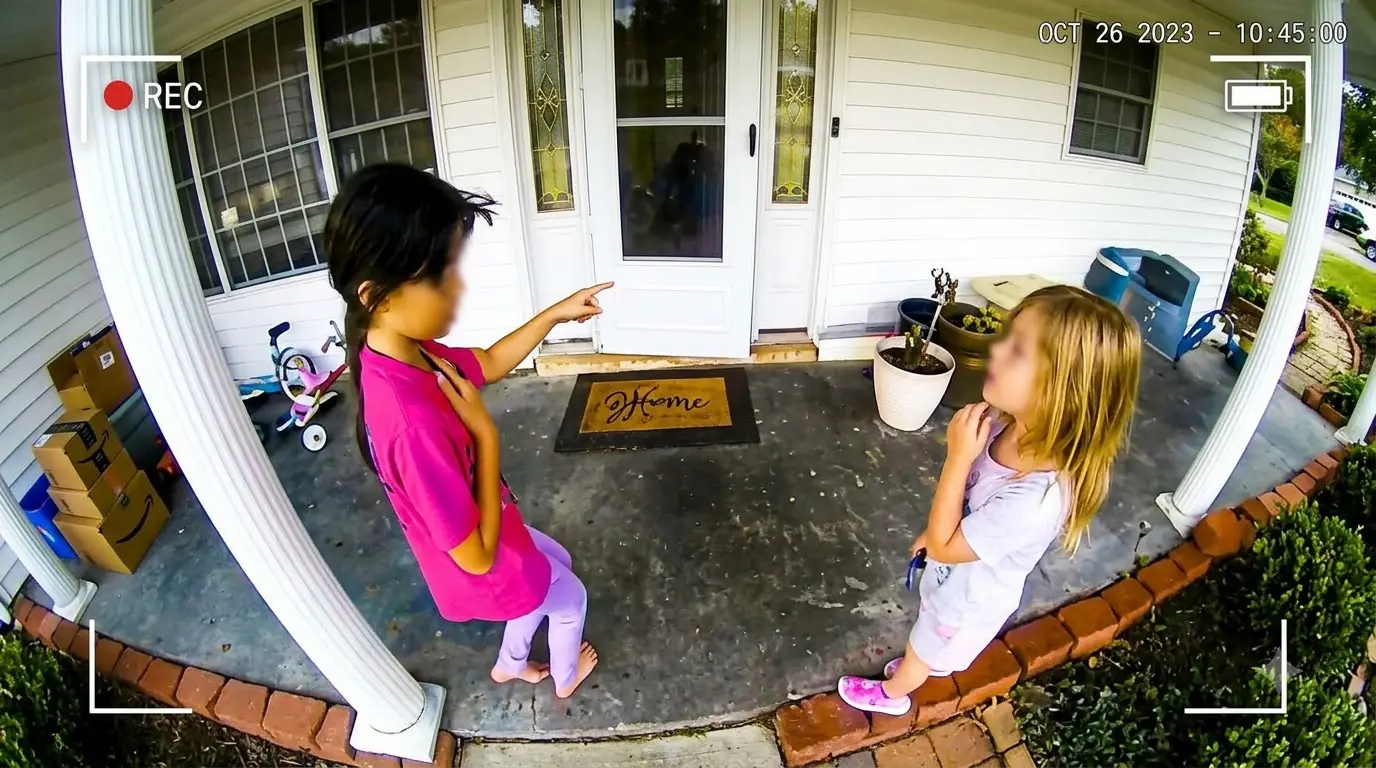
THE CALL
The evening of April 7, 2022, began with a short and unsettling call to police. A man told the dispatcher that he needed to report a crime, gave the location on North Ridge Drive, and then provided enough information for officers to understand that someone inside the home had been shot.
The caller was Tyler Derochowski. In a later call with the dispatcher, he said he needed to turn himself in because he had committed a crime, said he had shot someone, and told police he would wait for them in the parking lot of Burks Outlet in DeRidder.
Derochowski identified the woman as Ashley Fish, his girlfriend of roughly two years. He also told the dispatcher there were children inside the home who needed someone to look after them, but he did not ask police to send medical help for Ashley.
According to the trial record, Derochowski said the shooting had happened about ten minutes earlier. He initially said Ashley was not breathing when he left, then clarified that he had not actually checked her condition and simply believed she was dead.
He also told the dispatcher that Ashley was in the bathroom, that the bedroom door had been locked, and that he had removed the magazine from the firearm before leaving it behind. Those details would later be compared against the physical evidence recovered inside the house.
THE CHILDREN AT THE DOOR
Corporal Joshua Sanford was among the first officers sent to Ashley's home. When he arrived, he was met by Ashley's oldest daughter, who was trying to explain what was happening while also helping her younger sisters.
"You all right, babe?" the officer asked.
The child told him the door had been locked and that her mother was inside. She also mentioned that food was burning on the stove, an ordinary domestic detail unfolding beside something the children could not yet fully understand.
The officer quickly moved the girls away from the bedroom and asked whether anyone else was inside. The oldest child said she did not think so, but she could not be certain.
The four daughters were taken across the street to neighbors while officers entered and began clearing the house. Their safety became the first priority before investigators could begin reconstructing what had happened.
Inside the master bathroom, Sanford found Ashley lying on her left side. A cell phone was still in her right hand, and a semi-automatic Smith & Wesson pistol and its magazine were on the nearby vanity.
An empty shell casing was near Ashley, and an unfired cartridge was on the floor closer to the vanity. Nothing in the bathroom appeared overturned or damaged, and there was no obvious sign that the room had been the site of a prolonged physical struggle.
That lack of disturbance would become extremely important later because Derochowski would describe a frantic, life-or-death fight over the weapon. The room itself did not look the way detectives expected after hearing that version of events.
WHO WAS ASHLEY FISH?
Detective Douglas Cooley responded after jurisdiction shifted to the Beauregard Parish Sheriff's Office. Ashley was a local woman, 28 years old, with four daughters and family connections throughout the area.
She had married Josh Fish in 2012. The couple later moved to West Texas for Josh's work and raised their daughters together before the marriage began to fall apart.
Josh testified that he learned in January 2021 that Ashley had met Derochowski. Ashley and Josh attempted counseling, but within a few months she returned to the DeRidder area and eventually began the legal process of separating from him.
Josh later transferred to Beaumont, Texas, so he could remain closer to the children. Despite the failed marriage, he described the two of them as successfully co-parenting and said he had not known Ashley to be physically violent or threatening.
Derochowski, meanwhile, had come from Oregon. He told detectives that he and Ashley first met through an online application, became romantically involved, and eventually built a relationship that contributed to the end of both of their prior marriages.
By 2021, Derochowski had moved to Louisiana. He stayed with Ashley even though the custody arrangement connected to her separation from Josh placed restrictions on overnight guests.
Over time, the relationship between Ashley and Derochowski deteriorated. According to his own later statements, they argued about the relationship, his plans to leave Louisiana, and his threat to tell Josh that he had been staying overnight in violation of the custody arrangement.
A BLACK TRUCK LEAVES
While officers processed the house, they also began speaking with neighbors. One young witness had been outside mowing and remembered seeing a vehicle leave Ashley's property before police arrived.
A nearby camera showed a dark truck departing the home. Neighbors told officers that Ashley's significant other was Tyler Derochowski and that he commonly drove a dark truck.
The information fit what dispatchers were already learning from Derochowski himself. He was no longer merely someone police needed to locate; he was the man calling to say he had shot Ashley and wanted to surrender.
Officers responded to the Burks Outlet parking lot and found him without a weapon. He was taken into custody without a confrontation.
At that point, the investigation was not about identifying who had been with Ashley. Derochowski had already admitted he was there and had already admitted being involved in the shooting.
The central question was now what kind of shooting this had been. Was it an intentional killing, an accident during a struggle, or an act Derochowski could legally claim was self-defense?
THE FIRST VERSION
After being advised of his rights, Derochowski began explaining what he said had happened. He told Officer Cameron Smith that he and Ashley had been arguing and that a gun had become involved.
He described the relationship as collapsing and said he was preparing to leave Louisiana and return to Oregon. His truck was packed with personal belongings, something a later search would confirm.
Derochowski said Ashley owned a gun and had previously pulled it during an argument. He claimed the same thing happened again on April 7 after he threatened to tell Josh the truth about staying overnight at the house.
According to Derochowski, Ashley loaded the pistol and pointed it at him. He said they fought over the gun and it discharged during the struggle.
That explanation gave investigators a possible self-defense scenario they could not simply ignore. Ashley owned the weapon, and a holster matching the pistol was found on the bed in the adjacent bedroom.
But investigators immediately saw problems with the story. Derochowski had no visible defensive injuries consistent with the violent struggle he described, and the bathroom did not show obvious evidence of two adults fighting for control of a loaded weapon.
THE LAST MESSAGES TO JOSH
As investigators interviewed Ashley's family and Josh, another timeline began to emerge from Ashley's phone records. The messages placed her in an argument with Derochowski before the shooting and showed that she wanted him to leave.
At 4:32 p.m., Derochowski called Josh. At virtually the same time, Ashley messaged Josh telling him not to answer Tyler's call.
Josh replied that he did not want to become involved in their drama. Ashley then wrote, "He won't leave."
Because Josh did not answer Derochowski's call, Derochowski left him a voice message saying he had been staying overnight at Ashley's residence. This was exactly the information Derochowski had threatened to disclose in connection with the custody arrangement.
At 5:50 p.m., Ashley sent Josh another message. She said she would have the girls call later, that she was trying to handle dinner, and that she was "still working on my situation here."
That was the last text Josh received from her. The messages did not establish by themselves exactly what happened in the bathroom, but they contradicted any impression that Derochowski had quietly ended the relationship and was simply leaving without resistance from either side.
ASHLEY'S OWN GUN
The firearm recovered on the vanity belonged to Ashley. Josh testified that he and Ashley had purchased the Smith & Wesson pistol together in 2016.
That fact was important because it prevented investigators from relying on a simplistic theory that Derochowski had arrived carrying a murder weapon. The weapon was already in Ashley's home and was legally associated with her.
But ownership of the gun did not answer who controlled it when the fatal shot was fired. Investigators had to study the position of Ashley's body, the wound, the firearm, the cartridge casing, and the surrounding room.
The pistol was later examined by the Louisiana State Police Crime Lab. Firearms examiner Amber Downs determined that the cartridge case recovered from the scene had been fired from that weapon.
Downs also explained the pistol's safety features. The weapon would not simply fire because it had been dropped, kicked, or knocked around; a round had to be chambered and the trigger had to be properly depressed.
An accidental discharge could occur if someone pulled the trigger unintentionally, but the weapon itself did not have a demonstrated tendency to fire merely from impact. That distinction became central to the defense theory that the shot went off during a chaotic struggle.
NO ROOM FOR A TWO-MINUTE FIGHT
Detective Cooley carefully documented the master bathroom. A hair dryer, hairbrush, toothbrush, toiletries, towels, jewelry holder, shampoo rack, and laundry basket were all in place.
There was no broken glass, no damaged wall, no overturned furniture, and no blood spread through the room. According to Cooley, that environment did not resemble the aftermath of the desperate two-minute fight Derochowski described.
Derochowski told detectives that the confrontation started in the bedroom and moved into the bathroom. He said they wrestled over the gun, went to the floor, and that he at one point was behind Ashley in something resembling a chokehold while trying to control the weapon.
He said he never fully took the pistol away from her until after the shot. He repeatedly described the encounter as a fight for survival and said he did not know exactly when or how the gun discharged.
Detectives compared those statements against his body as well. Derochowski was approximately six feet two inches tall and around 230 pounds; Ashley was roughly five feet three or five feet four and around 130 pounds.
Aside from marks attributed to his detention in the parking lot, investigators did not document injuries on his face, hands, arms, or torso that supported the kind of violent struggle he described. He also never asked for medical care.
THE PHONE IN ASHLEY'S HAND
One of the most striking details was Ashley's cell phone. She was right-handed, and officers found the phone still held in her right hand after the shooting.
That did not make every version of a struggle physically impossible. But it created another difficulty for Derochowski's explanation because the jury would have to consider how Ashley was supposedly fighting aggressively over a pistol while her dominant hand remained occupied by her phone.
A long black hair consistent with Ashley's hair was also trapped in the slide of the pistol. Investigators documented the firearm and later presented the evidence to forensic experts.
The bullet entered above and behind Ashley's right ear and traveled through her head at a trajectory that ended near the floor. The physical relationship between Ashley's position, the wound track, and the floor became another point of dispute at trial.
The prosecution argued that Derochowski's account did not reasonably match the scene. The defense argued that a chaotic struggle can place bodies and weapons in unusual positions and that investigators could not reconstruct every split second with certainty.
THE AUTOPSY
Forensic pathologist Dr. Christopher Tape performed Ashley's autopsy. He determined that the cause of death was a gunshot wound to the head and classified the manner of death as homicide.
Most importantly, Tape found evidence that the muzzle was against Ashley's skin when the weapon discharged. Soot and the wound characteristics were consistent with what forensic pathologists call a contact gunshot wound.
A second forensic pathologist, Dr. Terry Welke, reviewed the case materials and also believed the wound was a contact wound. Both experts viewed the scenario described by Derochowski as unlikely, although the defense was able to establish that a contact wound during a struggle was not physically impossible.
That nuance mattered. The medical evidence did not produce a video of the shooting, and the pathologist could not say which person physically pulled the trigger merely from examining the wound.
But the evidence did establish that the gun was in direct contact with Ashley's head when it fired. Combined with the otherwise undisturbed bathroom, that fact weighed heavily against the defense's depiction of a weapon randomly discharging as two people fought over it.
THE CHILDREN
Four children were inside the residence when Ashley was killed. Derochowski knew they were there and told the dispatcher about them after he left the house.
According to his interview, after the shooting he unloaded the pistol and locked the bedroom door so the girls would not enter. He then left the house and drove to the nearby parking lot.
Before calling 911, however, Derochowski called his ex-wife and tried to call his father. He told investigators that he felt he needed to stand up for what had happened, but the sequence of calls became part of the prosecution's argument that his actions were not those of someone urgently seeking help for Ashley.
The eldest daughter ultimately met police and guided them toward the bedroom while helping move her younger sisters away from the scene. The girls were then sheltered by neighbors until relatives could take them.
The original documentary presents the children as later being the key witnesses who solved the case. The published appellate record places far greater evidentiary weight on Derochowski's admissions, the condition of the bathroom, Ashley's phone, the firearm evidence, the contact wound, and the messages exchanged before her death.
Because the children were minors, this cleaned account does not amplify private details about them beyond what is necessary to understand the investigation. The enduring fact is that four daughters were inside the home when their mother died.
DID ASHLEY THREATEN HIM?
Derochowski insisted Ashley had previously pulled the gun on him and that she did it again on April 7. He described her as angry over his plan to reveal their living arrangement to Josh.
He said Ashley loaded the gun in front of him and pointed it at him. Detectives repeatedly asked why, if he truly believed she was threatening his life, he did not simply leave the house.
Derochowski struggled to give a clear answer. He said he was scared but acknowledged he was apparently not scared enough to leave when the weapon first appeared.
That was especially important because his belongings were already packed in his truck. He was not trapped at the property without transportation or a way to get away.
Derochowski told detectives that the same kind of gun-related confrontation had supposedly happened only days earlier. Yet he remained at the house and continued the relationship until the argument on April 7 reached its fatal end.
The prosecution used those inconsistencies to challenge the reasonableness of his self-defense claim. The defense continued to argue that fear and human behavior do not always follow a neat or logical pattern during intimate-partner conflicts.
THE INTERVIEW
Detective Cooley and Detective Travis Thompson interviewed Derochowski later that evening. Derochowski waived his Miranda rights and gave a lengthy account of his relationship with Ashley and the shooting.
He repeatedly characterized the death as an accident. He said he did not intend to murder anyone and described the incident as something that went catastrophically wrong while he was trying to protect himself.
At moments, he expressed guilt and responsibility. He said the whole situation was partly his fault and spoke about having to live with what had happened.
At other moments, his language placed responsibility back on Ashley. He returned again and again to the claim that she had introduced the gun into the argument and that he had been reacting to a threat she created.
Detectives did not simply accuse him throughout the interview. At times they used a conversational approach, including statements suggesting they understood that the situation might not have intentionally escalated to murder.
At trial, the State argued that some of those comments were interview tactics designed to keep Derochowski talking. The jury ultimately had the opportunity to hear significant portions of his statements and compare them with the physical evidence.
A MEDICAL BACKGROUND, BUT NO AID
Derochowski told detectives he had medical experience, including prior work as an emergency-room technician. Yet after the shot, he did not attempt to provide medical treatment to Ashley.
When asked why, he said he could not think and had never experienced anything like it. He also did not ask the dispatcher to send an ambulance when he called police.
Instead, he unloaded the gun, secured the bedroom door, left the children in the house, drove away, called his ex-wife, attempted to call his father, and then contacted police from Burks Outlet.
The prosecution used that sequence as part of the circumstantial case concerning his state of mind. The defense argued that people can behave irrationally and freeze after an unexpected fatal event.
Neither interpretation could stand alone. The jury had to consider the calls together with the messages, physical scene, wound, gun evidence, and Derochowski's changing descriptions of what happened.
WHY THE CONTACT WOUND MATTERED
At trial, Dr. Tape was asked directly whether a contact shot like Ashley's could happen during a struggle. He did not say it was impossible.
He explained that people fighting can move into unusual positions. In theory, a gun can become pressed against someone's body while another person has a finger on the trigger.
But he repeatedly characterized the particular scenario as unlikely. A contact shot to the side of the head required the muzzle to be pressed against Ashley when the trigger was pulled.
The prosecution emphasized that this had to be reconciled with Derochowski's claim of a chaotic struggle, the lack of disruption in the bathroom, Ashley's phone remaining in her right hand, and Derochowski's lack of defensive injuries.
The defense focused on the limits of reconstruction. Without an independent eyewitness to the exact second of discharge, the defense argued that reasonable doubt remained over who pulled the trigger and whether Derochowski acted with the specific intent required for second-degree murder.
THE STATE'S THEORY
By the time of trial, the State's theory did not depend on a single piece of evidence. It was the totality of the circumstances that prosecutors presented to the jury.
Ashley had told Josh that Derochowski would not leave. Derochowski had threatened to expose the overnight arrangement in a way he believed could hurt Ashley's custody situation.
Derochowski admitted being present, admitted holding or controlling the gun when the fatal sequence occurred, admitted leaving the scene, and admitted calling police afterward to say he had shot someone and committed a crime.
The bathroom did not show the damage expected after a prolonged violent fight. Ashley's right hand still held her phone, and the firearm was found unloaded on the vanity.
The gun had fired a contact shot above Ashley's right ear. The weapon did not have a mechanical characteristic that caused it to discharge merely because it was struck or dropped.
The State argued these facts collectively showed an intentional killing rather than a random discharge during self-defense. Derochowski's lawyers argued that the State could not exclude every reasonable hypothesis consistent with an accidental shot during a struggle.
THE PEOPLE WHO TESTIFIED ABOUT THEM
The trial did not consist only of police and forensic experts. Members of both Ashley's and Derochowski's families testified, giving the jury sharply different pictures of the people at the center of the case.
Ashley's mother, Sheila Krebsbach, told jurors she had never known her daughter to be aggressive or physically violent. That testimony was consistent with Josh's description of Ashley during their marriage and co-parenting relationship.
Derochowski's parents offered a very different kind of character evidence about their son. His father, Zigmond Derochowski, testified that Tyler had been adopted when he was about four and had generally been the kind of child who admitted when he was in trouble.
His mother, Theresa Derochowski, described him as funny, articulate, kind, and gentle. She said the family was so convinced of his innocence that she and her husband refinanced their home to help pay for his defense.
Derochowski's former wife also supported him and attended the trial with his parents. According to the appellate record, she believed he was innocent and had traveled from Oregon for multiple court proceedings.
None of that character testimony could decide what happened in the bathroom. The jury still had to compare the people described by the witnesses with Derochowski's own words and the forensic evidence from April 7.
THE DEFENSE THEORY
Derochowski's lawyers argued that his actions after the shooting were inconsistent with someone who had planned or intentionally committed murder. He did not hide Ashley's body, remove the firearm, or attempt to clean the bathroom.
They emphasized that he unloaded the pistol, closed the bedroom door to keep the children from entering, drove only a short distance, called police, identified himself, and waited to be taken into custody. They also pointed out that he cooperated with investigators and gave a lengthy recorded statement.
The defense further argued that Ashley might have grabbed both the gun and her phone as the confrontation unfolded. Under that theory, the phone in her right hand did not necessarily exclude a struggle because she could have been using her left hand to hold or manipulate the pistol.
They also challenged the State's reliance on the otherwise orderly bathroom. The defense noted that people can fall to the floor quickly during a fight without necessarily knocking over every item around them.
Most importantly, the defense used Dr. Tape's own testimony to show that a contact gunshot wound during a struggle was not physically impossible. The pathologist repeatedly called the scenario unlikely, but he would not say that human bodies could never end up in the required position.
The defense therefore argued that the prosecution had not eliminated a reasonable hypothesis of innocence. The central uncertainty, they said, remained whether Ashley pulled the trigger, Derochowski pulled it unintentionally, or the trigger was depressed during the struggle in a way neither person intended.
THE PROSECUTION'S RESPONSE
The State responded that the defense was isolating each piece of evidence instead of considering how the pieces fit together. Prosecutors did not need to prove that one particular fact, by itself, made Derochowski's account impossible.
They asked jurors to consider the last messages showing Ashley wanted him to leave, his threat to damage her custody situation, the absence of defensive injuries, and the lack of physical disruption in the bathroom. They also emphasized that the muzzle had been pressed against Ashley's head when the weapon fired.
The State argued that the gun's mechanics mattered as well. The pistol did not fire merely because people bumped into it or because it fell; someone had to properly operate the weapon and depress the trigger.
Prosecutors also focused on Derochowski's behavior after the shooting. Although he later described himself as someone with medical experience, he provided no aid to Ashley, did not call for an ambulance, and made personal calls before contacting law enforcement.
The jury was also reminded that Derochowski himself used phrases expressing guilt and responsibility during the interview. His attorneys argued those words reflected remorse for triggering the confrontation, while the State argued they were consistent with consciousness of guilt.
THE FLIGHT QUESTION
Another issue later raised on appeal concerned whether the jury should have been instructed about flight. Derochowski's lawyers argued he had not really fled because he drove to a public parking lot, called 911, and waited for police.
The trial judge nevertheless allowed a standard instruction telling jurors that leaving the scene could be considered along with the other evidence, but that flight alone was not enough to prove guilt. Jurors were specifically told they had to decide whether any departure reflected consciousness of guilt or some innocent reason.
The State pointed out that Derochowski left the house shortly after the shooting with his personal belongings already packed in the truck. Four young children remained at the residence, with the oldest only nine years old according to the appellate record.
On appeal, the Third Circuit concluded there was enough evidence to permit the flight instruction. The court emphasized that the instruction did not tell jurors Derochowski was guilty; it left them to decide what significance, if any, his departure had.
THE POLYGRAPH REFERENCE
Derochowski's appeal also raised an issue involving a reference to a polygraph during his recorded police interview. Near the end of the interview, a detective offered him the opportunity to take a lie-detector examination.
No polygraph examination was actually administered. Still, Louisiana law generally treats polygraph evidence and references to such testing with caution because jurors might draw improper conclusions about credibility.
The appellate court assumed for purposes of analysis that admitting the reference could have been error, but concluded any error was harmless. It pointed to Derochowski's 911 admission that he had shot someone, together with the other physical and testimonial evidence presented at trial.
The court therefore rejected that issue as a basis for overturning the conviction. The decision left the jury's second-degree murder verdict intact.
THE TRIAL
Tyler N. Derochowski was charged by grand jury indictment with second-degree murder under Louisiana law. The case proceeded to trial in the Thirty-Sixth Judicial District Court in Beauregard Parish.
The jury heard testimony from responding officers, detectives, forensic experts, Josh Fish, and other witnesses. It heard portions of Derochowski's own statements and learned about the messages and calls in the hours before Ashley's death.
The defense challenged the State's reconstruction of the shooting and argued that the physical evidence did not conclusively prove Derochowski intentionally fired the weapon. It also emphasized portions of the forensic testimony acknowledging that unusual things can happen during a physical struggle.
The State argued that the totality of evidence made the self-defense and accident theory unreasonable. Prosecutors emphasized the contact wound, the undisturbed bathroom, Ashley's phone, the lack of injuries on Derochowski, his decision not to render aid, and his conduct after leaving the home.
In March 2024, the jury returned a unanimous verdict finding Derochowski guilty of second-degree murder. Under Louisiana law, that conviction carried a mandatory sentence of life imprisonment at hard labor without parole, probation, or suspension of sentence.
THE APPEAL
Derochowski appealed his conviction to the Louisiana Third Circuit Court of Appeal. Among other arguments, he challenged the sufficiency of the evidence and contended that the State had failed to prove beyond a reasonable doubt that he intentionally killed Ashley rather than being involved in an accidental shooting during a struggle.
The appellate court reviewed the evidence under the standard requiring it to consider whether a rational jury could have found the essential elements of the crime proven beyond a reasonable doubt. It did not retry the case or substitute its own credibility decisions for those of the jury.
On February 26, 2025, the Third Circuit affirmed Derochowski's conviction and sentence. The court concluded that the evidence was sufficient for the jury to reject his account and find him guilty of second-degree murder.
The court did identify a clerical problem in the Uniform Commitment Order. That document reflected a 999-year term even though the sentencing transcript and court minutes correctly recorded a life sentence at hard labor without parole, probation, or suspension of sentence.
The appellate court ordered the trial court to correct the paperwork. It did not reduce or change Derochowski's actual life sentence.
WHAT THE SOURCE GOT WRONG
The original transcript contains a number of useful body-camera and interview moments, but several details required correction. The city is DeRidder, not the various speech-to-text forms that appear in the transcript, and the surname is Derochowski.
Ashley's estranged husband was Josh Fish. The case record identifies Detective Douglas Cooley as the principal Beauregard Parish Sheriff's Office investigator who testified about the crime scene and Derochowski's interview.
Most importantly, the official appellate record reflects one grand-jury charge of second-degree murder and one unanimous murder conviction. The source's closing statement that Derochowski was convicted of four additional counts of child abandonment is not supported by that record.
The source also treats several pieces of evidence as more absolute than the trial testimony actually allowed. The medical experts considered the contact-wound scenario described by Derochowski unlikely, but they did not testify that a contact wound during a struggle was physically impossible.
Likewise, investigators strongly disagreed with Derochowski's account, but the legal significance came from the jury's assessment of all the evidence rather than from a single detective announcing that the case had been solved.
ASHLEY BEYOND THE CASE
Ashley Fish was more than the name attached to a homicide file. She was a 28-year-old mother whose four daughters were inside the home when she died and whose family had to absorb both the immediate loss and years of criminal proceedings afterward.
The investigation was especially difficult because many of the people involved knew one another in the DeRidder community. Responders were not entering an anonymous crime scene; for some, Ashley was someone they recognized from school or from life in the area.
Josh Fish had to continue raising and supporting the children while also participating in the prosecution of the man accused of killing their mother. The text messages he received that afternoon became some of the last documented words Ashley sent before her death.
For the four daughters, the criminal case could establish legal responsibility, but no sentence could restore the normal evening they lost on April 7, 2022. Their presence in the home remains one of the most painful aspects of the case.
CONCLUSION
When police first arrived at North Ridge Drive, the scene contained questions that could not be answered by appearances alone. The weapon belonged to Ashley, there was no obvious destruction in the bathroom, and the only surviving adult participant was already telling police the gun fired during a struggle.
The case was solved through accumulation rather than one dramatic discovery. Ashley's final messages, Derochowski's calls, his own admissions, the physical state of the bathroom, her phone still in her dominant hand, the contact gunshot wound, the firearm examination, and his lack of injuries all became pieces of the same reconstruction.
A jury ultimately rejected Derochowski's claim that Ashley's death was an accidental result of self-defense. It convicted him of second-degree murder, and the court imposed the mandatory life sentence without parole.
The Louisiana Third Circuit Court of Appeal later affirmed that conviction and sentence. The legal case reached its conclusion through the evidence, but the human consequence began much earlier, when four children were led out of their home while their mother remained behind a locked bedroom door.